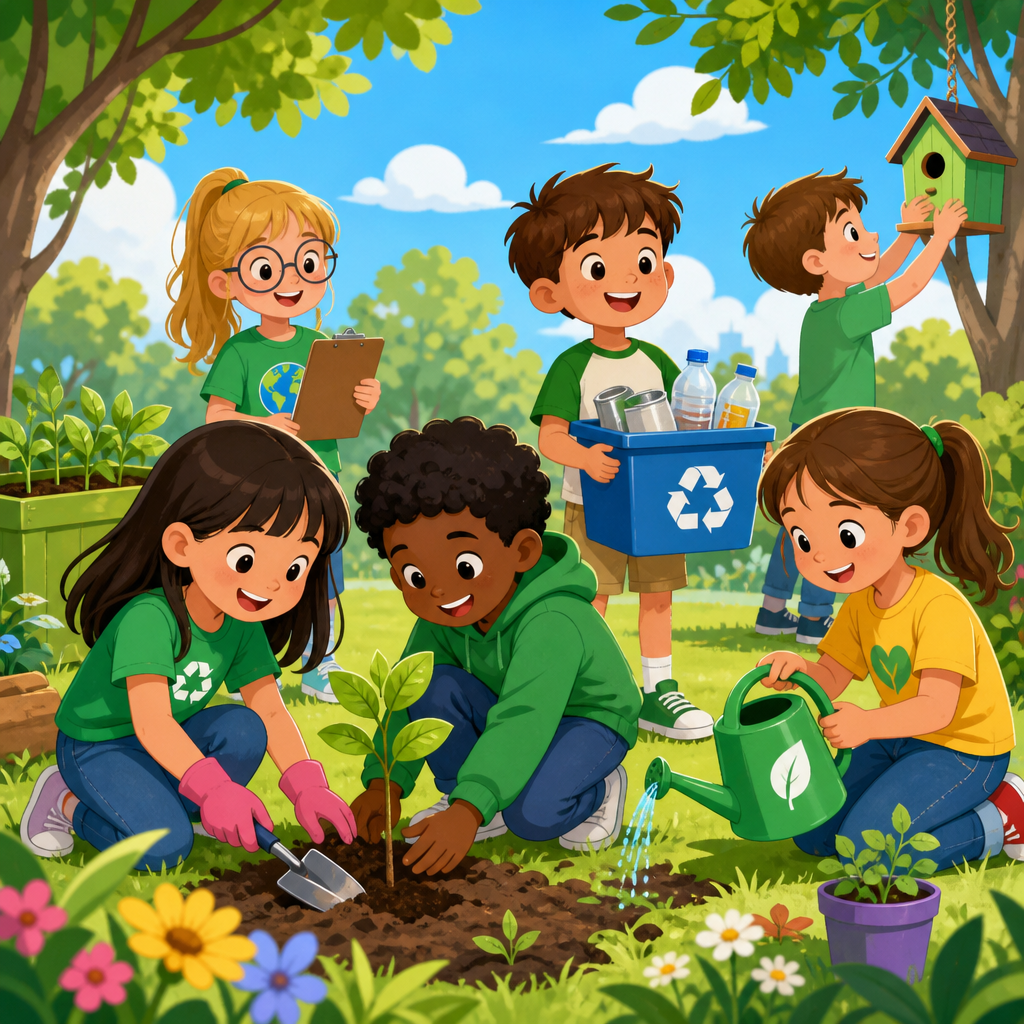
Raising eco-conscious kids starts long before they can explain climate change or recycling symbols. It begins with daily habits, language, and experiences that help children understand how natural systems work and how human choices affect them. Environmental science for kids is the age-appropriate study of air, water, soil, plants, animals, energy, waste, weather, and ecosystems, translated into practical lessons children can observe in their own homes and neighborhoods. I have found that children grasp these ideas best when adults connect abstract issues to visible routines: turning off a dripping tap, sorting food scraps, planting herbs, watching pollinators, or walking instead of driving short distances. This matters because early values tend to shape lifelong behavior. Research in child development consistently shows that repeated family practices influence identity, and environmental responsibility is no exception. Parents, caregivers, and educators do not need to create fear about pollution or climate risks. They need to build curiosity, competence, and a sense that caring for the planet is a normal part of growing up.
Environmental science for kids should not feel like a lecture or a guilt exercise. At its best, it is a framework for helping children understand interdependence. A meal connects soil, rain, farmers, transport, packaging, and waste. A toy connects materials, manufacturing, shipping, and durability. A local park connects biodiversity, weather patterns, stormwater, and community stewardship. When children learn to ask where things come from, how they are made, how long they last, and what happens when they are thrown away, they are learning scientific thinking and ethical reasoning at the same time. That combination makes this topic especially valuable within education and resources content. It supports science literacy, problem-solving, health, and citizenship. A strong hub page on environmental science for kids should therefore cover core concepts, practical home strategies, age-appropriate teaching methods, and ways to keep children engaged without overwhelming them. The goal is not perfection. The goal is to raise children who notice, question, and act responsibly.
Build environmental awareness through everyday routines
The most effective way to raise eco-conscious kids from an early age is to turn sustainability into visible family behavior. Children notice what adults repeat. If a family routinely carries reusable water bottles, turns off unnecessary lights, composts kitchen scraps, repairs broken items, and brings cloth bags to the store, those actions become the child’s baseline understanding of normal life. In my experience, this works better than occasional “green” projects because habits create memory through repetition. Young children especially learn through imitation, not abstract principle. Saying “we save water because clean water is precious” while shutting off the tap during toothbrushing links action to reason. Saying “we use both sides of paper because trees take years to grow” connects conservation to a real natural resource. These small scripts matter.
Environmental science for kids becomes practical when daily routines are tied to observable consequences. Show a child how food scraps break down into compost and then help feed a garden bed. Let them compare a room with windows open to one relying on air conditioning and discuss energy use. Ask them to count how many disposable items enter the house in a week, then brainstorm substitutes. Families can create a simple “care for our home and planet” routine chart that includes feeding pets responsibly, checking for recyclables, watering plants in the morning to reduce evaporation, and picking up litter on neighborhood walks. This teaches systems thinking: homes are small ecosystems connected to larger ones. It also prevents sustainability from sounding like a distant global issue. Children understand what they can touch, sort, grow, fix, and measure.
Teach core environmental science concepts in plain language
Children do not need advanced terminology to understand major environmental ideas, but adults should still teach the concepts accurately. Start with ecosystems: plants, animals, insects, fungi, water, air, and soil all interact in a shared environment. Then explain habitats as the places where living things find food, shelter, and space. Food chains can be introduced through familiar examples such as sunlight helping plants grow, rabbits eating plants, and foxes hunting rabbits. Weather and climate should be distinguished clearly. Weather is what happens day to day; climate is the long-term pattern over many years. Pollution can be defined as harmful substances entering air, water, or land. Conservation means using resources carefully so they remain available in the future. Biodiversity means many different living things sharing an area, and that variety helps ecosystems stay resilient.
Hands-on examples make these definitions stick. A jar terrarium can demonstrate moisture cycles, sunlight, condensation, and plant growth. A walk after rainfall can introduce runoff, puddles, worms, and storm drains. Bird feeders teach observation, migration, and species diversity. Even a grocery trip can become a lesson on packaging, transport distance, and seasonal produce. When I have taught these ideas, I have seen children remember them far better when they connect vocabulary to a visible process. If they watch bees visiting flowers and later hear that pollinators support food production, the term has meaning. If they collect leaves from several trees and compare shapes, they begin noticing biodiversity. This is why environmental science for kids should blend correct scientific language with direct sensory experience. Accuracy builds understanding; experience builds retention.
Use nature exposure to strengthen empathy and attention
Time outdoors is not an optional extra in raising eco-conscious kids. It is the foundation for emotional connection. Children protect what they know personally. Regular exposure to gardens, woods, beaches, ponds, parks, and even vacant lots helps them notice seasonal change, animal behavior, plant growth, and human impact. Studies on child development and environmental education repeatedly link nature contact with stronger attention, lower stress, and greater willingness to engage in stewardship. The setting does not have to be spectacular. Urban families can still observe pigeons, ants, weeds breaking through pavement, tree bark textures, shade patterns, and litter accumulation after wind or rain. What matters is repeated observation over time.
A simple field routine works well: stop, look, listen, and record. Encourage children to describe what they see, hear, smell, and feel. Ask what changed since the last visit. Did the stream level drop? Are more insects around the flowers? Is there trash near the bench again? A notebook, magnifying glass, and phone camera are enough for a serious child-led investigation. Outdoor experiences also help adults avoid turning sustainability into moral pressure. When a child feels wonder first, responsibility follows more naturally. They care about worms after turning compost, about birds after hearing dawn calls, and about trees after measuring trunk growth. Eco-conscious habits are more durable when rooted in affection and familiarity rather than anxiety alone.
Choose activities that match a child’s age and stage
Environmental science for kids should evolve with development. Toddlers need sensory exploration and simple cause-and-effect lessons. Preschoolers can sort leaves, water plants, and learn that animals need homes. Early elementary children can begin tracking weather, understanding recycling categories, and asking where products come from. Older elementary children can compare energy choices, test soil, map neighborhood green spaces, and discuss climate impacts in more detail. Middle school students are usually ready for tradeoffs: why electric vehicles still require mining, why recycling is useful but limited, and why reducing consumption often matters more than buying new “eco” products. Matching lessons to developmental stage prevents confusion and keeps children engaged.
| Age range | What children can understand | Practical activities |
|---|---|---|
| 2–4 | Basic care for living things, simple routines, sensory noticing | Water plants, pick up litter with help, sort colors in recycling |
| 5–7 | Habitats, weather, waste, saving water and energy | Nature walks, compost observation, turning off lights chart |
| 8–10 | Food chains, pollution, biodiversity, product life cycles | Garden planning, bird counts, package comparison at the store |
| 11–13 | Climate systems, resource tradeoffs, local environmental issues | Energy audit, citizen science apps, school waste reduction project |
This progression matters because children’s questions deepen quickly. A six-year-old may ask why plastic in the ocean hurts turtles. A twelve-year-old may ask why companies still use so much plastic if everyone knows it is harmful. Both questions deserve real answers. Avoid misleading simplifications that need to be unlearned later. For example, do not imply that recycling solves waste. Explain that reducing, reusing, repairing, and choosing durable goods often do more. Likewise, do not frame every environmental issue as an individual choice. Children should understand that households matter, but infrastructure, industry, agriculture, and policy shape outcomes at a larger scale. Honest explanations build trust and prevent cynicism as children mature.
Make food, waste, and energy visible at home
The home is the best laboratory for environmental science for kids because it makes invisible systems visible. Food offers an easy starting point. Children can learn that producing meat, dairy, grains, and vegetables requires land, water, and energy, but the lesson does not have to become rigid or moralizing. Show how meal planning reduces food waste, why leftovers matter, and how seasonal produce often travels shorter distances. Growing basil on a windowsill or tomatoes in containers teaches sunlight, pollination, watering, and patience. Composting turns peels and coffee grounds into a lesson on decomposition and soil health. Even noticing packaging differences between products helps children think about materials and waste streams.
Energy is equally teachable. Walk through the house and identify what uses electricity: refrigerators, lights, chargers, heating and cooling systems, washing machines, routers, and televisions. Children are often surprised by “always on” devices. A simple home energy audit using utility bills, smart plugs, or an energy monitor can show that comfort and convenience have measurable costs. Water use can be tracked the same way. Time a shower, collect warm-up water while waiting for the tap to heat, and compare hand-washing with a running tap versus turning it off while scrubbing. These exercises are concrete and empowering. They help children see that environmental stewardship is not abstract idealism. It is resource management practiced in ordinary life.
Model thoughtful consumption instead of performative green habits
One common mistake in raising eco-conscious kids is focusing too heavily on branded “green” products while ignoring consumption itself. Children quickly absorb the idea that helping the planet means buying special items, but that is often the opposite of what environmental science suggests. The lower-impact choice is frequently to use what you already own, borrow when possible, repair before replacing, and buy fewer but better-made things. I have found that children understand this surprisingly well when adults narrate the decision. “We are fixing this backpack because making a new one uses materials and energy.” “We are borrowing skates because you may outgrow them in a year.” “We chose the durable lunch box because it lasts longer than disposable bags.” These are practical lessons in life-cycle thinking.
This approach also teaches media literacy. Kids are surrounded by advertising that treats novelty as normal. Eco-conscious parenting should challenge that assumption gently but clearly. Before buying something new, ask three questions: Do we need it, can we borrow it, and will it last? Thrift stores, library lending programs, repair cafés, community tool libraries, and school uniform exchanges provide real-world examples of circular use. Children should also learn that some tradeoffs are complex. A glass container may be reusable and durable, but it is heavier to transport than lightweight plastic. Organic farming can reduce synthetic pesticide use, but yields and costs may differ by crop and region. Teaching nuance does not weaken environmental values. It strengthens critical thinking.
Turn concern into action through community and school involvement
Children stay engaged when they see that environmental care extends beyond the family. Schools, libraries, museums, nature centers, and neighborhood groups can turn abstract concern into collective action. A school garden teaches biology, nutrition, teamwork, and local food systems at once. A classroom waste audit shows how much paper, plastic film, and food are discarded in a normal day. Community cleanups reveal where litter comes from and why storm drains matter. Citizen science platforms such as iNaturalist and eBird help children contribute observations used by researchers and conservation groups. These tools are especially effective because they show children that careful noticing has value outside the home.
Parents should also prepare children for the emotional side of environmental learning. As they grow, many will hear about wildfires, species loss, heat waves, floods, and pollution-related illness. Honest discussion is essential, but so is emotional regulation. The healthiest message is that environmental problems are serious, many solutions already exist, and people can participate at different levels. Some children will be drawn to gardening or wildlife care. Others will prefer engineering projects, school advocacy, or art that communicates environmental themes. Support the child’s entry point. The long-term aim is not to produce perfect activists. It is to raise informed, capable young people who understand systems, care about consequences, and believe their choices can contribute to wider change.
Raising eco-conscious kids from an early age means combining science, routine, and relationship. Children need accurate environmental science, but they also need repeated chances to practice it in daily life. When families make water, energy, food, waste, biodiversity, and consumption visible, children learn that the environment is not a separate subject. It is the living system that supports every home, school, and community. Nature exposure builds affection. Clear explanations build understanding. Age-appropriate responsibilities build confidence. Together, these elements create durable values rather than short-lived enthusiasm.
The strongest lesson is consistency. Children remember what adults do repeatedly, what they invite children to notice, and how they respond to difficult questions. You do not need a perfect zero-waste home, a large garden, or advanced scientific training to teach environmental responsibility well. You need honest conversation, practical habits, and a willingness to explore alongside your child. Start small: plant something edible, track household waste for a week, visit the same outdoor place every month, or involve your child in one repair before replacing an item. Those steps help children connect care with action. If you are building an education and resources library, use this environmental science for kids hub as your starting point, then branch into recycling, biodiversity, climate, gardening, conservation, and sustainable living topics one lesson at a time.
Frequently Asked Questions
1. How can I start teaching eco-conscious habits to very young children?
The best way to begin is by focusing on simple, repeatable daily habits rather than abstract environmental concepts. Young children learn through routines, imitation, and direct experience, so eco-consciousness should be introduced in ways they can see and do. For example, you can invite them to turn off lights when leaving a room, help sort recycling, water plants, use a reusable water bottle, or bring cloth bags to the store. These actions may seem small, but they build the foundation for understanding that human choices affect the world around us.
It also helps to use clear, age-appropriate language. Instead of launching into complex explanations about pollution or climate systems, say things like, “We save water because plants, animals, and people all need it,” or “We reuse this bag so we make less trash.” This connects everyday actions to real-world outcomes. Children respond especially well when environmental lessons are tied to things they care about, such as animals, gardens, local parks, bugs, birds, or the weather. The more they can observe nature directly, the more meaningful the lesson becomes.
Just as important, avoid framing sustainability as fear-based or overly restrictive. The goal is not to make children anxious about every environmental problem, but to help them feel capable, curious, and responsible. If eco-friendly habits are presented as a normal part of family life, children are far more likely to internalize them. Over time, these repeated actions teach that caring for the environment is not a one-time lesson, but a regular part of how a household operates.
2. What are the most effective age-appropriate environmental science activities for kids?
The most effective environmental science activities are hands-on, observation-based, and closely tied to a child’s everyday surroundings. For younger children, that might include planting seeds and watching them grow, comparing what happens to soil when it is dry versus wet, observing worms or insects in the yard, collecting leaves, noticing cloud patterns, or learning what can and cannot be composted. These experiences introduce core ideas about living things, water, weather, and ecosystems without making the learning feel too technical or formal.
As children get older, you can expand these lessons into more structured activities. They might track household energy use, test how much trash the family produces in a week, compare reusable and disposable products, create a simple rain gauge, map birds or pollinators in the neighborhood, or investigate where tap water comes from and where waste goes after it leaves the home. These activities help children understand systems, causes, and consequences. They also show that environmental science is not limited to textbooks; it is visible in kitchens, backyards, sidewalks, and community spaces.
The key is to connect science with action. If a child learns about soil, let them garden. If they learn about waste, let them help reduce it. If they become interested in insects, talk about habitat and pesticides. When learning is anchored in direct experience, children retain more and develop a stronger sense of responsibility. It also gives them a practical framework for understanding that the environment is not something distant or separate from daily life. It is the air they breathe, the water they drink, the food they eat, and the natural systems that support their community every day.
3. How do I explain environmental issues to kids without scaring them?
This is one of the most important questions parents ask, and the answer lies in balancing honesty with reassurance. Children do need truthful information, but they do not need the full emotional weight of every environmental crisis all at once. A helpful approach is to explain problems in simple, manageable terms and pair them with examples of solutions. For instance, you might say, “Sometimes people make too much trash, and that can hurt animals and land. That’s why we recycle, reuse, and try not to waste things.” This gives context while also emphasizing that people can make better choices.
It is also wise to follow the child’s lead. If they ask a question, answer what they asked rather than overwhelming them with extra detail. A preschooler may only need a basic explanation about litter harming wildlife, while an older child may be ready to understand habitat loss, pollution, or energy conservation in greater depth. The tone matters too. If environmental topics are always presented with urgency, guilt, or despair, children may shut down or become anxious. If they are presented with curiosity, responsibility, and problem-solving, children are more likely to stay engaged.
One of the most effective ways to reduce fear is to show that action is possible. Families can pick up litter, plant pollinator-friendly flowers, conserve water, repair broken items, donate outgrown clothing, or support local nature programs. These actions reinforce an essential message: while environmental challenges are real, people are not powerless. Teaching children that they can notice, care, and contribute builds resilience and confidence. That mindset is far more useful in the long term than trying to shield them from environmental realities or, on the other hand, overwhelming them with information they are not ready to process.
4. How can families make sustainability part of everyday life at home?
The most successful approach is to embed sustainability into ordinary routines so it feels practical rather than performative. Start by looking at the everyday systems children already participate in: meals, laundry, shopping, cleaning, transportation, and play. In the kitchen, children can help reduce food waste by using leftovers creatively, composting scraps, or learning why seasonal and local foods matter. In the bathroom, they can practice turning off the tap while brushing their teeth. During errands, they can help remember reusable bags, containers, or bottles. At home, they can learn to repair, donate, or repurpose items before replacing them.
It is also helpful to make environmental choices visible. Label bins for recycling and compost, keep reusable items in easy-to-reach places, and explain why certain household decisions are made. If you choose a lower-waste option, walk or bike when possible, or reduce energy use, say so in simple terms. Children often miss the reasoning behind adult decisions unless it is explicitly stated. Narrating these choices helps them understand that sustainability is not random; it is the result of thinking about resources, waste, health, and the needs of other living things.
At the same time, families should aim for consistency, not perfection. Children do not need to grow up in a zero-waste household to learn environmental responsibility. In fact, trying to do everything perfectly can create stress or make sustainable living feel unattainable. A better model is to show thoughtful effort: making better choices where possible, learning from mistakes, and improving gradually. When children see sustainability practiced as an ongoing family value rather than a rigid set of rules, they are more likely to adopt it in a lasting and realistic way.
5. Why is it important to teach children about nature and ecosystems early in life?
Teaching children about nature and ecosystems early matters because early childhood is when foundational beliefs, habits, and emotional connections are formed. When children spend time observing birds, insects, trees, soil, water, and weather, they begin to understand that the natural world is made up of interconnected systems. They see that plants need sunlight and water, animals need food and shelter, healthy soil supports growth, and human activity can either support or disrupt these relationships. These are the building blocks of environmental literacy.
Just as importantly, early exposure to nature helps children develop care before they develop complexity. A child who loves watching butterflies, digging in the garden, or exploring a local trail is more likely to value living systems later on. That emotional connection often comes before scientific understanding, and it plays a major role in shaping long-term attitudes. Children protect what they know and appreciate. If nature feels familiar and meaningful, environmental responsibility becomes personal rather than theoretical.
There are also developmental benefits beyond environmental knowledge. Time in nature supports curiosity, observation, patience, sensory learning, and problem-solving. It encourages children to ask questions, notice patterns, and think about cause and effect. These are essential scientific habits of mind. Over time, teaching children about ecosystems helps them understand that their choices are part of a larger web of life. That perspective encourages empathy, responsibility, and a deeper awareness of how everyday actions connect to the health of communities and the planet as a whole.