Innovations in pollution detection and cleanup are changing how environmental science identifies hazards, traces their sources, and restores damaged air, water, and soil. Pollution detection means measuring contaminants accurately enough to know what is present, where it came from, how concentrations change over time, and whether exposure threatens ecosystems or human health. Cleanup, often called remediation, includes physical removal, chemical treatment, biological degradation, containment, and long-term monitoring. In practice, these two fields are inseparable. Better detection leads to faster intervention, while more effective cleanup depends on precise data about contaminant type, mobility, and persistence.
This area matters because pollution is rarely obvious until damage is advanced. Fine particulate matter can travel across regions, nitrate can seep through agricultural soils into aquifers, and per- and polyfluoroalkyl substances can persist in groundwater for decades without odor or visible color. Municipal utilities, industrial operators, researchers, and regulators all rely on improved methods to move from reactive response to preventive management. I have seen projects stall when teams lacked baseline data, and I have also seen inexpensive sensors, targeted lab testing, and smart sampling plans reveal patterns that expensive emergency actions missed.
As a hub topic within environmental science, research and discoveries in pollution detection and cleanup connect atmospheric chemistry, toxicology, microbiology, hydrology, materials science, remote sensing, and public policy. The core questions are straightforward: how do scientists find pollution earlier, measure it more reliably, and remove it with less cost and collateral harm? The latest answers include low-cost sensor networks, satellite imaging, machine learning for anomaly detection, advanced mass spectrometry, engineered sorbents, bioremediation, electrochemical treatment, and circular approaches that recover resources from waste streams. Understanding these innovations helps readers evaluate technologies realistically and follow where the field is heading.
How modern pollution detection works in real conditions
Modern pollution detection combines field instruments, laboratory analysis, and data interpretation rather than relying on a single test. For air pollution, regulatory monitoring stations still provide the highest confidence measurements for pollutants such as ozone, nitrogen dioxide, sulfur dioxide, carbon monoxide, and PM2.5. These stations use reference or equivalent methods, including beta attenuation monitors for particles and ultraviolet photometry for ozone. What has changed is scale. Networks of lower-cost electrochemical and optical sensors now fill gaps between fixed stations, especially near highways, ports, refineries, and schools. Their readings need calibration and drift correction, but when paired with meteorological data they can identify localized hotspots that citywide averages hide.
Water pollution detection has advanced in a similar way. Researchers now combine grab samples, passive samplers, in situ probes, and high-resolution lab analysis to capture both immediate conditions and longer exposure windows. Multiparameter sondes continuously track pH, conductivity, dissolved oxygen, turbidity, temperature, and chlorophyll. Those indicators do not identify every contaminant directly, but they reveal stress events such as wastewater overflows, algal bloom formation, or industrial discharge anomalies. For trace organics and emerging contaminants, laboratories increasingly use liquid chromatography coupled with tandem mass spectrometry, which can measure pharmaceuticals, pesticides, PFAS compounds, and industrial chemicals at very low concentrations.
Soil detection has also become more precise. Portable X-ray fluorescence instruments allow rapid screening for metals such as lead, arsenic, and cadmium without waiting weeks for laboratory turnaround. Gas analyzers can detect volatile organic compounds in soil vapor, helping investigators map plumes from leaking underground storage tanks. In brownfield redevelopment, the best results usually come from a conceptual site model that links land-use history, geology, hydrology, and analytical data. That framework prevents under-sampling and helps explain whether contamination is shallow and accessible or deep and migrating toward groundwater.
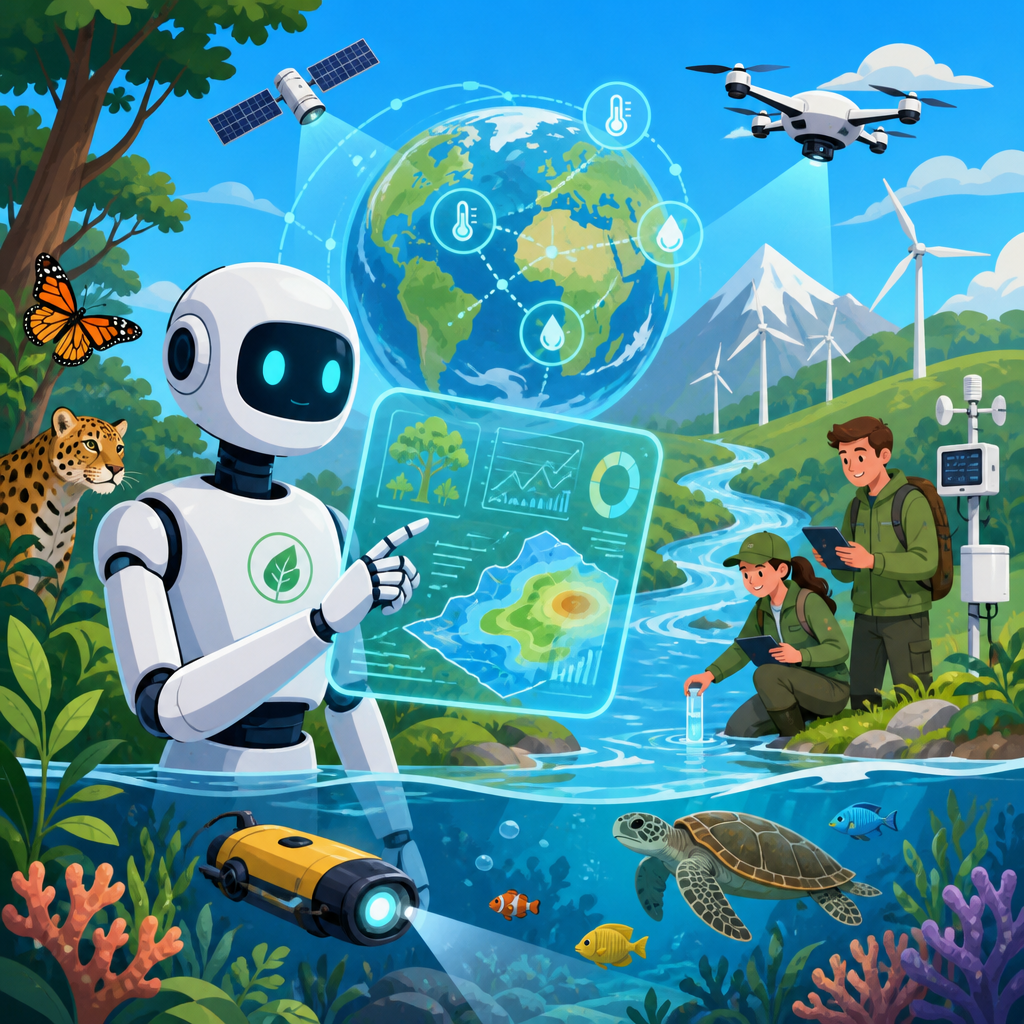
Remote sensing, satellites, and drones extend the search area
One of the most important research shifts is the move from point measurements to landscape-scale observation. Satellite platforms such as Sentinel-5P, Landsat, and MODIS can detect changes associated with air pollution, thermal discharge, harmful algal blooms, wildfire smoke, and land disturbance. Satellites do not replace ground monitoring, because they infer conditions from reflected or emitted radiation and often need atmospheric correction and validation. However, they are invaluable for trend analysis and regional coverage. During smoke events, for example, aerosol optical depth measurements help agencies estimate where fine particles are likely to be elevated even before every community has direct sensor data.
Drones add resolution where satellites are too coarse and manual surveys are too slow. Equipped with multispectral cameras, methane detectors, thermal imagers, or particulate sensors, drones can inspect landfills, pipelines, tailings ponds, wetlands, and stormwater outfalls. I have found drones especially useful for tracing spatial patterns: a thermal camera can reveal warm effluent entering a stream, while a methane sensor can pinpoint leaking equipment on a waste site. Because drones can repeatedly follow the same path, they also support before-and-after comparisons during cleanup projects, which is critical for documenting progress and verifying contractor performance.
Remote sensing is strongest when used as a screening and prioritization tool. It can flag suspicious areas quickly, guide crews to the right sampling locations, and reduce unnecessary field effort. It is weaker when stakeholders expect it to provide courtroom-grade proof on its own. The research consensus is clear: satellite and drone data become most reliable when integrated with validated ground measurements, quality assurance protocols, and transparent uncertainty estimates.
Artificial intelligence improves pattern detection and forecasting
Artificial intelligence is not replacing environmental scientists, but it is making complex pollution data more usable. Monitoring programs now produce continuous streams from air sensors, water sondes, weather stations, lab results, GIS layers, and maintenance logs. Machine learning helps detect anomalies, classify pollution sources, and forecast risk windows that would be hard to recognize manually. In urban air quality work, models can combine traffic counts, wind direction, temperature inversions, and historical concentrations to predict where PM2.5 or nitrogen dioxide spikes are likely within the next few hours. That supports public health alerts and can guide school activity decisions.
In water systems, utilities use predictive analytics to identify conditions associated with nitrification, harmful algal bloom development, or lead release from plumbing. Watershed researchers apply random forest and neural network models to estimate nutrient runoff based on rainfall, land cover, soil type, and fertilizer timing. These tools are useful because pollution events are often nonlinear. A moderate storm after a long dry period may wash oil, metals, and litter into drains more intensely than several smaller storms combined. Machine learning can capture those interactions if the training data are strong.
The limitation is that models inherit bias from poor data. A low-cost sensor with unresolved drift can produce a false hotspot, and an algorithm trained on one watershed may fail in another with different geology or land management. The best programs use interpretable models when possible, validate predictions against independent measurements, and keep a human review step before making enforcement or public health decisions. In environmental science, predictive accuracy matters, but explainability and defensibility matter too.
Breakthrough cleanup technologies for water, soil, and air
Cleanup innovation is moving toward methods that are more selective, less energy intensive, and easier to deploy at contaminated sites. For water treatment, activated carbon remains a backbone technology, but newer media are targeting contaminants that older systems capture poorly or expensively. Ion exchange resins and specialized sorbents have improved removal of nitrate, perchlorate, and some PFAS compounds. Membrane systems such as reverse osmosis can achieve excellent removal for dissolved pollutants, though they create concentrated waste streams that still require management. Advanced oxidation processes, including ozone, ultraviolet light with hydrogen peroxide, and electrochemical oxidation, can break down persistent organic chemicals when conventional filtration cannot.
Soil and groundwater remediation have also expanded beyond excavation and pump-and-treat alone. In situ chemical oxidation uses reagents such as persulfate or permanganate to destroy chlorinated solvents underground. In situ chemical reduction can transform contaminants into less mobile forms. Bioremediation stimulates native microbes or introduces selected organisms that metabolize hydrocarbons, solvents, or other pollutants under aerobic or anaerobic conditions. Phytoremediation uses plants to stabilize, extract, or transform contaminants, particularly in shallow soils. It is slower than aggressive engineered remedies, but for large areas with moderate contamination it can be practical and less disruptive.
Air pollution cleanup includes scrubbers, catalytic reduction, carbon capture approaches, and filtration improvements for industrial stacks and indoor environments. In manufacturing settings, regenerative thermal oxidizers can destroy volatile organic compounds efficiently when process conditions are suitable. In buildings, high-efficiency filtration and activated carbon systems can reduce particles and gases, but performance depends on airflow design, pressure drop, and maintenance. No cleanup technology is universal. The right choice depends on contaminant chemistry, concentration, site hydrogeology, energy cost, waste handling needs, and cleanup goals.
| Technology | Best use | Main advantage | Key limitation |
|---|---|---|---|
| LC-MS/MS analysis | Trace contaminants in water | High sensitivity and specificity | Requires specialized laboratory capacity |
| Low-cost sensor networks | Neighborhood air monitoring | Dense spatial coverage | Need calibration and drift management |
| Activated carbon | Organic pollutant removal | Proven and widely deployable | Media replacement and disposal costs |
| Bioremediation | Hydrocarbons and some solvents | Lower site disturbance | Performance varies with subsurface conditions |
| Advanced oxidation | Persistent organics | Can destroy contaminants rather than transfer them | Energy demand and by-product control |
Emerging contaminants are driving new research priorities
A major reason innovation has accelerated is the rise of contaminants that older monitoring and treatment systems were not designed to handle well. PFAS are the clearest example. Their carbon-fluorine bonds make them highly persistent, and some compounds are mobile enough to spread through groundwater and surface water systems. Research now focuses on both detection and destruction. Total oxidizable precursor assays, high-resolution mass spectrometry, and targeted methods help identify not only known PFAS but also compounds that may transform into regulated forms. On the cleanup side, granular activated carbon, ion exchange, membranes, supercritical water oxidation, plasma treatment, and electrochemical approaches are being tested or deployed with varying success.
Microplastics and nanoplastics are another priority because they challenge both sampling and toxicological interpretation. Detecting them reliably requires careful control of contamination during sampling and analysis. Fourier-transform infrared spectroscopy and Raman spectroscopy are common identification tools, while pyrolysis gas chromatography-mass spectrometry can characterize polymer composition. Cleanup is difficult once particles disperse widely, so prevention at source, stormwater capture, wastewater filtration upgrades, and textile or tire wear reduction may provide more benefit than downstream removal alone.
Pharmaceuticals, personal care products, antibiotic resistance genes, and industrial transformation products are also reshaping monitoring programs. These contaminants may occur at low concentrations, yet chronic exposure and mixture effects can still matter ecologically. That is why modern research increasingly looks beyond single-pollutant compliance and toward cumulative risk, exposure pathways, and source control.
Field implementation, regulation, and the future of discovery
The strongest pollution detection and cleanup programs succeed because technology is matched to decision-making, not because a device is novel. A city monitoring diesel emissions near a port needs different tools than a rural watershed tracking nitrate or a redevelopment team investigating solvent plumes. Effective implementation starts with a clear question: screening, compliance, exposure assessment, source attribution, remedy selection, or post-cleanup verification. From there, sampling design, detection limits, quality control, and stakeholder communication should follow. Agencies such as the U.S. Environmental Protection Agency, the World Health Organization, and ASTM standards bodies matter because they provide methods, benchmarks, and frameworks that make results comparable and defensible.
Research discoveries are also pushing the field toward continuous monitoring and adaptive remediation. Instead of testing once a quarter and reacting later, facilities can now combine online sensors, cloud dashboards, and automated alerts to respond quickly when conditions shift. Digital twins of water systems, real-time fence-line air monitoring, and passive samplers deployed over long periods are all part of this transition. Resource recovery is another important trend. Wastewater plants increasingly recover phosphorus, produce biogas, and treat sludge as a materials management challenge rather than a disposal afterthought. That shift matters because pollution control is no longer just about removing harm; it is about redesigning systems to reduce waste generation in the first place.
The key takeaway is simple: the future of environmental protection depends on pairing sharper detection with smarter cleanup. Better sensors, stronger analytics, and more selective remediation methods are making interventions earlier, cheaper, and more reliable. For anyone following research and discoveries in environmental science, this is the hub topic to watch because it connects laboratory innovation directly to public health, ecosystem recovery, and infrastructure decisions. Explore the related articles under this subtopic to go deeper into air monitoring, water treatment, soil remediation, PFAS research, and remote sensing applications.
Frequently Asked Questions
What are the most important recent innovations in pollution detection?
Some of the most important advances in pollution detection come from combining better sensors, faster data analysis, and wider geographic coverage. Traditional testing often relied on collecting samples in the field and sending them to a laboratory, which is still valuable for accuracy and regulatory confirmation. However, newer technologies now allow scientists to detect contaminants closer to real time and with far greater detail. Portable air monitors, smart water quality probes, biosensors, and miniaturized chemical analyzers can measure pollutants directly in the field, reducing delays between discovery and response.
Remote sensing has also transformed detection. Satellites, drones, and aircraft-mounted instruments can identify pollution patterns across large areas, including oil spills, wildfire smoke, industrial plumes, algal blooms, and sediment contamination. In urban areas, dense sensor networks can map how air pollution changes street by street instead of relying on only a few monitoring stations. Environmental DNA, advanced spectroscopy, and high-resolution mass spectrometry are also helping researchers identify extremely small quantities of contaminants and distinguish between similar compounds.
Equally important is the software behind these tools. Artificial intelligence and machine learning can process huge volumes of sensor and imaging data to detect trends, flag anomalies, trace likely pollution sources, and predict where contaminants will move next. This matters because pollution is rarely static. It shifts with wind, water flow, temperature, land use, and human activity. The newest detection systems are valuable not only because they measure contamination, but because they improve the ability to understand timing, movement, and risk.
How do scientists trace where pollution comes from?
Tracing pollution to its source is one of the most useful and technically sophisticated parts of environmental science. Detecting contamination is only the first step. To reduce harm and prevent future releases, scientists need to know whether pollutants came from industrial discharge, transportation, agriculture, mining, wastewater systems, consumer products, or natural events. Modern source-tracking uses a combination of chemical fingerprints, spatial data, historical records, and environmental modeling.
Chemical fingerprinting is especially powerful. Different pollution sources often leave distinct signatures based on compound ratios, isotopes, additives, or byproducts. For example, petroleum from one facility may differ chemically from petroleum released elsewhere. Heavy metals can sometimes be linked to mining, battery waste, or industrial manufacturing depending on their associated elements and concentrations. Nutrient pollution in rivers may be traced by comparing patterns consistent with fertilizer runoff, sewage leakage, or livestock waste. Scientists also examine how pollutants disperse in air, groundwater, rivers, estuaries, and soils to determine whether the contamination pathway matches a suspected source.
Newer innovations make source attribution faster and more precise. Geographic information systems, atmospheric transport models, groundwater flow models, and machine learning tools can combine environmental measurements with weather, terrain, infrastructure maps, and land-use data. This allows researchers to reconstruct likely release points and transport routes. In practical terms, accurate source tracing supports regulation, cleanup funding, legal accountability, and smarter prevention strategies. It helps communities and decision-makers move beyond simply confirming pollution exists to identifying who or what is driving it.
What new technologies are improving pollution cleanup and remediation?
Pollution cleanup has advanced far beyond simple excavation or containment, although those methods are still sometimes necessary. Today, many of the most promising remediation technologies are designed to be more targeted, less disruptive, and more efficient over time. In contaminated groundwater and soil, in situ treatment methods are increasingly common. These approaches treat pollution in place rather than removing massive quantities of material. Depending on the pollutant, remediation may involve injecting substances that break down contaminants chemically, stimulate beneficial microbes, or immobilize toxic compounds so they are less likely to spread.
Bioremediation is one of the most important innovations in this area. It uses bacteria, fungi, or plants to degrade or absorb contaminants such as petroleum hydrocarbons, solvents, and some metals. Phytoremediation, for example, uses plants to stabilize soil, take up pollutants, or support microbial communities around roots. Nanotechnology is also being explored for certain applications, including materials that can adsorb contaminants or speed chemical reactions. In water treatment, advanced oxidation processes, membrane filtration, activated carbon, ion exchange, and electrochemical systems are making it possible to remove substances that older systems struggled to address, including some pharmaceuticals, industrial chemicals, and persistent organic pollutants.
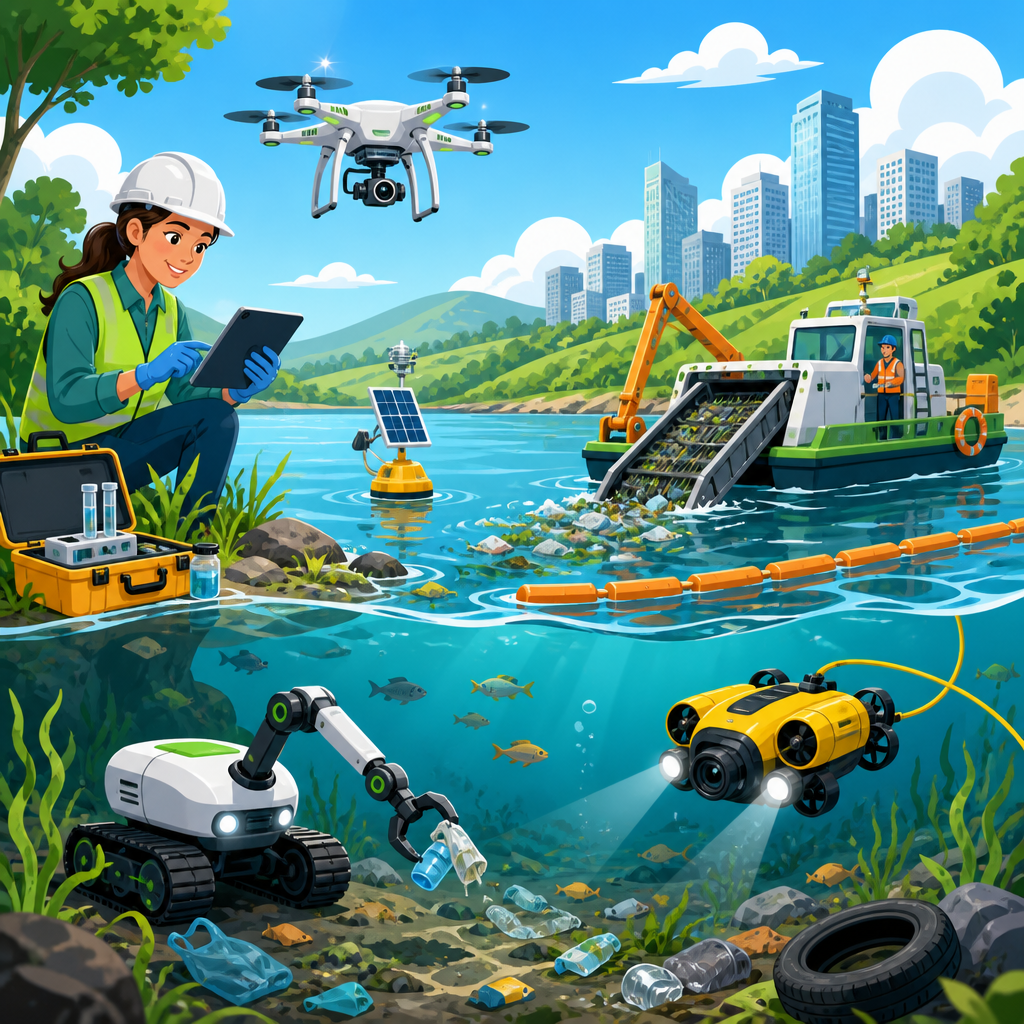
Robotics and automation are improving cleanup in dangerous or hard-to-reach places. Drones can survey contaminated sites, autonomous underwater vehicles can inspect spills or sediment damage, and automated systems can continuously adjust treatment conditions based on incoming sensor data. The biggest shift is that cleanup is becoming more adaptive. Instead of using one fixed method for an entire site, environmental teams increasingly combine detection, modeling, and staged treatment to respond to changing conditions. That leads to better long-term restoration and often lowers cost and environmental disturbance.
Why does real-time pollution monitoring matter for public health and ecosystems?
Real-time monitoring matters because pollution can change rapidly, and delayed information can mean delayed protection. If air quality worsens over a few hours because of traffic emissions, wildfire smoke, or an industrial release, communities need timely warnings to reduce exposure. The same is true for water contamination from sewage overflows, chemical spills, harmful algal blooms, or storm-driven runoff. Traditional sampling remains essential for rigorous analysis, but it may not capture short pollution spikes that still pose serious health or ecological risks. Continuous monitoring helps fill that gap.
For public health, this means faster alerts, better exposure assessment, and more informed decision-making. Schools, hospitals, local governments, and households can respond more effectively when they know current conditions rather than relying on outdated averages. In occupational and industrial settings, real-time detection can trigger immediate safety actions when hazardous gases or particulates rise above safe thresholds. Over time, continuous data also improves epidemiological research by linking health outcomes to more accurate exposure patterns.
For ecosystems, real-time monitoring is just as important. Aquatic systems can shift quickly when oxygen levels drop, temperatures rise, or toxic inputs enter the water. Fish kills, coral stress, wetland degradation, and wildlife exposure events often develop through dynamic conditions rather than a single static measurement. Continuous sensors and remote observations help scientists detect these changes early, track ecosystem stress, and evaluate whether cleanup actions are working. In that sense, real-time monitoring is not just about identifying pollution; it is about protecting living systems before damage becomes harder or more expensive to reverse.
What challenges still limit pollution detection and cleanup, despite these innovations?
Even with rapid technological progress, major challenges remain. One of the biggest is complexity. Environmental contamination rarely involves a single pollutant in a simple location. Many sites contain mixtures of chemicals that interact differently in air, water, soil, and sediment. Some contaminants break down into other hazardous compounds, while others persist for years and move through food webs. Detecting very low concentrations is now easier than before, but interpreting what those levels mean for health, regulation, and long-term ecological harm is still difficult.
Cost and access are also significant barriers. Advanced monitoring networks, laboratory instruments, remote sensing platforms, and customized remediation systems can be expensive to deploy and maintain. Wealthier regions, major research institutions, and large industries are more likely to benefit from cutting-edge tools, while under-resourced communities may still face gaps in monitoring and delayed cleanup. There are also practical constraints: sensors can drift, field conditions can interfere with measurements, biological treatments may work slowly, and cleanup methods that succeed in one site may fail in another because of differences in geology, climate, or hydrology.
Another continuing challenge is governance. Effective cleanup depends not only on technology, but on regulation, enforcement, data transparency, liability, and long-term stewardship. A site may be well characterized scientifically but still remain polluted if funding, political will, or legal responsibility is unclear. Emerging contaminants add further uncertainty because standards and best practices may lag behind detection capability. In other words, innovation is making pollution management more powerful, but technology alone is not enough. The strongest outcomes happen when advanced detection and remediation are paired with sound policy, community engagement, and sustained environmental oversight.