Are we running out of nonrenewable resources? The short answer is yes in a physical sense, because nonrenewable resources form far more slowly than humans extract them, but the practical answer is more complex. Availability depends on geology, technology, price, policy, and how quickly societies shift toward renewable alternatives. In environmental science, nonrenewable resources usually include fossil fuels such as coal, oil, and natural gas, along with mineral resources like copper, uranium, phosphate rock, and rare earth elements. Renewable resources include solar energy, wind, flowing water, sustainably managed forests, and biological materials that can replenish on human timescales. Understanding renewable vs. nonrenewable resources matters because energy systems, food production, manufacturing, national security, and climate stability all depend on how these materials are used.
I have worked on sustainability content and resource planning projects where one recurring mistake was treating depletion as a simple countdown clock. In practice, reserves are not the same as total resource endowment. A reserve is the portion that can be economically and technically extracted under current conditions. That means proven oil reserves can rise even while oil is finite, because improved seismic imaging, horizontal drilling, or higher prices make previously inaccessible deposits viable. The same logic applies to copper, lithium, and uranium. However, expanding reserves does not erase long term scarcity. It often means lower grade ores, deeper wells, greater energy input, more waste rock, higher water use, and larger ecological impacts.
This hub article explains the full picture of renewable vs. nonrenewable resources: what they are, why depletion concerns are real, which resources face the greatest pressure, how recycling and substitution help, and why the transition to cleaner energy changes resource demand rather than eliminating it. If you want a clear foundation for related topics such as fossil fuels, mining, water scarcity, recycling systems, and clean energy infrastructure, this is the place to start. The core idea is straightforward: societies are not simply “running out” overnight, but they are exhausting easy, cheap, high quality nonrenewable resources and must manage the transition carefully.
What Counts as a Renewable or Nonrenewable Resource?
A nonrenewable resource is replenished so slowly that human use depletes it on meaningful economic or historical timescales. Coal forms over millions of years from buried plant matter. Petroleum and natural gas originate from ancient organic material transformed by heat and pressure. Metallic minerals form through long geological processes involving magmatic, hydrothermal, sedimentary, or metamorphic conditions. These materials are finite within the crust that is accessible to current society. By contrast, renewable resources are replaced naturally at rates comparable to use, at least when managed responsibly. Sunlight arrives daily, wind is continually generated by atmospheric circulation, and river flow is renewed through the hydrologic cycle. Biomass can be renewable if harvest does not exceed regrowth.
The distinction sounds simple, but it is often misunderstood. Freshwater is renewable in principle, yet aquifers can be depleted faster than recharge, making a local water supply functionally nonrenewable. Forests are renewable, but old growth ecosystems can take centuries to recover, so a clear cut forest is not equivalent to a mature one. Soil is technically renewable, but topsoil forms so slowly that erosion can outpace formation by orders of magnitude. Environmental science therefore treats renewability as a question of rate, scale, and management, not just category. This matters when comparing energy systems, because a resource can be renewable and still produce ecological damage if poorly governed.
Another useful distinction is between stock resources and flow resources. Fossil fuels and ores are stocks: once extracted and burned or dispersed, they are gone from the usable stock. Solar radiation and wind are flows: people harvest a continuous stream rather than depleting a fixed deposit. This difference shapes economics and infrastructure. Stock resources are often energy dense, transportable, and compatible with long established industrial systems. Flow resources are abundant but diffuse and variable, requiring capture technologies, storage, transmission, and smart grid management. Understanding these characteristics helps explain both the historical dominance of nonrenewables and the rapid, though uneven, rise of renewables.
Are We Actually Running Out?
Humanity is not about to flip a switch and find every mine empty or every oil field dry. What happens instead is progressive depletion of the most accessible deposits. Early extraction targets rich seams, shallow reservoirs, and concentrated ores because they deliver high output at low cost. Over time, industries move toward harder resources: ultra deepwater oil, tar sands, shale formations, or lower grade copper ore. This is why the question “Are we running out?” must be answered in terms of quality, cost, energy return, and environmental burden. A society can still possess large underground quantities while facing rising extraction difficulty and greater social conflict over land, water, and pollution.
The energy industry provides a clear example. Conventional oil discoveries peaked decades ago in many regions, yet total liquid fuel production expanded through unconventional sources such as U.S. tight oil and Canadian oil sands. Those barrels exist, but they typically require more drilling, more capital, and often more environmental management than giant conventional fields discovered in the twentieth century. Mining tells a similar story. Average ore grades for several metals have declined over time, meaning companies must process more rock to produce the same amount of refined material. Lower grades increase tailings volume, energy consumption, and water demand. Scarcity, then, is not only about absolute exhaustion; it is about declining ease of supply.
Economists sometimes argue that higher prices solve scarcity by encouraging exploration, innovation, substitution, and efficiency. They are partly correct. Rising copper prices can stimulate recycling, aluminum substitution, or new exploration. Higher fuel prices can reduce demand and support electrification. Yet price signals alone do not resolve everything. Some resources have concentrated supply chains, long permitting timelines, geopolitical risks, or environmental constraints that markets adjust to slowly. Phosphate is a good example because it is essential for fertilizer and food production, and high quality deposits are unevenly distributed. The practical lesson is that depletion pressures can be managed, but they do not disappear simply because markets respond.
Which Nonrenewable Resources Face the Greatest Pressure?
Fossil fuels remain the most discussed nonrenewable resources because they power transport, industry, electricity generation, and chemical production while driving most anthropogenic carbon dioxide emissions. Coal is abundant globally, but its climate and air pollution costs are severe, so the central issue is less geological depletion than whether countries can phase it down quickly enough. Oil faces both depletion concerns and strategic vulnerability because modern transport systems have long depended on liquid fuels. Natural gas has expanded due to power generation, heating, and feedstock uses, yet methane leakage and infrastructure lock in complicate its role as a transition fuel. In each case, climate limits are forcing change before physical exhaustion does.
Minerals and metals present a different challenge. Copper is critical for wiring, motors, transmission lines, and renewable energy equipment. Lithium, nickel, cobalt, graphite, and rare earth elements are important for batteries, magnets, and electronics, though exact demand varies by technology choice. Uranium is nonrenewable but highly energy dense, making fuel availability less urgent than for fossil fuels in many reactor systems. Phosphate rock deserves special attention because agriculture depends on phosphorus and there is no synthetic substitute for the element itself. Sand and gravel are often overlooked, yet they are heavily mined for concrete and infrastructure. “Running out” is less likely globally for bulk materials, but local shortages and ecological damage are already significant.
| Resource | Main Uses | Primary Risk | Best Response |
|---|---|---|---|
| Oil | Transport fuels, petrochemicals | Depletion of easy reserves, price shocks, emissions | Efficiency, electrification, alternative fuels |
| Natural gas | Power, heating, fertilizer | Methane leakage, dependency, volatile markets | Leak control, heat pumps, renewable power |
| Copper | Wiring, grids, motors | Declining ore grades, slow mine development | Recycling, material efficiency, new supply |
| Lithium | Batteries | Processing bottlenecks, water and land conflicts | Diverse chemistries, recycling, better permitting |
| Phosphate | Fertilizer | Finite high quality deposits, runoff pollution | Nutrient recovery, precision agriculture |
Geopolitics intensifies these pressures. A resource can be geologically available yet strategically constrained if refining capacity, mine ownership, or shipping routes are concentrated. Rare earth processing has been dominated by China for years. Cobalt mining has been heavily concentrated in the Democratic Republic of the Congo. Natural gas dependence shaped European energy vulnerability after Russia’s invasion of Ukraine. These examples show why resource security is not just a question of abundance underground. It depends on extraction technology, processing infrastructure, labor conditions, governance, and international trade. For policymakers and businesses, diversification matters almost as much as total reserves.
How Renewable Resources Change the Picture
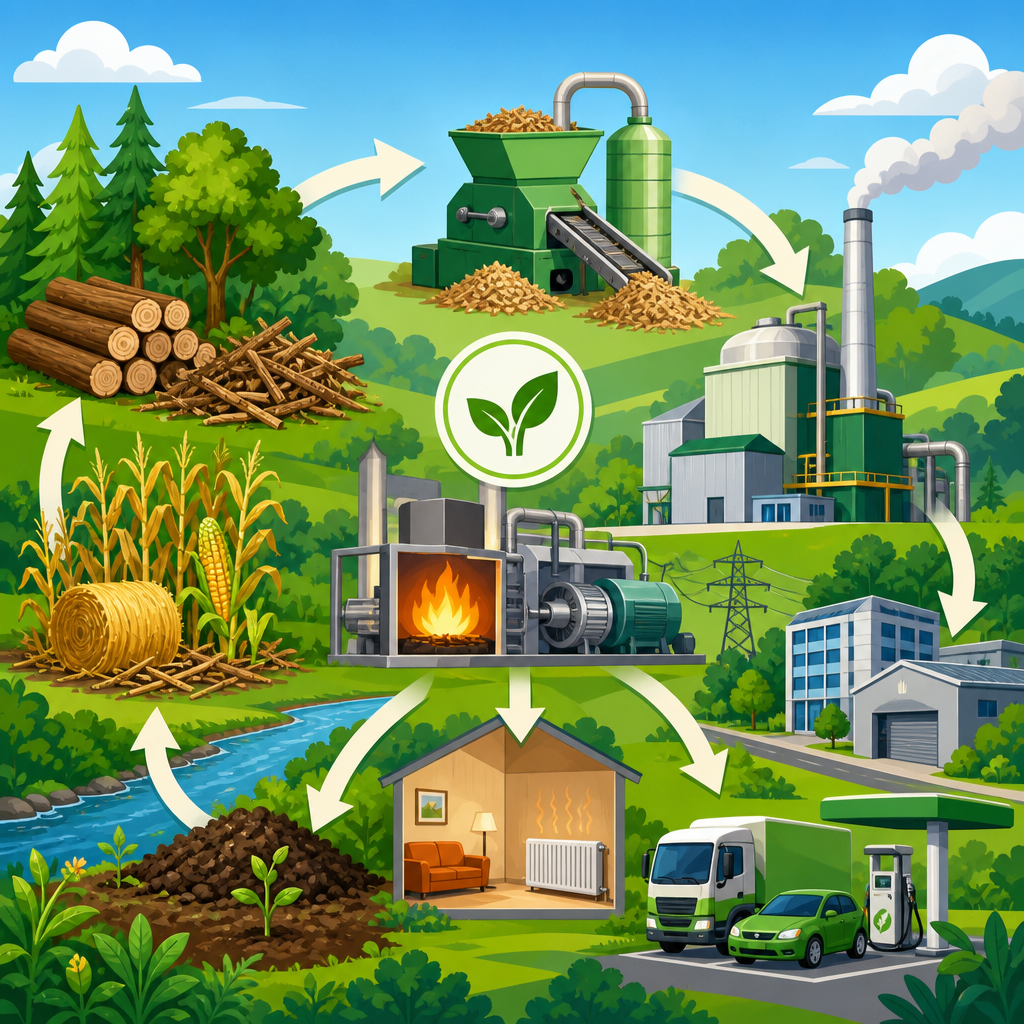
Renewable resources reduce dependence on exhaustible fuels by replacing combustion with ongoing natural flows. Solar panels convert sunlight directly into electricity. Wind turbines capture kinetic energy from moving air. Hydropower uses flowing water. Geothermal systems tap Earth’s internal heat, and sustainably sourced biomass can provide fuel or feedstocks under tight land use safeguards. The major advantage is that sunlight and wind are not depleted when used. Once infrastructure is installed, the fuel input is effectively free and domestic. That improves long term energy security and usually cuts air pollution. In lifecycle terms, renewables still require materials, land, manufacturing, and end of life management, but they avoid the continual extraction and burning that define fossil systems.
In my experience reviewing energy transition plans, the most useful comparison is not renewable versus nonrenewable as a moral binary but as a systems design choice. A gas plant stores energy in fuel on site and can generate power whenever dispatched, while a solar farm depends on daylight and weather. That does not make solar inferior; it means planners must pair it with storage, flexible demand, transmission upgrades, and complementary generation. Countries already show how this works. Denmark has integrated large shares of wind using regional interconnections and market coordination. California combines solar growth with batteries and demand response, though reliability planning remains essential during heat waves. Renewable systems succeed when the grid is modernized around them.
Renewables also shift material demand upstream. Electric vehicles reduce oil use but increase demand for battery minerals and copper. Wind turbines use steel, concrete, fiberglass, and in some designs rare earth magnets. Solar modules require silicon, silver, aluminum, glass, and polymers. This is why claims that clean energy eliminates extraction are inaccurate. It changes the profile of extraction from ongoing fuel combustion toward front loaded material investment. That trade can still be favorable because many metals are recyclable and because the same solar panel can generate electricity for decades without fuel deliveries. The key is building cleaner mining, stronger recycling, and more durable product design alongside renewable deployment.
Can Recycling, Efficiency, and Substitution Prevent Shortages?
Yes, but with limits. Recycling is one of the strongest tools for extending nonrenewable resources because it turns waste streams into secondary supply. Aluminum is the classic example: recycling aluminum uses far less energy than producing primary metal from bauxite. Copper, steel, lead, and precious metals also have mature recycling systems, though collection quality varies by region and product type. Battery recycling is expanding through firms such as Redwood Materials, Li-Cycle, and Umicore, but volumes are still constrained because many batteries are young and have not yet reached end of life. Recycling works best when products are designed for disassembly, material streams are well sorted, and contamination is minimized.
Efficiency often delivers faster gains than new supply. Vehicles that travel farther per unit of energy reduce oil demand. Heat pumps can deliver multiple units of heat for each unit of electricity, lowering fuel consumption in buildings. Transmission upgrades, efficient motors, LED lighting, and industrial heat recovery all reduce pressure on both energy and mineral systems. During energy crises, demand reduction can be as strategic as supply expansion. The International Energy Agency has repeatedly emphasized efficiency as a major resource and emissions solution because the cleanest unit of energy is the one not used. Still, efficiency alone can be offset by rebound effects if lower operating costs encourage more consumption.
Substitution is the third lever. Engineers can replace scarce or problematic materials with alternatives, though tradeoffs are common. Sodium ion batteries may reduce reliance on lithium and nickel in some applications, but they currently have lower energy density than many lithium ion chemistries. Aluminum can substitute for copper in some power applications, though it has different conductivity and mechanical properties. Green hydrogen may replace natural gas or coal in selected industrial processes, but infrastructure and efficiency challenges remain substantial. The practical message is that no single strategy prevents shortages. Durable resource security comes from combining recycling, efficiency, substitution, and more responsible extraction within clear environmental limits.
What This Means for Environmental Science and Everyday Decisions
Environmental science treats resource use as a linked system of geology, ecology, economics, and human behavior. The question is not only whether a resource exists, but what it costs in habitat loss, carbon emissions, pollution, labor conditions, and political dependence to obtain it. That systems view changes public conversation. It explains why climate policy cannot focus only on emissions while ignoring mining impacts, and why anti mining positions that reject all new extraction can conflict with the material needs of electrification and grid expansion. The goal is not zero extraction. The goal is far lower waste, far lower fossil dependence, better material recovery, and stricter standards for the extraction that still occurs.
For households, schools, and businesses, the most meaningful actions are usually practical rather than symbolic. Use less energy through insulation, efficient appliances, and smarter transportation choices. Support products that are repairable and recyclable instead of disposable. Reduce food waste, which cuts unnecessary fertilizer, fuel, and water use across the supply chain. Pay attention to where electricity comes from and how local utilities are investing in renewables, storage, and grid resilience. For students and educators, resource literacy matters: understanding reserves, life cycle assessment, circular economy principles, and environmental justice creates better citizens and better policy debates. These concepts connect directly to climate science, land use, and economic development.
So, are we running out of nonrenewable resources? We are running through the easiest and cheapest ones, and that reality is already reshaping energy, industry, and geopolitics. Renewable resources offer a path to reduce dependence on finite fuels, but they are not impact free and must be built on efficient design, recycling, and careful governance. The biggest benefit of understanding renewable vs. nonrenewable resources is clarity: it helps you evaluate headlines, technologies, and policies without oversimplification. If you are building knowledge in environmental science, use this hub as your starting point, then explore the connected topics of fossil fuels, mining, recycling, water use, and clean energy systems in greater detail.
Frequently Asked Questions
Are we actually running out of nonrenewable resources?
In a strict physical sense, yes. Nonrenewable resources are finite because they take millions of years, or in some cases even longer geological timescales, to form, while people extract and use them far faster than nature can replace them. That includes fossil fuels such as coal, oil, and natural gas, as well as many important mineral resources like copper, uranium, phosphate, and rare earth elements. However, the practical question is not simply whether a resource is finite, but how available, affordable, and accessible it remains over time. A resource can still exist underground, yet become harder or more expensive to find, mine, refine, or transport.
That is why scientists, economists, and policymakers often avoid simplistic yes-or-no answers. What matters in the real world is the balance between remaining deposits, extraction technology, market prices, environmental regulations, geopolitical stability, and demand. Societies can also reduce pressure on nonrenewable resources through efficiency, recycling, substitution, and a faster shift toward renewable energy and more circular manufacturing systems. So while we are not likely to “run out” of everything all at once, many nonrenewable resources can become more difficult, costly, or environmentally damaging to obtain long before total depletion occurs.
Why do some experts say we are not running out, even if nonrenewable resources are finite?
When experts say we are not immediately running out, they usually mean that known reserves and recoverable supplies can expand or contract depending on human factors. A reserve is not the same thing as the total amount of a resource in the Earth’s crust. Reserves are the portion that can be extracted economically with current technology under current conditions. If prices rise, new extraction methods improve, or companies discover new deposits, reserves can increase even though the overall resource remains finite.
This is why predictions of imminent exhaustion are often more complicated than they first appear. For example, advances in drilling, seismic imaging, ore processing, and recycling have allowed societies to access materials that were once considered too difficult or too expensive to use. At the same time, this does not mean scarcity disappears. It often means extraction moves toward lower-quality ores, deeper deposits, remote locations, or methods with higher energy use and greater environmental risk. In other words, “not running out yet” does not mean “no problem.” It often means the challenge shifts from absolute physical shortage to rising economic cost, environmental harm, and social conflict over access and use.
Which nonrenewable resources are most concerning today?
Fossil fuels remain one of the biggest concerns because they are still deeply tied to electricity generation, transportation, heating, and industrial production in many countries. Even where supplies remain substantial, continued dependence creates two major problems: finite availability over the long term and major environmental consequences right now, especially climate change from carbon dioxide and methane emissions. For that reason, concerns about coal, oil, and natural gas are not only about depletion, but also about whether societies can transition away from them quickly enough to reduce environmental damage.
Among mineral resources, concern often centers on materials that are essential for agriculture, electronics, infrastructure, and clean energy systems. Copper is critical for electrical wiring and renewable energy technologies. Uranium matters for nuclear power. Phosphate is indispensable for fertilizer and food production. Certain rare earth elements and battery minerals are important for wind turbines, electric vehicles, and electronics. In many cases, the issue is less that the resource will vanish overnight and more that high-quality, easy-to-access deposits are limited, geographically concentrated, or politically sensitive. That can create supply bottlenecks, price spikes, strategic competition, and pressure to improve recycling and material substitution.
What happens before a nonrenewable resource is completely depleted?
Long before total depletion, several warning signs usually appear. The easiest and cheapest deposits are often used first, so extraction gradually shifts to lower-grade ores, deeper wells, offshore fields, or more remote and technically difficult locations. This tends to raise production costs and often increases energy use, waste generation, and environmental impacts. For fuels, declining output from older fields can require more drilling and more complex technologies to maintain supply. For minerals, processing lower-quality ore may require moving and treating much more rock to obtain the same amount of usable material.
Consumers and industries may experience this as higher prices, greater market volatility, supply disruptions, or increased geopolitical tension. Governments may respond by stockpiling key materials, subsidizing domestic extraction, promoting recycling, or investing in substitutes. Businesses may redesign products to use less of a scarce material or switch to alternatives when possible. In environmental science, this is an important point: societies rarely hit a dramatic moment when a resource simply disappears. More often, they face a gradual tightening of supply, rising environmental trade-offs, and difficult policy choices about conservation, innovation, and transition.
How can society reduce the risk of running short on nonrenewable resources?
The most effective strategy is to reduce dependence on nonrenewable resources rather than waiting for scarcity to become severe. That means improving energy efficiency, expanding renewable energy, designing products that last longer, increasing repair and reuse, and building stronger recycling systems. A circular economy approach can help keep valuable materials in use for longer instead of treating them as disposable. In manufacturing, this may involve recovering metals from old electronics, vehicles, batteries, and construction materials. In energy systems, it means replacing fossil fuel demand with solar, wind, hydro, geothermal, storage technologies, and in some cases nuclear power.
Policy also plays a major role. Governments can encourage conservation through standards, incentives, research funding, and infrastructure investment. They can support supply-chain resilience by diversifying sources, promoting responsible mining practices, and requiring more efficient material use. Education and consumer behavior matter too, since demand patterns influence how quickly resources are extracted. Ultimately, the goal is not only to avoid physical shortages but to create systems that are more sustainable, less vulnerable to disruption, and less damaging to ecosystems and climate. In that sense, the question is not just whether we are running out of nonrenewable resources, but whether we are using the time we still have wisely enough to build better alternatives.