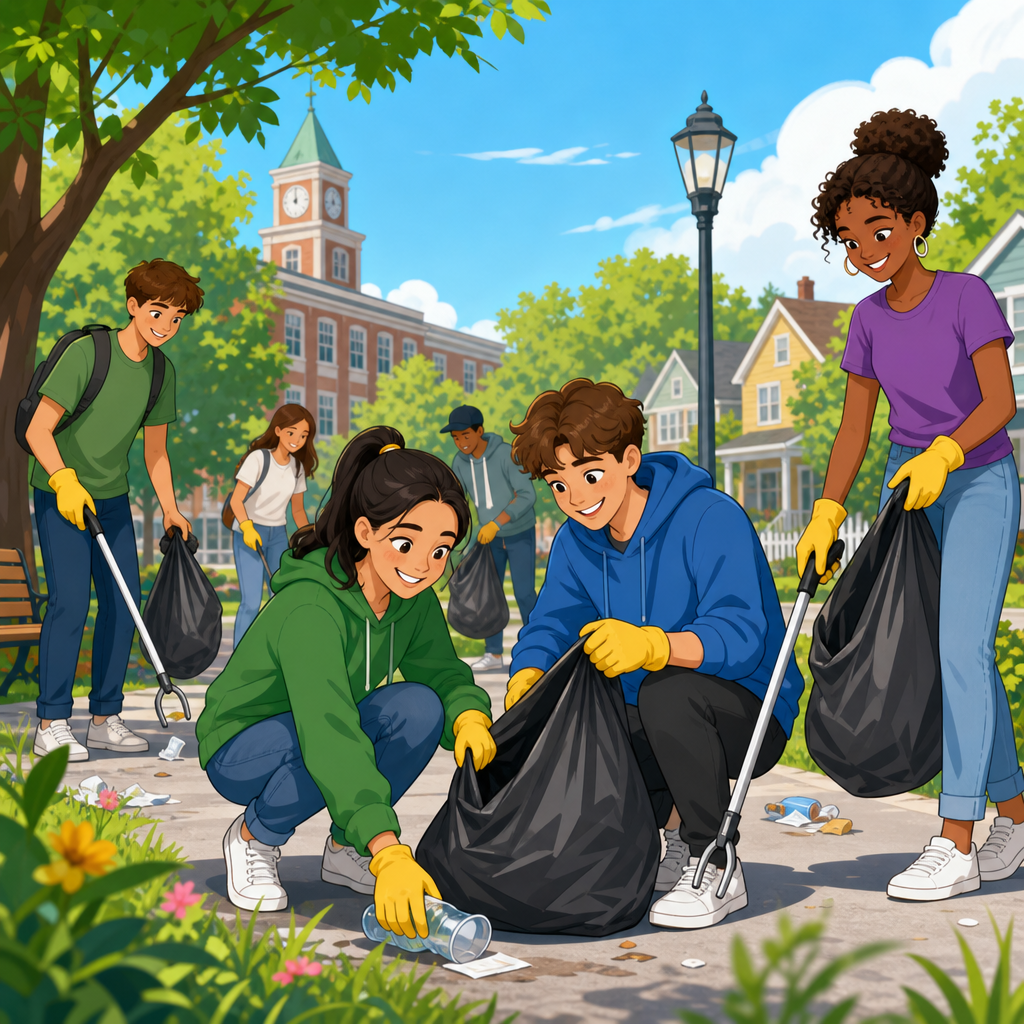
Starting a green club is one of the most practical ways to turn concern about litter, waste, and local environmental decline into organized action. In schools, colleges, apartment complexes, and neighborhood associations, a well-run club gives people a structure for planning campus or neighborhood clean-up events, recruiting volunteers, and building habits that last beyond a single Saturday morning. When I have helped groups launch these clubs, the most successful ones treated cleanups not as isolated projects, but as the visible centerpiece of a broader program that included education, partnerships, and measurable goals. That approach matters because litter reduction, recycling participation, storm-drain protection, and public space stewardship all improve when people have a standing team responsible for coordinating effort.
A green club is a volunteer organization focused on environmental improvement through activities such as waste audits, recycling drives, tree planting, awareness campaigns, and cleanup events. A campus clean-up event typically targets school grounds, dorm areas, parking lots, athletic fields, or nearby streets. A neighborhood clean-up event usually covers sidewalks, parks, vacant lots, transit stops, waterways, and common areas. The club becomes the hub that handles leadership, permissions, scheduling, safety rules, communications, supplies, and follow-up. Without that hub, enthusiasm tends to fade after one event, materials go missing, and no one tracks what worked. With it, even a small team can run repeatable projects that earn trust from administrators, residents, local businesses, and public works departments.
This guide explains how to start a green club comprehensively, with a special focus on organizing campus or neighborhood clean-up events. It covers mission setting, leadership structure, member recruitment, budgeting, risk management, partnerships, event logistics, and long-term growth. If you want a direct answer to the core question, here it is: start with a clear purpose, secure approval from the institution or neighborhood leadership, assign defined roles, plan one achievable cleanup first, document results, and use that win to build a durable club. Everything else in this article supports those steps and helps you avoid common mistakes such as vague goals, poor volunteer retention, unsafe collection practices, and weak communication.
Define the club’s purpose, scope, and first-year goals
The strongest green clubs begin with a narrow, concrete mission rather than a generic promise to “help the planet.” On a campus, that mission might be reducing visible litter and increasing recycling participation in residence halls. In a neighborhood, it might be keeping parks, sidewalks, and storm drains free of trash while educating residents about proper disposal. A mission statement should be short enough to repeat easily and specific enough to guide decisions. For example: “Our club organizes monthly clean-up events and waste reduction projects that make campus spaces cleaner, safer, and more sustainable.” That wording clarifies activity, audience, and outcome.
Once the mission is set, define scope. Will the club focus only on cleanup events, or also on composting, zero-waste education, native plantings, and advocacy? I usually advise new groups to choose one flagship activity and two secondary activities for the first year. Cleanups work well as the flagship because they are visible, inclusive, and easy to explain. Secondary activities can include a recycling education campaign and a supply reuse drive. This mix helps members who want different kinds of involvement: some prefer outdoor service, others prefer planning, outreach, data tracking, or social media.
Set first-year goals that are measurable. Useful examples include holding six cleanups, recruiting thirty active members, removing five hundred pounds of litter, adopting two high-traffic areas, or securing three partner sponsors. If your institution tracks service hours, include that too. Quantified goals are not about appearing impressive; they allow leaders to allocate labor, prove value to decision-makers, and write stronger funding requests later. Goals should also reflect seasonality. Campuses may have better turnout at the start of each term, while neighborhoods often see higher participation in spring and early fall. Build around those realities rather than pretending every month offers equal volunteer capacity.
Secure approval, choose leaders, and create a workable structure
To start a green club formally, determine who must approve it. In a school or college, that may be student activities, a faculty advisor, facilities management, or risk management. In a neighborhood, it may be a homeowners association board, tenant council, community center, or informal steering committee. Ask early about rules for volunteer events, use of logos, storage of supplies, transportation, waivers, and minors. Many clubs lose momentum because they recruit members before confirming whether they can reserve space, collect funds, or host public events. Administrative clarity is not glamorous, but it prevents avoidable delays.
Leadership structure should be simple but real. A president or coordinator provides direction, a vice president or operations lead manages events, a treasurer handles budget tracking, and a communications lead manages email, flyers, and social posts. For larger clubs, add a partnership lead and a data lead. Written role descriptions matter because volunteer groups often assume everyone understands the work when they do not. In my experience, event operations and follow-up are the first responsibilities to be neglected, so assign them explicitly. A cleanup is not just showing up with trash bags; it involves route planning, supply checklists, check-in, safety briefing, waste sorting, photo documentation, and reporting.
Adopt a basic operating system from the beginning. Hold one planning meeting each month, publish notes within twenty-four hours, and maintain a shared calendar and cloud folder. Free tools like Google Drive, Google Sheets, Trello, Slack, and Canva are sufficient for most student and neighborhood groups. Create a member sign-up form that captures name, email, availability, interests, and any physical limitations relevant to cleanup tasks. This is also the right time to draft a one-page constitution or charter covering mission, membership, elections, meeting frequency, and financial rules. It does not need legal complexity, but it should define how decisions are made and how leadership transitions occur.
Recruit members and build momentum with a strong first campaign
Recruitment works best when people can picture the activity immediately. “Join our green club” is broad; “Help us clean the quad and nearby bus stop this Saturday, then build monthly projects together” is concrete. Use places where your audience already pays attention: school email newsletters, orientation fairs, residence hall bulletin boards, neighborhood Facebook groups, Nextdoor, library noticeboards, community centers, and local faith organizations. Ask partners to repost your message. Include time, place, purpose, what volunteers should wear, and whether tools are provided. Friction kills sign-ups, so link directly to one form.
Retention depends on giving people meaningful roles quickly. New members should not spend weeks listening to planning discussions without action. During the first month, assign clear tasks such as flyer distribution, sponsor outreach, route mapping, registration table staffing, litter data entry, or refreshments coordination. Students who are interested in resume-building may take communications or partnership roles; residents with local knowledge may identify illegal dumping hotspots or recurring problem blocks. Keep meetings efficient and task-oriented. A sixty-minute meeting with decisions and deadlines is more effective than ninety minutes of broad discussion.
Recognition also matters. Volunteers stay engaged when they see impact and feel appreciated. Thank members publicly, highlight service hours, share before-and-after photos, and report results in plain language. If allowed, offer certificates, digital badges, or small incentives such as donated coffee, reusable gloves, or club shirts. On campuses, co-hosting with service-learning offices or residence life can broaden participation. In neighborhoods, partnering with schools, scout troops, and local businesses brings intergenerational energy that a single group often cannot generate alone.
| Club Stage | Best Action | Example Tool or Partner | Why It Works |
|---|---|---|---|
| Launch | Create interest form and first event invite | Google Forms, school newsletter | Captures contacts and converts interest into attendance |
| Approval | Confirm rules, advisor, and event permissions | Student activities office, HOA board | Prevents delays and compliance problems |
| Recruitment | Promote one visible cleanup with clear details | Canva flyers, Instagram, Nextdoor | Concrete activities attract more volunteers than abstract messaging |
| Operations | Assign roles for supplies, safety, check-in, and data | Trello, shared checklist | Reduces confusion on event day |
| Growth | Publish results and invite members to next project | Email recap, photos, service log | Turns one-time volunteers into repeat participants |
Plan cleanup events with safety, logistics, and measurable outcomes
A successful campus or neighborhood clean-up event starts with site selection. Choose an area that is visible enough to show impact but manageable enough for your current volunteer base. Conduct a walkthrough beforehand and note entry points, parking, restroom access, shade, hazards, and where full bags will be staged. If sharp objects, heavy dumping, or roadside exposure are likely, coordinate with facilities, sanitation, or public works rather than expecting volunteers to handle every condition. Never ask participants to collect hazardous chemicals, needles, broken glass without proper tools, or large items requiring special equipment.
Permissions and coordination are essential. Public parks may require permits. Campuses may require facilities notification. Neighborhood cleanups often benefit from advance contact with sanitation departments so collected waste is picked up promptly. Clarify whether trash, recycling, and bulky waste should be separated. Some municipalities provide litter grabbers, gloves, and bags through adopt-a-street or beautification programs. Keep records of every request, approval, and pickup confirmation. On event day, run a short safety briefing covering hydration, closed-toe shoes, proper lifting, weather awareness, traffic caution, and prohibited materials. If minors participate, follow supervision rules exactly.
Measure outcomes in ways that are simple and credible. Count volunteers, hours served, bags collected, estimated weight, recyclables recovered, and blocks or acres covered. Use a standard method each time so results can be compared. Keep expectations realistic: a small monthly cleanup that consistently removes twenty bags may be more valuable than a one-time mega-event with no follow-up. Document recurring litter types too. If most waste is beverage containers near an athletic field, that suggests a bin placement issue. If fast-food packaging concentrates near a transit stop, outreach to nearby businesses or the transit agency may help. Good clubs do not just remove litter; they identify sources and reduce repeat accumulation.
Fund the club, build partnerships, and connect cleanups to education
Most new green clubs do not need large budgets, but they do need predictable access to basic supplies and communication resources. Typical expenses include gloves, litter grabbers, trash bags, reflective vests, first-aid materials, clipboards, printing, water, snacks, and occasional storage bins. On campuses, student government grants, service offices, sustainability offices, and alumni mini-grants are common sources. In neighborhoods, small business sponsorships, community foundations, local council discretionary funds, and in-kind donations are often easier to secure than cash. Ask for specific support: fifty pairs of gloves, branded water coolers, pickup service, or event flyers.
Partnerships multiply credibility and reach. Facilities teams know waste streams and problem areas. Public works departments understand pickup procedures. Parks departments can help with permits and site priorities. Environmental nonprofits may provide training on litter audits, stormwater pollution, or waste diversion. National programs such as Keep America Beautiful affiliates, campus sustainability networks, and municipal adopt-a-block initiatives can supply templates, signage, and recognition. When approaching partners, explain what you are organizing, what audience you reach, what help you need, and what outcome they can expect. Specificity is more persuasive than enthusiasm alone.
A cleanup-focused green club becomes more valuable when it links service to education. Use findings from each event to teach practical lessons. If storm drains were clogged with plastic film and food wrappers, create a short awareness campaign about how litter enters waterways. If cigarette butts dominate one area, work with administrators or property managers on receptacle placement and signage. If recycling bins are contaminated, run a bin-labeling project using standardized icon systems and examples of accepted materials. The educational function matters because cleaner spaces are easier to maintain when people understand cause and effect. A club that only picks up trash can become trapped in repetitive labor; a club that combines cleanup with prevention changes behavior.
Grow the club into a lasting hub for environmental action
Long-term success depends on systems, not charisma. Create an annual calendar with recurring cleanups, planning deadlines, budget cycles, and leadership elections. Maintain a simple operations manual that includes contact lists, permit steps, event scripts, supply inventory, sign-in sheets, sponsor templates, and reporting formats. This document is the difference between a club that survives graduation, relocation, or volunteer turnover and one that collapses when one leader leaves. I have seen clubs recover quickly from leadership changes when their processes were documented, and disappear entirely when everything lived in one person’s memory.
Evaluate the club every semester or quarter. Which events had the strongest turnout? Which channels recruited the best volunteers? Which sites reaccumulated litter fastest? Were members overloaded? Did partners respond well? Use short surveys and attendance data, then adjust. Maybe monthly cleanups are realistic during the academic year but not summer. Maybe weekday evenings work better than Saturday mornings in your neighborhood. Maybe volunteers want more social elements, such as a debrief meal or recognition board. Improvement should be evidence-based, not driven by assumptions.
Starting a green club is ultimately about building a repeatable engine for local environmental care, and organizing campus or neighborhood clean-up events is one of the clearest ways to begin. Define a focused mission, secure approval, assign roles, recruit around a concrete first event, manage safety carefully, track results, and turn every cleanup into a lesson about prevention. That is how a small volunteer idea becomes a trusted community resource. If you are ready to begin, draft your mission statement, identify one target area, and schedule your first planning meeting this week.
Frequently Asked Questions
How do you organize a campus or neighborhood clean-up event from start to finish?
Start by defining a clear goal for the clean-up event. Some groups want to remove visible litter from a school campus, while others are targeting illegal dumping areas, park edges, sidewalks, storm drains, or apartment common spaces. Once the goal is clear, choose a manageable location, set a date and time, and estimate how many volunteers you realistically expect. A strong clean-up plan usually includes a site walk in advance so organizers can identify problem areas, note safety concerns, estimate supply needs, and decide where volunteers should check in, store collected trash, and access restrooms or water.
Next, handle logistics early. Secure any permissions required from a school administration, property manager, homeowners association, parks department, or local municipality. Confirm how collected waste will be removed at the end of the event, especially if you expect bulky debris or recyclable materials. Then build a volunteer system that includes sign-ups, reminders, team leaders, and a simple briefing for the day of the event. Most successful organizers assign zones, provide gloves and bags, explain what to collect and what to avoid, and create a check-in and check-out process so no one is overlooked. If the clean-up is part of a green club or community group, treat it as an ongoing program rather than a one-time effort by documenting what worked, tracking the amount of waste removed, and inviting participants to return for future events.
What supplies and equipment are most important for a successful clean-up event?
The most essential supplies are sturdy trash bags, work gloves in multiple sizes, litter grabbers or trash pickers, and clearly identified containers or bags for different waste streams if you plan to separate recyclables. Beyond those basics, many organizers overlook items that make the event safer and more efficient, such as hand sanitizer, first aid supplies, sunscreen, bottled water or refill stations, safety vests, and a sign-in sheet or digital check-in form. If your clean-up area includes roadsides, parking lots, or high-traffic pathways, visibility gear and cones can be especially important. For school or campus events, it also helps to bring clipboards, maps, and printed zone assignments so teams know exactly where to work.
You should also plan for the type of debris likely to be found. Light litter like cans, bottles, wrappers, and paper can be handled with standard tools, but larger clean-ups may involve cardboard, scrap metal, abandoned items, or yard waste. In those cases, organizers may need heavy-duty bags, buckets, wheelbarrows, or coordination with maintenance staff or municipal sanitation services. It is equally important to establish what volunteers should not touch, including broken glass without proper tools, sharp metal, medical waste, hazardous containers, or unknown substances. A well-supplied event is not just about collecting more trash; it is about creating a safe, organized experience that makes volunteers feel capable, comfortable, and willing to come back.
How can a green club or local group recruit volunteers and keep people engaged for future clean-ups?
Recruitment works best when the invitation is specific, local, and connected to visible results. Instead of simply asking people to “help the environment,” explain exactly what the clean-up will improve: a safer school walkway, a cleaner apartment courtyard, a more welcoming park entrance, or reduced litter near storm drains and neighborhood corners. Use multiple outreach channels such as student announcements, campus newsletters, resident email lists, social media, flyers, group chats, community boards, and personal invitations. In practice, direct outreach is often the most effective. People are much more likely to volunteer when a classmate, neighbor, club leader, or resident organizer asks them personally and explains why their help matters.
Retention depends on making the event well-run and rewarding. Volunteers are more likely to return when they feel their time was respected, the work was organized, and the impact was obvious. That means starting on time, providing supplies, assigning clear roles, recognizing contributions, and sharing results afterward. Photos, before-and-after comparisons, and simple metrics such as bags collected or areas restored help participants see the difference they made. For long-term engagement, connect the clean-up to a broader mission. A green club can pair clean-up events with recycling education, waste audits, beautification projects, advocacy efforts, or monthly stewardship days. When volunteers see clean-ups as part of a larger culture of community care rather than a random one-off activity, participation becomes more consistent and sustainable.
What safety guidelines should organizers follow during a campus or neighborhood clean-up?
Safety should be built into the event from the beginning, not added as an afterthought. Before the clean-up, organizers should assess the site for traffic risks, uneven ground, sharp debris, overgrown areas, water hazards, or locations where illegal dumping may have occurred. Based on that assessment, create simple ground rules and share them during a mandatory volunteer briefing. Volunteers should wear closed-toe shoes, gloves, weather-appropriate clothing, and any protective equipment relevant to the site. They should know which areas are off-limits, who the team leaders are, and what to do if they find broken glass, needles, chemicals, dead animals, or suspicious items. Children or younger students should be supervised appropriately, and groups should use a buddy system whenever possible.
It is also important to have a practical response plan for minor injuries and unexpected conditions. Keep a first aid kit on-site, identify at least one person responsible for handling incidents, and make sure organizers have a charged phone available for emergencies. In hot weather, schedule breaks and hydration reminders; in colder or wet conditions, shorten shifts and monitor for exposure. If the event takes place near roads or parking areas, volunteers should avoid stepping into traffic and should work facing oncoming vehicles when necessary. An effective clean-up event balances enthusiasm with caution. Volunteers should leave feeling proud and energized, not exhausted or placed at unnecessary risk. A clear safety structure protects both participants and the long-term credibility of the club or group running the event.
How do clean-up events create lasting environmental impact instead of just providing a temporary fix?
Clean-up events have the greatest value when they are used as a starting point for long-term stewardship. Picking up litter immediately improves a space, but the bigger opportunity is learning why waste keeps appearing there and what systems need to change. Organizers who pay attention during clean-ups often notice patterns: overflowing trash cans, poor recycling access, heavy foot traffic near convenience stores, lack of signage, gaps in custodial coverage, or a general absence of shared responsibility for public spaces. When a green club or neighborhood group documents those patterns, it can move from reactive cleanup to proactive prevention.
That is where lasting impact is created. After each event, review what was collected, where litter was concentrated, and what barriers prevented better waste management. Then turn those observations into practical next steps, such as requesting more bins, improving bin placement, launching anti-litter campaigns, educating residents or students, partnering with school or property leadership, or establishing recurring cleanup schedules. Just as important, use the event to build relationships and habits. People who spend a morning cleaning a campus or block often become more aware of their own waste and more invested in maintaining the area. Over time, repeated events can shift norms, strengthen community pride, and give a green club a credible platform for broader environmental work. In that sense, a clean-up is not just a service project; it is a highly visible way to build leadership, accountability, and ongoing local action.