The difference between terrestrial and aquatic ecosystems begins with one simple fact: land and water impose very different physical conditions on life. In ecology, an ecosystem is a community of organisms interacting with each other and with nonliving factors such as light, temperature, nutrients, soil, salinity, and moisture. Terrestrial ecosystems develop on land, where air surrounds organisms and soil anchors plants. Aquatic ecosystems develop in water, where buoyancy, dissolved oxygen, depth, and salinity shape survival. Understanding both is essential because ecology and ecosystems form the foundation of environmental science, conservation planning, climate research, agriculture, fisheries, and land management.
When I explain ecology to students or clients, I start with scale. A single pond is an ecosystem. A prairie, mangrove forest, coral reef, and desert basin are ecosystems too. Ecology studies the relationships that connect producers, consumers, decomposers, and abiotic conditions across these places. Ecosystems are not just collections of species; they are energy-processing and nutrient-cycling systems. Sunlight is captured by plants or algae, converted into biomass, passed through food webs, and ultimately broken down by microbes. Carbon, nitrogen, phosphorus, and water move through these systems continuously, linking biology to geology and climate.
This topic matters because the difference between terrestrial and aquatic ecosystems affects how environmental problems appear and how solutions are designed. Drought, wildfire, deforestation, and soil erosion are dominant concerns on land. Eutrophication, hypoxia, acidification, overfishing, and altered streamflow are common in water. Yet the boundary between them is porous. Wetlands, estuaries, riparian corridors, and floodplains function as transition zones where processes from land and water interact intensely. A strong understanding of ecology and ecosystems helps readers evaluate biodiversity loss, ecosystem services, habitat restoration, invasive species control, and the impacts of climate change across the entire biosphere.
Key terms are worth defining clearly. Biotic factors are living components such as plants, animals, fungi, and microbes. Abiotic factors are nonliving conditions such as temperature, pH, salinity, sunlight, and substrate. A habitat is the place an organism lives; a niche is its ecological role. Primary productivity is the rate at which autotrophs produce biomass, while trophic levels describe feeding positions in a food web. Biodiversity includes genetic, species, and ecosystem diversity. Resilience refers to an ecosystem’s capacity to absorb disturbance and recover function. These concepts apply to both terrestrial and aquatic systems, but the mechanisms differ in important ways.
Physical conditions define the core differences
The clearest difference between terrestrial and aquatic ecosystems is the medium in which life exists. Air is far less dense than water, so land organisms must support their own weight. Trees invest heavily in lignin-rich trunks and root systems, and terrestrial animals require strong skeletons or supportive tissues. In water, buoyancy reduces the need for rigid support, allowing plankton, jellyfish, and many aquatic plants to remain suspended or flexible. That single physical contrast influences body form, movement, reproduction, and habitat structure across nearly every taxonomic group.
Temperature behaves differently as well. Land heats and cools quickly, creating wider daily and seasonal variation. Deserts can swing dramatically between day and night, while temperate forests experience strong annual cycles. Water has high specific heat, so aquatic environments usually change temperature more slowly, especially in large lakes and oceans. However, vertical stratification creates distinct thermal layers, such as the epilimnion and hypolimnion in lakes. These layers affect oxygen distribution, nutrient availability, and species composition. In marine systems, currents, upwelling, and depth gradients create additional complexity that terrestrial landscapes rarely match.
Water availability is another major dividing line. In terrestrial ecosystems, moisture often limits productivity, species distribution, and decomposition rates. Rainforests, grasslands, shrublands, tundra, and deserts can be distinguished largely by precipitation and evapotranspiration patterns. In aquatic ecosystems, organisms are surrounded by water, but access to oxygen and light becomes limiting instead. Dissolved oxygen is much less available in water than oxygen in air, so fish rely on gills and many invertebrates are highly sensitive to low-oxygen conditions. Light also declines rapidly with depth, restricting photosynthesis to the photic zone.
Salinity further separates aquatic systems into freshwater, brackish, and marine environments. Osmoregulation is a central challenge for aquatic life because organisms must maintain internal water and ion balance. Salmon, for example, undergo physiological changes to move between freshwater rivers and the ocean. On land, salinity is usually a soil issue affecting plant uptake, especially in coastal marshes or irrigated farmland, rather than a constant whole-body challenge for animals. In practice, these physical differences explain why terrestrial and aquatic ecosystems host distinct communities, energy pathways, and stress responses.
Primary producers and energy flow
All ecosystems depend on primary producers, but the dominant producers differ sharply between land and water. In terrestrial ecosystems, vascular plants such as trees, grasses, shrubs, mosses, and herbs create most biomass. Their leaves capture sunlight, roots extract water and minerals, and stems support vertical growth that competes for light. In aquatic ecosystems, primary production often comes from phytoplankton, algae, seagrasses, kelp, cyanobacteria, and aquatic macrophytes. Although phytoplankton may have little standing biomass at any moment, they can turn over rapidly and support productive food webs, especially in nutrient-rich waters.
This difference changes how food webs are organized. On land, large amounts of plant biomass are tough, fibrous, and not directly consumed by herbivores. Much terrestrial production enters the detrital pathway when leaves, wood, and roots die and are decomposed by fungi, bacteria, and detritivores. In water, especially marine systems, phytoplankton are often consumed quickly by zooplankton, moving energy rapidly into higher trophic levels. That is one reason oceans can support major fisheries even though producer biomass appears small compared with forests. Turnover rate matters as much as standing stock.
| Feature | Terrestrial Ecosystems | Aquatic Ecosystems |
|---|---|---|
| Main producer groups | Trees, grasses, shrubs, herbs, mosses | Phytoplankton, algae, seagrasses, kelp |
| Common limiting factor | Water availability | Light, nutrients, dissolved oxygen |
| Structural support | Needed against gravity | Reduced by buoyancy |
| Food-web pathway | Large detrital contribution | Rapid grazing often important |
| Typical zoning | Canopy, understory, soil horizons | Photic/aphotic, littoral/pelagic, benthic |
Productivity patterns reflect climate and nutrient supply. Tropical rainforests rank among the most productive terrestrial ecosystems because warm temperatures and high rainfall support year-round growth. Deserts are far less productive due to water limitation. In aquatic settings, coral reefs and estuaries can be highly productive, while the open ocean is often nutrient poor despite its vast size. Upwelling zones off Peru and California are classic examples of marine productivity because deep, nutrient-rich water rises to the surface and fuels plankton blooms. In lakes, phosphorus often controls productivity, which is why nutrient runoff can transform clear water into algae-dominated systems.
Habitat structure, biodiversity, and ecological interactions
Habitat structure differs fundamentally between land and water, and those differences shape biodiversity. Terrestrial ecosystems are strongly influenced by vegetation architecture. A mature forest can contain a canopy, subcanopy, shrub layer, leaf litter, coarse woody debris, and complex soil horizons, each supporting different organisms. Tropical forests illustrate this vividly: epiphytes occupy branches, insects partition bark and leaves, birds nest at multiple heights, and decomposers process material on the forest floor. On land, vertical structure is often built by plants.
Aquatic ecosystems organize habitat through depth, flow, substrate, and chemistry. In a lake, organisms may be distributed across littoral, limnetic, profundal, and benthic zones. In rivers, current velocity, channel shape, gravel size, and dissolved oxygen determine which species persist. Trout need cold, oxygen-rich flow; catfish tolerate slower, warmer water. In the ocean, coral reefs provide three-dimensional habitat analogous to forests, while seagrass meadows function as nurseries for fish and invertebrates. Because water moves constantly, aquatic habitats are often defined more by fluid dynamics than by fixed structure alone.
Species interactions also express themselves differently. Pollination by insects, birds, and bats is a hallmark of many terrestrial ecosystems. Seed dispersal by wind, mammals, or frugivorous birds shapes plant distribution over time. In aquatic systems, broadcast spawning, larval drift, filter feeding, and symbioses tied to water flow are especially important. Coral and zooxanthellae relationships are foundational in reef ecosystems. Beaver engineering on land creates wetlands that then alter aquatic biodiversity, showing how interactions can cross ecosystem boundaries in powerful ways.
Biodiversity patterns reveal both overlap and divergence. Tropical terrestrial systems often hold immense species richness because stable climates and habitat complexity allow specialization. Marine biodiversity peaks in places such as coral reefs, where light, temperature, and structural complexity support dense ecological networks. Freshwater ecosystems contain a disproportionate share of global biodiversity relative to their area, yet they are among the most threatened. From a management perspective, conserving ecology and ecosystems means protecting not only species counts but also the interactions, disturbance regimes, and habitat mosaics that sustain them.
Nutrient cycling, disturbance, and human impact
Nutrient cycling operates in both terrestrial and aquatic ecosystems, but the pathways differ. On land, soils act as major nutrient reservoirs. Decomposition by fungi, bacteria, and soil fauna releases nitrogen, phosphorus, and other elements for plant uptake. Mycorrhizal fungi extend root access to nutrients and can influence forest composition significantly. In water, nutrients move through dissolved forms, suspended particles, sediments, and biotic uptake. Stratified lakes may trap nutrients at depth until seasonal turnover mixes the water column. Estuaries process nutrients dynamically as freshwater, tides, and sediments interact.
Disturbance is not inherently negative; it is part of ecosystem function. Fire maintains many terrestrial systems, including savannas, longleaf pine forests, and some Mediterranean shrublands. Floods reshape rivers, recharge wetlands, and transport sediments. Storms, droughts, pest outbreaks, and herbivory can all reset succession or create habitat heterogeneity. In aquatic environments, hurricanes can damage reefs but also redistribute nutrients; seasonal floods connect rivers to floodplains and trigger fish spawning. The key ecological question is not whether disturbance occurs, but whether frequency and intensity remain within ranges to which species are adapted.
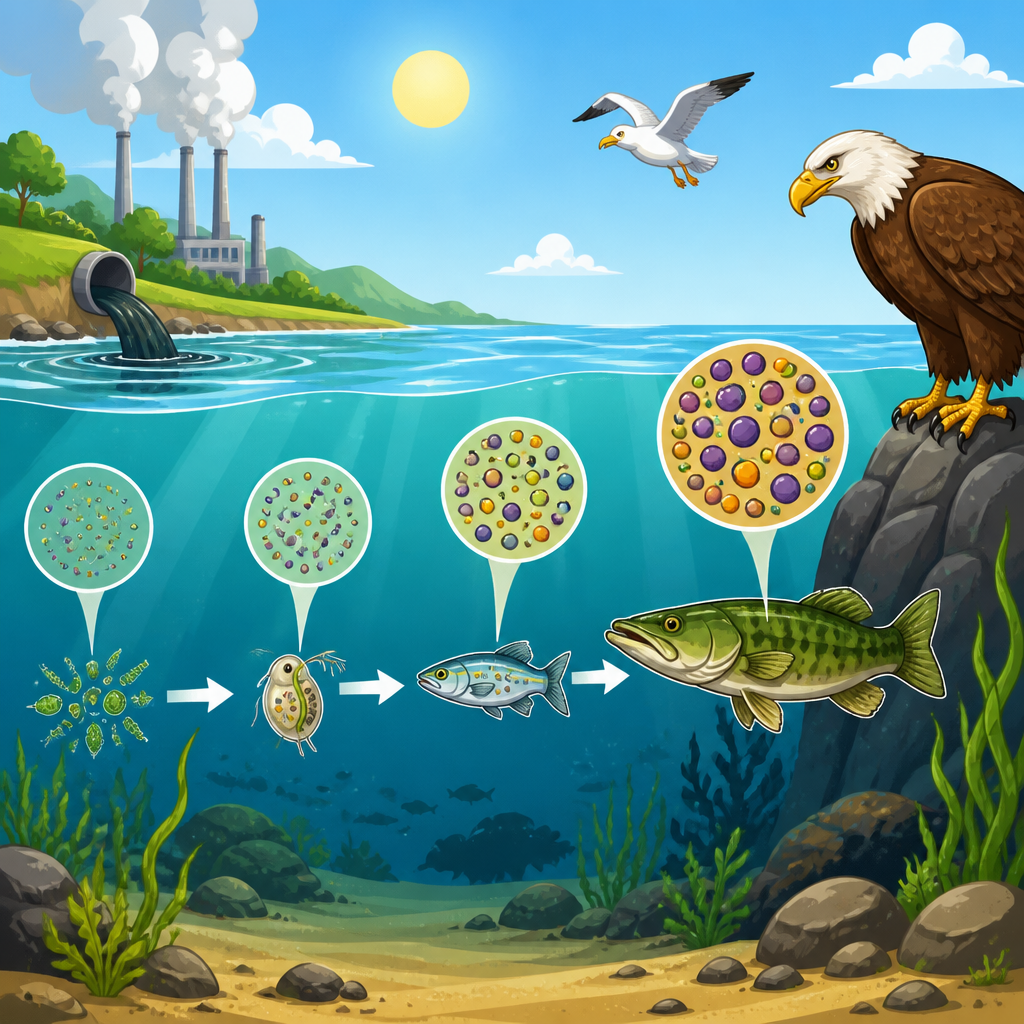
Human impacts often push systems beyond those ranges. On land, deforestation fragments habitat, reduces carbon storage, increases edge effects, and disrupts evapotranspiration. Intensive agriculture can degrade soil structure, reduce pollinator habitat, and increase erosion. In aquatic ecosystems, nutrient pollution from fertilizers and sewage can cause eutrophication, harmful algal blooms, and hypoxic dead zones, as seen in the Gulf of Mexico. Dams alter flow regimes, block migration routes, and change sediment transport. Overfishing simplifies marine food webs, while bottom trawling damages benthic habitats. Climate change intensifies both terrestrial heat stress and aquatic warming, deoxygenation, and acidification.
Restoration strategies differ accordingly. On land, successful projects may focus on native vegetation, invasive species control, prescribed fire, soil stabilization, or corridor design. In freshwater systems, restoration often targets riparian buffers, dam removal, flow management, wetland reconnection, and nutrient reduction. In marine settings, managers may establish no-take zones, restore oyster reefs, or reduce watershed pollution reaching estuaries and coasts. The most effective plans recognize that terrestrial and aquatic ecosystems are linked. Managing an upland watershed well usually improves downstream water quality, habitat integrity, and ecosystem resilience.
Why the land-water connection is central to environmental science
The most practical lesson in ecology and ecosystems is that terrestrial and aquatic systems cannot be managed in isolation. Watersheds connect forests, farms, suburbs, wetlands, rivers, lakes, and coasts through runoff and groundwater flow. Riparian vegetation shades streams, stabilizes banks, and supplies leaf litter that fuels aquatic food webs. Floodplains store water and sediment, reducing downstream flood risk while creating habitat. Estuaries depend on sediment and nutrient inputs from land, but too much input can destabilize them. Environmental science treats these linkages as core, not secondary.
For readers building knowledge in ecology and ecosystems, this hub should frame every related topic: biomes, food webs, population ecology, succession, biogeochemical cycles, invasive species, habitat fragmentation, restoration ecology, and climate adaptation. The difference between terrestrial and aquatic ecosystems is not merely location. It is a difference in physical medium, resource limitation, habitat design, species interaction, nutrient movement, and response to disturbance. Once those patterns are clear, many environmental problems become easier to interpret and solve.
The main benefit of understanding these differences is better judgment. You can assess why deserts respond differently to stress than coral reefs, why stream restoration fails without watershed protection, or why conserving biodiversity requires both upland habitat and clean water. Strong ecological literacy supports better policy, smarter land use, and more durable conservation outcomes. Use this article as your starting point, then continue into deeper topics across environmental science to build a connected, practical understanding of how ecosystems work.
Frequently Asked Questions
What is the main difference between terrestrial and aquatic ecosystems?
The main difference between terrestrial and aquatic ecosystems is the medium in which life exists and interacts. Terrestrial ecosystems occur on land, where organisms live in air, depend on soil, and cope with changes in temperature, moisture, and sunlight exposure. Aquatic ecosystems occur in water, where organisms are influenced by buoyancy, water pressure, salinity, dissolved oxygen, water movement, and light penetration. Because land and water create very different physical conditions, plants and animals in each ecosystem have evolved distinct structures, behaviors, and survival strategies.
In terrestrial ecosystems, soil quality, rainfall, and temperature largely shape the kinds of organisms that can survive. Forests, grasslands, deserts, and tundra are all terrestrial ecosystems, and each is defined by different climate and soil conditions. In aquatic ecosystems, factors such as freshwater versus saltwater, water depth, current, and nutrient availability play especially important roles. Oceans, rivers, lakes, wetlands, and estuaries are all aquatic ecosystems, but they can differ dramatically from one another depending on these variables.
At the broadest level, the difference comes down to environmental constraints. On land, organisms must avoid drying out, support their own weight, and handle rapid temperature shifts. In water, organisms must deal with oxygen that is less available than in air, changing depth conditions, and in some cases the stress of living in salty environments. These contrasting challenges explain why terrestrial and aquatic ecosystems function differently, even though both are made up of living communities interacting with nonliving factors.
What abiotic factors most strongly shape terrestrial and aquatic ecosystems?
Abiotic factors are the nonliving conditions that influence how ecosystems develop, and they differ significantly between land and water environments. In terrestrial ecosystems, some of the most important abiotic factors are temperature, precipitation, sunlight, wind, soil composition, and nutrient availability. Soil is especially important on land because it anchors plants, stores water, and provides minerals needed for growth. The amount of rainfall in an area can determine whether it becomes a desert, grassland, or forest, while seasonal temperature patterns affect plant productivity and animal behavior.
In aquatic ecosystems, abiotic factors include salinity, dissolved oxygen, water temperature, depth, pressure, light penetration, pH, currents, and nutrient concentrations. Salinity is one of the clearest distinctions within aquatic systems, separating freshwater ecosystems such as lakes and rivers from marine ecosystems such as seas and oceans. Light penetration is also critical because sunlight decreases with depth, limiting where photosynthetic organisms can live. Dissolved oxygen affects which species can survive in a body of water, and water movement can shape feeding, reproduction, and habitat stability.
One useful way to understand the difference is to think about what organisms must respond to every day. Land-based life is heavily shaped by air temperature, dryness, and soil conditions. Water-based life is shaped more by chemical conditions in the water and by physical factors like depth and flow. In both cases, abiotic factors determine not only which species are present, but also how energy moves through the ecosystem and how stable the ecosystem remains over time.
How do plants and animals adapt differently in terrestrial and aquatic ecosystems?
Plants and animals in terrestrial and aquatic ecosystems show very different adaptations because the challenges of living on land are not the same as the challenges of living in water. In terrestrial ecosystems, plants need structures that help them stay upright, absorb water from the ground, and prevent moisture loss. That is why many land plants have strong stems, deep or widespread root systems, and waxy leaf surfaces. Animals on land often have lungs for breathing air, limbs for movement, and skin, fur, scales, or behavioral strategies that help regulate body temperature and reduce dehydration.
In aquatic ecosystems, many plants and animals rely on the support of water itself. Aquatic plants may have flexible stems, floating leaves, and reduced root structures compared with land plants because buoyancy helps hold them up. Some absorb nutrients directly from the surrounding water. Aquatic animals often have gills or specialized breathing adaptations, streamlined bodies for moving through water, and fins or flippers instead of weight-bearing limbs. Marine organisms may also need mechanisms to manage salt balance, while freshwater species face different osmoregulatory challenges.
These adaptations reflect the physical demands of each habitat. A land animal must be able to move without the support of water and avoid drying out, while an aquatic animal must be able to obtain oxygen from water and navigate currents or changing depths. Likewise, a terrestrial plant must resist gravity and conserve water, whereas an aquatic plant must tolerate submersion and limited light in deeper areas. Adaptation is one of the clearest ways to see how the distinction between terrestrial and aquatic ecosystems shapes life at every level.
Why is biodiversity different between terrestrial and aquatic ecosystems?
Biodiversity differs between terrestrial and aquatic ecosystems because environmental conditions, habitat structure, and resource distribution vary widely between land and water. Terrestrial ecosystems often contain highly visible habitat layers, especially in places like forests where there are canopies, understories, forest floors, and soil communities. These multiple layers create many niches for species to occupy. Climate differences across land areas also produce a broad range of terrestrial habitats, from tropical rainforests with very high biodiversity to deserts and tundra with more specialized but less dense life.
Aquatic ecosystems also support tremendous biodiversity, but it is distributed differently. Coastal zones, coral reefs, wetlands, estuaries, and shallow freshwater habitats are often especially rich in species because they combine sunlight, nutrients, and habitat complexity. By contrast, very deep ocean zones can have lower visible diversity because light is absent and food resources are limited. In lakes and rivers, biodiversity may depend on oxygen levels, water quality, current speed, and seasonal nutrient cycles. So while both terrestrial and aquatic ecosystems can be highly diverse, the locations and drivers of that diversity are not always the same.
Another important point is that biodiversity is influenced by how stable or stressful an environment is. Ecosystems with moderate conditions, abundant energy, and many available niches tend to support more species. Harsh or highly variable environments often favor fewer, more specialized organisms. That is true on land and in water alike. The difference lies in which environmental pressures dominate. On land, climate and vegetation structure are major influences. In water, depth, salinity, oxygen, and light often play stronger roles in determining how biodiversity is organized.
Why is it important to protect both terrestrial and aquatic ecosystems?
Protecting both terrestrial and aquatic ecosystems is essential because both are fundamental to life on Earth and are deeply connected to one another. Terrestrial ecosystems help regulate climate, store carbon, protect soil, support pollinators, and provide habitat for countless species. Aquatic ecosystems supply freshwater, produce oxygen through photosynthetic organisms, support fisheries, cycle nutrients, and moderate weather and climate patterns. When either type of ecosystem is damaged, the effects often extend far beyond one location or one group of organisms.
The connection between the two is especially important. What happens on land often affects water systems directly. Deforestation, soil erosion, agricultural runoff, and urban pollution can carry sediments, chemicals, and excess nutrients into rivers, lakes, wetlands, and oceans. In turn, damage to aquatic ecosystems can affect terrestrial life by reducing water quality, weakening fisheries, increasing flood risks, and disrupting food chains. Healthy land and healthy water systems support each other, which is why conservation efforts cannot treat them as isolated categories.
There is also a practical human reason for protecting both. People depend on terrestrial and aquatic ecosystems for food, clean water, raw materials, medicine, recreation, and economic stability. Biodiversity in both systems contributes to resilience, meaning ecosystems are better able to recover from disturbances such as droughts, storms, pollution, or climate change. Conserving forests, grasslands, wetlands, rivers, lakes, and oceans is not just about protecting wildlife. It is about maintaining the natural systems that make human life possible and sustainable over the long term.