
Salinization is the buildup of water-soluble salts in soil, groundwater, or surface water to levels that reduce plant growth, degrade soil structure, and disrupt ecosystems. In soil science, the salts involved are usually chlorides, sulfates, bicarbonates, and carbonates of sodium, calcium, and magnesium, with sodium causing the most severe structural damage when it dominates the exchange complex. I have seen fields that looked healthy from a distance but produced stunted crops because a thin white crust on the surface signaled a deeper chemistry problem. Understanding salinization matters because it threatens food production, water quality, infrastructure, and the long-term resilience of dryland and irrigated landscapes.
In practical terms, salinization happens when more salt enters the soil than leaves it. That imbalance can be driven by irrigation water, shallow saline groundwater, seawater intrusion, poor drainage, weathering of parent material, road deicing salts, or vegetation clearing that raises water tables. Once salts accumulate in the root zone, plants struggle to take up water because the soil solution has a lower osmotic potential. Even when soil looks moist, crops can behave as if they are in drought. In severe cases, sodium also disperses clay particles, collapses aggregates, seals the surface, and slows infiltration, creating waterlogging after rain and hard crusts during dry periods.
For a hub article on soil and water science, salinization connects several essential topics: the water cycle, irrigation management, groundwater flow, soil texture, cation exchange, drainage engineering, wetland ecology, and land restoration. It is not just an agricultural issue. Salts mobilized through catchments can affect rivers, reservoirs, urban green spaces, and drinking water supplies. The Food and Agriculture Organization has repeatedly identified salinity and sodicity as major constraints on irrigated land worldwide, and the United States Department of Agriculture classifies salt-affected soils using electrical conductivity, pH, and sodium indicators because management depends on the exact type of problem.
Three terms are especially important. Saline soil contains enough soluble salts to harm sensitive plants, usually measured by electrical conductivity of the saturation extract. Sodic soil contains excessive exchangeable sodium relative to other cations, which damages physical structure even when total soluble salt is modest. Saline-sodic soil has both conditions at once. These distinctions matter because the remedy for one can worsen another. If a sodic soil is simply leached without a calcium amendment such as gypsum, structure often declines further. Good soil and water science starts by diagnosing the chemistry, the hydrology, and the source of salts before choosing any treatment.
How salinization develops in soil and water systems
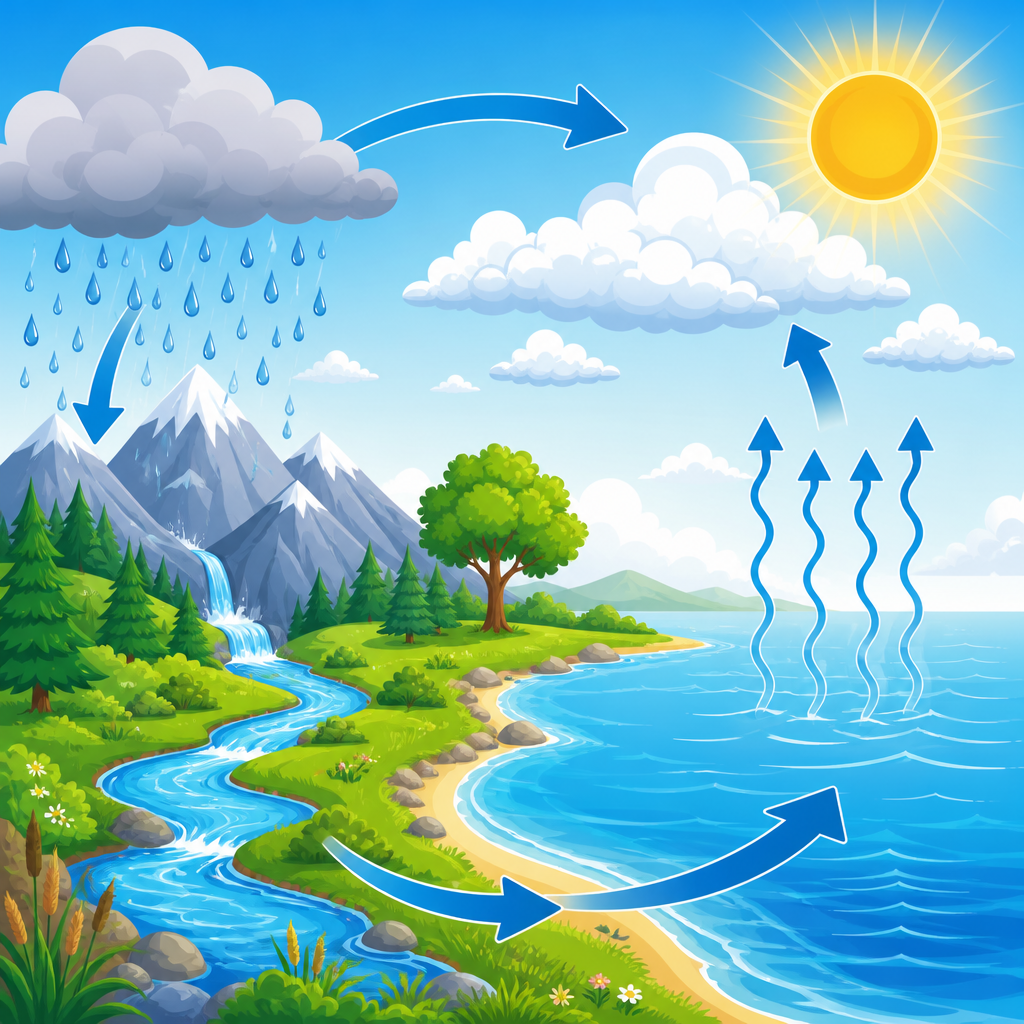
Salinization develops through linked physical and chemical processes. Water moving through landscapes always carries dissolved ions. In humid climates, abundant rainfall usually flushes many of those ions below the root zone and onward to streams or aquifers. In arid and semi-arid climates, evaporation and plant transpiration remove water but leave most salts behind. Over time, repeated cycles of irrigation, capillary rise from shallow groundwater, or evaporation from poorly drained surfaces concentrate salts near the soil surface. This is why salt problems are common in inland basins, irrigated valleys, and low-lying areas with restricted drainage.
The hydrologic setting usually determines the pace of damage. A field with a deep water table, good internal drainage, and low-salinity irrigation water may remain productive for decades. The same field can deteriorate quickly if canal seepage raises groundwater to within one to two meters of the surface. At that depth, capillary rise can feed a continuous upward flow, bringing dissolved salts into the root zone. I have watched this happen around aging irrigation districts where unlined canals and overirrigation slowly changed a groundwater asset into a salinity source. The result is often patchy yield loss at first, then expanding bare areas as salts accumulate.
Natural salinization also occurs without direct human input. Marine sediments, evaporite minerals, and ancient inland seas leave salt-rich parent materials that weather over time. In coastal zones, storm surges and tidal flooding can push saline water into soils and shallow aquifers. In dryland catchments, clearing deep-rooted native vegetation can increase groundwater recharge, raise saline water tables, and export salt to streams. Southwestern Australia is a classic example: broadscale land clearing transformed the water balance enough to mobilize large stores of naturally occurring salt, affecting farms, roads, and biodiversity. That lesson applies widely: land use change can activate salt that was previously stable in the subsurface.
Types of salt-affected soils and how scientists measure them
Scientists separate salt-affected soils into categories because each behaves differently. Saline soils typically have an electrical conductivity of the saturation extract above 4 deciSiemens per meter, a pH usually below 8.5, and enough neutral salts to reduce crop performance. Sodic soils are identified by high exchangeable sodium percentage or sodium adsorption ratio, often with pH above 8.5 because sodium carbonate and bicarbonate influence alkalinity. Saline-sodic soils combine high soluble salts with high sodium on exchange sites. These thresholds are diagnostic conventions, not magic numbers, but they provide a reliable starting point for management.
Field and laboratory testing are essential. Electrical conductivity meters estimate how strongly a soil-water extract conducts electricity, which correlates with dissolved salt concentration. The sodium adsorption ratio compares sodium to calcium and magnesium in irrigation water or soil solution, helping predict whether sodium will displace calcium on clay surfaces. Exchangeable sodium percentage measures how much of the cation exchange capacity is occupied by sodium. Soil texture, mineralogy, and depth to groundwater are also critical because a clay-rich profile with smectite behaves very differently from a sandy profile with low cation exchange capacity.
| Soil condition | Key indicators | Main problem | Typical management focus |
|---|---|---|---|
| Saline | High electrical conductivity, lower sodium hazard | Osmotic stress reduces plant water uptake | Leaching salts with good-quality water and drainage |
| Sodic | High exchangeable sodium percentage or sodium adsorption ratio, often high pH | Clay dispersion, crusting, low infiltration, poor aeration | Calcium amendment such as gypsum, then leaching |
| Saline-sodic | High salinity and high sodium | Combined osmotic stress and structural decline | Careful amendment, drainage, staged reclamation |
Water analysis matters as much as soil analysis. Irrigation water with moderate salinity may still be usable on well-drained soils with salt-tolerant crops, while low-salinity water with a high sodium adsorption ratio can create sodicity over time. That apparent contradiction surprises many growers. The explanation is that electrolyte concentration and sodium hazard interact: some dissolved salts help maintain clay flocculation, but excess sodium destabilizes it. Standard references from the USDA Salinity Laboratory and FAO irrigation guidelines remain the best practical frameworks for interpreting these tradeoffs in real fields.
How salinization harms soil, crops, and ecosystems
The first and most immediate impact of salinization is reduced plant access to water. As salts accumulate in the soil solution, the osmotic potential becomes more negative, so roots must exert more energy to absorb water. Sensitive crops such as beans, carrots, onions, and many fruit trees show yield losses at relatively low salinity levels, while barley, cotton, and date palm tolerate higher levels. Symptoms often resemble drought or nutrient deficiency: leaf burn, poor germination, stunting, and uneven stands. Farmers sometimes respond by adding more water, which can help temporarily but may worsen the long-term salt balance if drainage is inadequate.
Sodicity adds a second layer of damage by changing the soil’s physical behavior. Sodium ions have a large hydrated radius and weaken the attraction between clay particles, promoting dispersion instead of stable aggregation. Dispersed clay plugs soil pores, causing crusting at the surface, low infiltration, poor seedling emergence, and reduced oxygen supply to roots. When this process is advanced, rainwater ponds instead of soaking in, tractor traffic causes severe compaction, and the soil dries into hard, dense clods. Rebuilding structure then requires both chemical correction and careful physical management over multiple seasons.
Salinization also alters nutrient availability and biological activity. High sodium and chloride can become directly toxic. Elevated bicarbonate can induce micronutrient deficiencies, especially zinc and iron, in alkaline sodic soils. Nitrogen cycling slows when microbial communities are stressed, and beneficial symbioses such as rhizobia in legumes can perform poorly. Earthworm activity often declines in strongly salt-affected zones. In wetlands and streams, rising salinity shifts species composition, favors tolerant organisms, and can reduce freshwater biodiversity. Even infrastructure is affected: saline groundwater accelerates corrosion of concrete and metal, while salt crusts damage paved surfaces and foundations.
At landscape scale, the economic costs are significant. Yield losses on irrigated land can reduce farm profitability long before a field becomes visibly barren. Reclamation requires drainage works, amendments, water testing, and years of follow-up monitoring. In river basins, salts exported from fields can accumulate downstream, increasing treatment costs for municipalities and industry. The Murray-Darling Basin in Australia and parts of the Indus Basin in South Asia both demonstrate how salinity can become a regional water governance issue, not merely a field management problem. Once salinization spreads across a catchment, prevention is far cheaper than recovery.
Where salinization is most common and what causes it
Salinization is most common in arid and semi-arid regions because evaporation is high and natural leaching is limited, but geography alone does not guarantee a problem. The highest risk occurs where climate, hydrology, and management combine unfavorably. Irrigated agriculture is a prime setting because every irrigation event applies some dissolved salt, even when water quality is considered good. If drainage is poor, those salts remain behind. The Indus Basin in Pakistan, California’s San Joaquin Valley, the Nile Delta, Central Asia, and inland northern China are well-known examples where irrigation, shallow groundwater, and water allocation pressures interact.
Coastal areas face a different pathway: seawater intrusion. Overpumping freshwater aquifers lowers hydraulic pressure and allows saline water to move inland. Storm surge from hurricanes or cyclones can also flood fields with seawater, depositing salt that persists long after surface water recedes. Following major storm events, producers often need repeated flushing rains or managed leaching to restore soils. Rice systems can sometimes recover faster than orchard systems because annual crops allow flexible management, whereas perennial crops suffer root damage that can last for years. The source of salinity therefore shapes both the severity and the recovery timeline.
Human infrastructure contributes as well. Reservoir evaporation concentrates salts, road deicing introduces sodium chloride into roadside soils and urban streams, and poorly designed irrigation canals leak water that elevates groundwater. Mining and oilfield brines can create localized but severe contamination if containment fails. In rainfed dryland regions, large-scale vegetation clearing can alter recharge patterns enough to raise ancient saline groundwater, a process documented in Australia and parts of North America. These examples show that salinization is not caused by one practice. It emerges when salt sources, water movement, and inadequate export pathways align.
Prevention, reclamation, and long-term management
The most effective salinity strategy is prevention through water balance control. In irrigated systems, that means matching application to crop demand, improving uniformity, and ensuring there is a route for salts to leave the root zone. Tools such as drip irrigation, soil moisture sensors, electromagnetic induction mapping, and drainage monitoring make this more precise than it was a generation ago. Good-quality water helps, but quality must be interpreted alongside drainage, soil texture, and crop tolerance. A farm using slightly saline water can remain productive if leaching fractions are planned and the water table stays deep enough to prevent capillary rise.
Reclaiming saline soil usually starts with leaching soluble salts below the rooting depth using relatively low-salinity water, provided internal drainage is adequate. Reclaiming sodic soil is more complex because the structure must be stabilized first. Gypsum is widely used because it supplies soluble calcium, which replaces sodium on exchange sites; the displaced sodium can then be leached out. In some calcareous soils, sulfuric acid or elemental sulfur may be used to dissolve native calcium carbonate and release calcium, but these treatments require technical oversight. Simply applying amendment without water movement accomplishes little.
Biological and agronomic measures support chemical correction. Salt-tolerant crops such as barley, cotton, sugar beet, bermudagrass, and certain forage shrubs can maintain production while reclamation proceeds. Deep ripping may help if dense layers restrict drainage, but only after the sodium problem is being corrected; otherwise the benefit is short-lived. Organic amendments can improve aggregation and infiltration in some soils, though they do not replace calcium chemistry. In severely affected landscapes, engineered drains, interceptor pumps, or land retirement may be the only realistic options. Effective management is always site-specific and depends on diagnosis, not guesswork.
Why salinization belongs at the center of soil and water science
Salinization belongs at the center of soil and water science because it links chemistry, physics, hydrology, ecology, and land management in one visible problem. When salts build up, the issue is never only about ions in a lab report. It is about how water moves through a profile, how roots interact with the soil solution, how clays respond to sodium, how infrastructure changes groundwater, and how decisions upstream affect users downstream. That is why this topic serves as a strong hub for the wider field. Anyone studying irrigation, wetlands, watershed management, soil fertility, groundwater protection, or climate resilience eventually encounters salinity.
The key takeaway is straightforward. Salinization harms soil by making water harder for plants to absorb, by degrading structure when sodium dominates, and by triggering long-term ecological and economic damage if left unmanaged. The most successful responses combine early detection, correct classification of saline versus sodic conditions, better drainage, careful irrigation, and amendments based on tested chemistry. If you are building out your understanding of environmental science, use salinization as an entry point into the broader relationships between soil and water, then explore the connected topics of irrigation quality, groundwater management, drainage design, and soil restoration.
Frequently Asked Questions
What is salinization in soil, and why is it such a serious problem for agriculture?
Salinization is the accumulation of water-soluble salts in soil to concentrations high enough to interfere with normal plant growth and soil function. In agricultural settings, these salts commonly include chlorides, sulfates, bicarbonates, and carbonates of sodium, calcium, and magnesium. A small amount of dissolved salt is natural in many soils and irrigation waters, but the problem begins when salts build up faster than they can be leached below the root zone or carried away through drainage. Once that happens, crops face increasing difficulty taking up water, even when the soil may appear moist.
This is serious because salinization reduces productivity in ways that are not always immediately obvious. A field can look acceptable from a distance, yet plants may be under constant stress, showing stunted growth, patchy emergence, leaf burn, or poor yields. Salts in the root zone increase osmotic stress, meaning plants must use more energy to absorb water. In severe cases, specific ions such as sodium or chloride can also become toxic. Beyond crop stress, salinization can damage the physical structure of soil, especially when sodium dominates, making the land harder to manage, less permeable to water, and more prone to long-term degradation.
How does salinization actually harm soil structure and plant growth?
Salinization harms plants first by changing how water behaves in the soil. When salt concentrations rise, the soil solution has a lower water potential, which means roots cannot draw in water as easily. The result is similar to drought stress, even when the soil contains moisture. Plants may wilt, grow slowly, produce fewer tillers, flowers, or fruits, and show reduced root development. Germinating seeds are especially vulnerable because young seedlings are less able to tolerate osmotic stress and ion imbalance.
Soil structure is affected most severely when sodium becomes dominant on the soil’s exchange complex, a condition often associated with sodicity. Sodium causes clay particles to disperse rather than bind into stable aggregates. As those aggregates break down, pore spaces collapse, infiltration slows, surface crusting increases, and drainage worsens. Water may pond on the surface, yet the root zone can remain poorly aerated and difficult for roots to penetrate. Over time, this combination of poor structure, weak root growth, and restricted water movement creates a cycle of declining soil health that can be very difficult to reverse without targeted management.
What causes salinization to develop in the first place?
Salinization usually develops when salts are introduced or concentrated faster than they are removed. One of the most common causes is irrigation in dry or semi-arid regions. Irrigation water almost always contains some dissolved salts, and when that water evaporates or is taken up by crops, the salts are left behind in the soil. If there is not enough high-quality water or effective drainage to flush those salts downward and away from the root zone, they accumulate over time. This process is especially common in areas with high evaporation, low rainfall, and shallow groundwater.
Other important causes include poor drainage, rising water tables, seawater intrusion in coastal regions, and land clearing that changes how groundwater moves through the landscape. In some cases, naturally saline parent materials or underlying geologic deposits contribute salts to the soil. Fertilizers, manures, and industrial inputs can also add salts, though they are often secondary compared with irrigation and groundwater influences. In practical terms, salinization is rarely caused by one factor alone. It usually results from a combination of climate, water quality, soil type, landscape position, and management decisions that allow salts to concentrate in the root zone.
What are the signs that a soil may be saline or sodic, even before testing confirms it?
There are several field clues that can suggest salinity or sodicity, although laboratory testing is still the best way to confirm the problem. In saline soils, growers often notice uneven crop growth, poor germination, leaf tip burn, reduced vigor, and lower yields. Salt-sensitive crops may fail first, while more tolerant species survive but still underperform. White or pale crusts on the soil surface can indicate salt accumulation, especially after irrigation or drying cycles. Sometimes the field looks healthy overall, but closer inspection reveals stunted plants in patches where salts have concentrated near the surface.
Sodic soils often show additional physical warning signs. Water may infiltrate very slowly, puddles may persist after rainfall or irrigation, and the surface may form a hard crust that makes seedling emergence difficult. When dry, the soil can become dense and cloddy; when wet, it may turn slick and sticky. These symptoms reflect poor aggregate stability and clay dispersion caused by excess sodium. Because visual symptoms can overlap with compaction, nutrient deficiencies, or drought, soil and water testing are essential. Measurements such as electrical conductivity, pH, sodium adsorption ratio, and exchangeable sodium percentage help distinguish salinity from sodicity and guide the right treatment approach.
Can salinized soil be reclaimed, and what management practices help prevent the problem?
Yes, many salinized soils can be improved, but the strategy depends on whether the issue is mainly salinity, sodicity, or both. For saline soils, the core goal is to move excess salts below the root zone using good-quality water and adequate drainage. This often requires leaching, which means applying enough water to dissolve salts and carry them downward. However, leaching only works if water can actually move through the soil and exit the profile. Without drainage, salts may simply shift temporarily and then return as the soil dries or groundwater rises again.
For sodic soils, improving structure is just as important as removing salts. Calcium-based amendments such as gypsum are commonly used because calcium can replace sodium on exchange sites, helping clay particles flocculate and restoring better aggregation and permeability. Once structure improves, leaching becomes more effective. Long-term prevention includes monitoring irrigation water quality, maintaining drainage systems, avoiding over-irrigation, managing shallow water tables, using salt-tolerant crops where appropriate, and testing soils regularly. In many cases, the most successful approach is not a single treatment but a system of water, soil, and crop management practices designed to keep salts from accumulating in the first place.