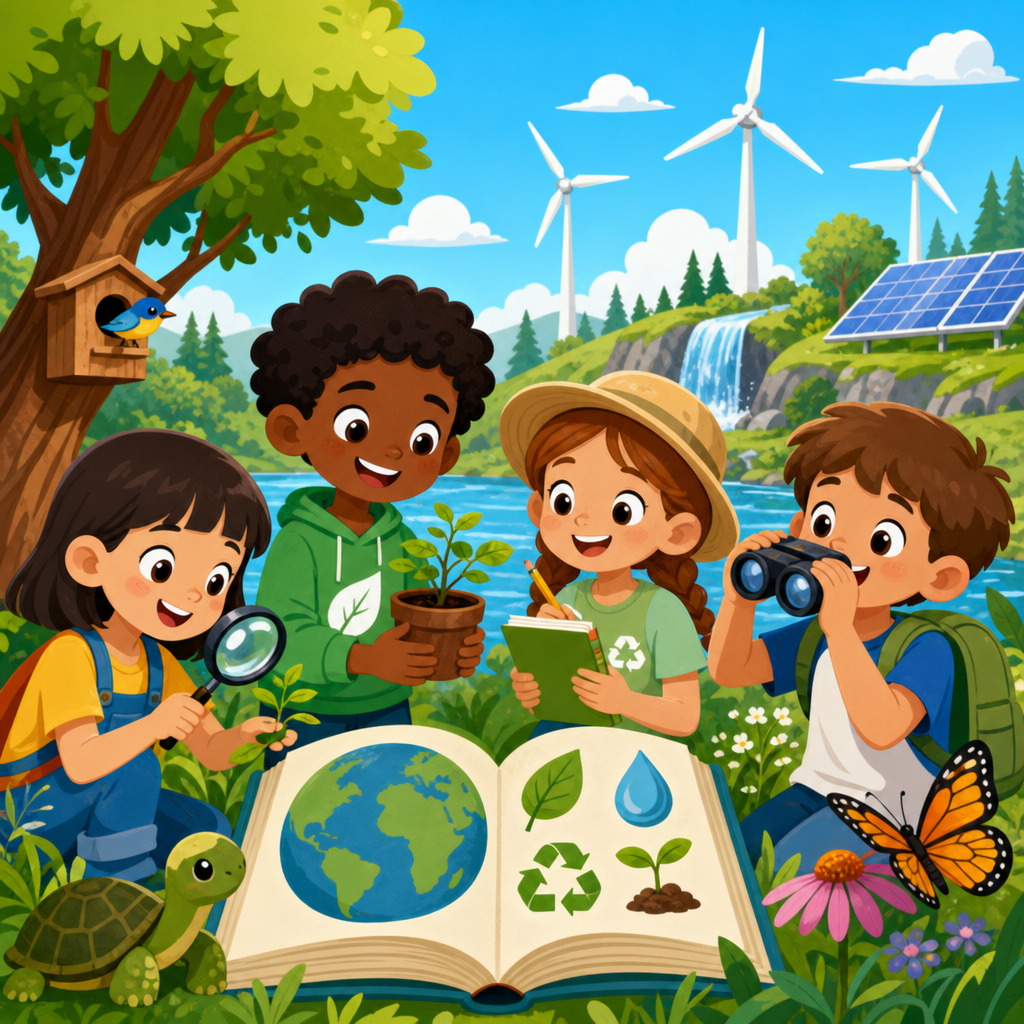
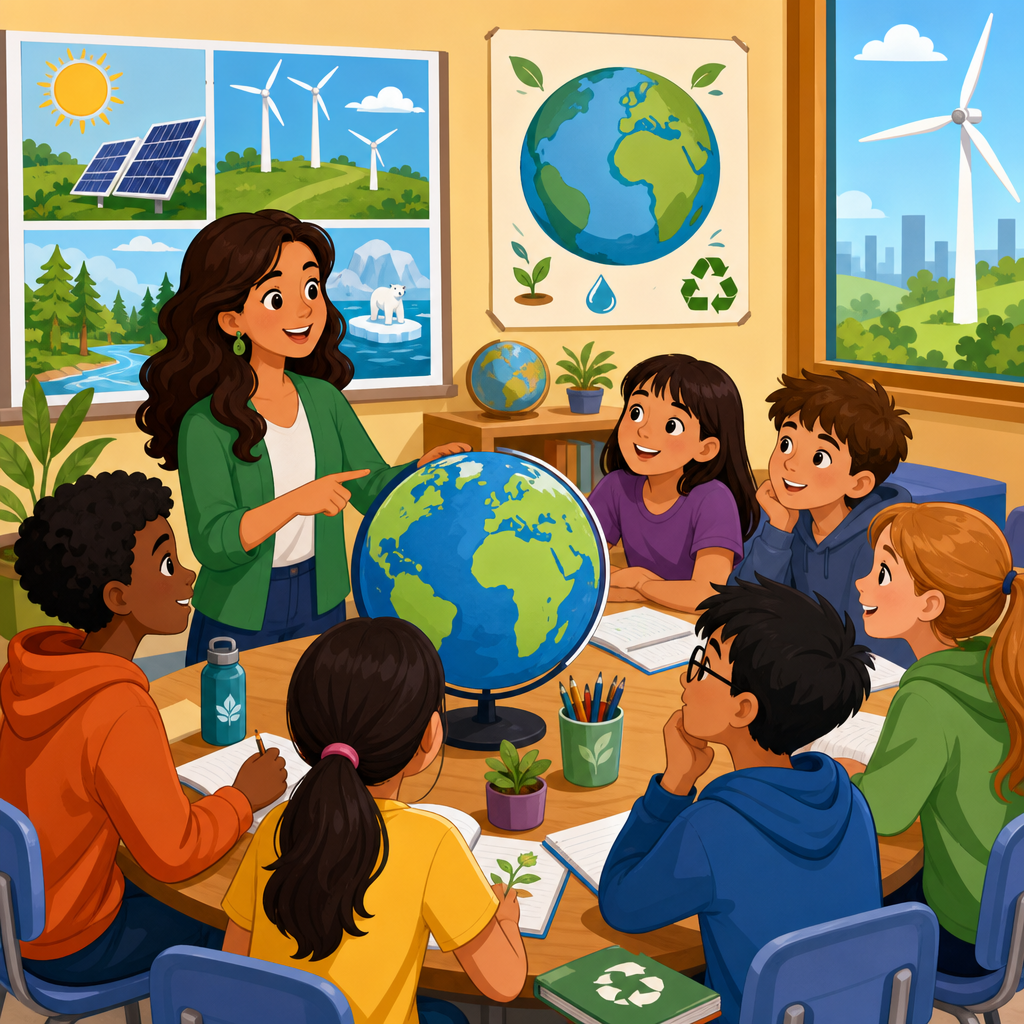
Environmental science is the study of how the natural world works and how people affect it, and for kids, that means learning why clean air, safe water, healthy soil, plants, animals, weather, and energy all connect. In classrooms and museum programs, I have found that children understand this subject best when it is explained as a giant team project: Earth has many parts, and each part depends on the others. If one part changes, nearby parts often change too. That is the central idea behind environmental science for kids. It combines biology, chemistry, geology, physics, and geography to answer practical questions such as why rivers get polluted, how forests help the climate, where trash goes after pickup, and what communities can do to protect nature while still meeting human needs.
The word environment means everything around us in nature and in the places people live, learn, and work. Science means carefully observing, asking questions, testing ideas, measuring results, and using evidence to reach conclusions. Put together, environmental science is the evidence-based study of living things, nonliving things, and human systems interacting every day. It matters because every child depends on environmental systems from morning to night. Breakfast comes from farms, orchards, oceans, or food factories that use water and energy. Drinking water travels through treatment plants and pipes. Electricity may come from coal, natural gas, hydropower, nuclear plants, wind turbines, or solar panels. Even a school playground depends on weather patterns, soil health, and local biodiversity.
Understanding these connections helps children make sense of headlines about climate change, drought, plastic pollution, recycling, endangered species, wildfires, and extreme storms. It also builds useful habits. Kids who learn environmental science often become better observers. They notice birds returning in spring, puddles disappearing after sunshine, leaves decomposing into soil, and insects visiting flowers. Those observations support larger ideas such as ecosystems, life cycles, food webs, conservation, and sustainability. Sustainability means using resources in ways that meet today’s needs without harming the ability of future generations to meet theirs. That concept may sound big, but children can see it clearly through simple examples: turning off unused lights saves energy, using a refillable bottle reduces waste, and planting native flowers can support pollinators like bees and butterflies.
This hub article explains the foundations of environmental science for kids in plain language. It covers ecosystems, natural resources, pollution, climate, biodiversity, scientific tools, and everyday actions children can take. Think of it as a starting map for the whole topic. Once kids understand the basic pieces and how they fit together, deeper lessons become much easier. Environmental science is not only about problems. It is also about solutions, curiosity, teamwork, and learning how people can care for the planet in smart, measurable ways.
The Big Idea: Everything in Nature Is Connected
The most important environmental science idea for children is interdependence, which means living and nonliving things affect one another. A forest is not just trees. It includes sunlight, rainfall, soil minerals, fungi, insects, birds, mammals, streams, rocks, temperature, and people using trails or nearby roads. Change one part, and other parts may respond. If a stream becomes polluted, fish can decline. If fish decline, birds that eat fish may struggle. If trees are cut down near the stream, the water can warm up because there is less shade, and warmer water holds less oxygen. In real field lessons, this is often the moment when children realize nature is a network, not a collection of separate objects.
Scientists often describe these networks as systems. A system has parts that work together, and Earth contains many systems, including the atmosphere, hydrosphere, geosphere, and biosphere. The atmosphere is the layer of gases around Earth. The hydrosphere includes all water, from oceans to clouds. The geosphere is rock, soil, and landforms. The biosphere includes all living things. Environmental science studies what happens where those spheres meet. For example, plant roots in soil show a connection between the biosphere and geosphere, while evaporation from oceans into clouds connects the hydrosphere and atmosphere. Children do not need advanced formulas to grasp this. They need examples they can see, draw, and discuss.
A simple neighborhood pond shows the concept clearly. Sunlight warms the water. Algae and aquatic plants use that light to grow. Tiny animals eat the plants. Fish eat the tiny animals. Frogs, turtles, herons, and dragonflies all use the pond differently. Fallen leaves add nutrients. Rain can wash soil or fertilizer into the water from nearby land. If too much fertilizer enters, algae may grow too fast, reducing oxygen and stressing fish. That chain of events teaches cause and effect, one of the strongest habits in science learning.
Ecosystems, Habitats, and Food Webs
An ecosystem is a community of living things interacting with each other and with nonliving parts of their environment. A habitat is the specific place where an organism lives, such as a meadow, coral reef, desert burrow, or city park tree. In lessons for elementary students, I often compare a habitat to an animal’s home and an ecosystem to the whole neighborhood. That distinction helps kids understand scale. A squirrel’s habitat may be one oak tree, but the ecosystem includes the entire park with its soil, insects, streams, weather, and human visitors.
Food webs are another essential concept in environmental science for kids. Plants are producers because they make food through photosynthesis using sunlight, carbon dioxide, and water. Animals that eat plants are consumers. Carnivores eat other animals, omnivores eat both plants and animals, and decomposers such as fungi, worms, and bacteria break down dead material and recycle nutrients back into the soil. Decomposers are often overlooked by children at first, yet they are among the most important organisms in any ecosystem. Without them, fallen leaves, dead plants, and animal remains would pile up, and nutrients would stay locked away instead of returning to the food web.
Food chains show one path of energy transfer, but food webs are more realistic because most organisms eat or are eaten by more than one thing. An owl may eat mice, insects, or small birds. A mouse may eat seeds, berries, and insects. This complexity matters because it gives ecosystems some resilience. If one food source drops, a species may shift to another. Still, resilience has limits. If enough habitats are destroyed or polluted, the web can weaken. Children can observe food web ideas directly by watching a garden. Flowers attract bees. Bees help pollinate plants. Seeds feed birds. Earthworms improve soil. Spiders catch insects. A small space can reveal a big scientific pattern.
Natural Resources: What People Use From Earth
Natural resources are materials and energy sources people get from nature. They include water, air, soil, sunlight, trees, minerals, fossil fuels, and wildlife. Some are renewable, which means they can be replaced naturally on a human timescale if managed carefully. Sunlight, wind, and flowing water are common examples. Others are nonrenewable, such as coal, oil, natural gas, and many metal ores, because they take millions of years to form. Kids often understand this quickly when it is framed as the difference between something that grows back soon and something that does not.
Resources are useful, but they must be managed wisely. Freshwater is a good example. Earth has a lot of water, yet most of it is salty ocean water. Only a small share is freshwater, and much of that is locked in glaciers or underground. Communities rely on rivers, lakes, reservoirs, and aquifers for drinking, farming, sanitation, and industry. When children learn where local water comes from and how it is treated, environmental science becomes concrete. The same is true for energy. Flipping on a light seems simple, but behind that switch is a power grid, fuel source, transmission system, and environmental tradeoff.
| Resource | Type | Common Use | Main Environmental Concern |
|---|---|---|---|
| Fresh water | Renewable if protected | Drinking, farming, cleaning | Pollution, overuse, drought |
| Forests | Renewable if regrown | Wood, habitat, carbon storage | Deforestation, habitat loss |
| Soil | Slowly renewable | Growing food | Erosion, nutrient loss |
| Coal and oil | Nonrenewable | Electricity, fuel, products | Air pollution, greenhouse gases |
| Sunlight | Renewable | Solar power, plant growth | Needs equipment and storage systems |
Teaching resources also introduces the idea of tradeoffs. Wood from forests can build homes, but careless logging can damage habitats and increase erosion. Plastic is lightweight and useful in medicine and food safety, but single-use plastic can become long-lasting waste. Solar panels produce electricity without smokestack emissions, yet they require materials, land, manufacturing, and recycling plans. Good environmental science does not pretend every choice is simple. It teaches children to ask what benefits a resource provides, what costs come with it, and how smarter design can reduce harm.
Pollution and Waste: When Harmful Materials Enter the Environment
Pollution happens when harmful substances or forms of energy enter the environment at levels that damage living things, ecosystems, or human health. The main types children encounter are air pollution, water pollution, soil contamination, noise pollution, light pollution, and solid waste. Air pollution can include ozone near the ground, particulate matter, nitrogen oxides, sulfur dioxide, and smoke. Water pollution may come from sewage, fertilizers, pesticides, oil spills, industrial chemicals, or litter. Soil contamination can result from heavy metals, leaking fuel, or improper waste disposal. Each type has different causes and effects, but they all show how human actions can travel beyond the original source.
A useful example is stormwater runoff. When rain falls on forests or meadows, much of it soaks into the ground. In paved neighborhoods, however, rain often flows over roads, parking lots, and rooftops into drains and streams. Along the way, it can pick up motor oil, pet waste, trash, road salt, and fertilizers. Children are often surprised to learn that a storm drain usually does not lead to a magical cleaning machine. In many places, it drains directly to a local waterway. That single fact changes how kids think about litter and yard chemicals.
Waste is closely tied to pollution. Landfills are engineered facilities designed to contain garbage, but reducing waste in the first place is usually better than sending more material to a dump. The familiar ideas reduce, reuse, recycle, and compost remain useful because they rank actions by impact. Reducing means using less to begin with, which prevents waste upstream. Reusing extends a product’s life. Recycling turns certain materials into new products, though it depends on local systems and clean sorting. Composting turns food scraps and yard waste into nutrient-rich material instead of methane-producing trash. Kids can participate in all four steps at home or school.
Climate, Weather, and Why They Matter
Weather is the short-term condition of the atmosphere, including temperature, rain, wind, clouds, and storms on a given day or week. Climate is the long-term pattern of weather in a place over many years. Children often mix up these terms, so the clearest explanation is that weather tells you what to wear today, while climate tells you what kinds of clothes are usually kept in the closet where you live. Environmental science studies both because they shape habitats, water supplies, farming, health, and natural hazards.
Climate change refers to long-term shifts in temperature and weather patterns. Earth’s climate has changed naturally in the past, but current warming is primarily driven by human activities, especially burning fossil fuels and clearing forests, which increase greenhouse gases such as carbon dioxide and methane. These gases trap heat in the atmosphere. The greenhouse effect itself is natural and necessary; without it, Earth would be too cold for most life. The problem is that adding extra greenhouse gases strengthens that effect. This is a nuanced point, and it matters because children deserve accurate explanations rather than scary oversimplifications.
Kids can see climate impacts through examples: longer heat waves, heavier rainfall in some places, stronger wildfire conditions, melting glaciers, shifting animal ranges, coral bleaching, and sea level rise. Still, local effects vary. Some regions face worsening drought, others more flooding, and many experience both at different times. That is why scientists use long-term data from weather stations, satellites, ocean buoys, ice cores, and computer models. Agencies such as NASA, NOAA, and the Intergovernmental Panel on Climate Change provide strong evidence that the planet is warming and that human choices affect the trend. For children, the practical lesson is not helplessness. It is that evidence helps communities prepare, adapt, and reduce future risk.
Biodiversity, Conservation, and Helping Nature Recover
Biodiversity means the variety of life in an area, including different species, genes, and ecosystems. High biodiversity often helps ecosystems stay stable because many organisms perform important jobs such as pollinating plants, cycling nutrients, filtering water, dispersing seeds, and controlling pests. When biodiversity declines, ecosystems can become more fragile. A disease, drought, invasive species, or habitat change may then cause bigger disruption. This is one reason conservation matters. Conservation means protecting, restoring, and wisely using natural systems so that wildlife and people can both thrive.
Habitat loss is one of the biggest threats to biodiversity, followed by pollution, invasive species, overuse of resources, and climate change. A classic example is the decline of pollinators when native flowering plants are replaced by large areas of pavement or lawns with few nectar sources. Another example is stream damage after forests along the banks are removed. Without roots to hold soil, erosion increases, sediment clouds the water, and fish spawning areas may be buried. These are not abstract textbook ideas. They are measurable changes scientists document in local field surveys.
Recovery is possible when communities use proven methods. Planting native species supports local insects and birds better than many ornamental plants because native animals evolved with them. Wetland restoration can reduce flooding, filter pollutants, and create habitat. Wildlife corridors help animals move safely between fragmented habitats. Protected areas such as national parks, marine reserves, and community nature preserves safeguard key ecosystems. Citizen science projects, including eBird, iNaturalist, and school bioblitz events, also help. When children record bird sightings or insect observations, they contribute real data while learning that conservation is practical, not just inspirational.
How Environmental Scientists Study the World
Environmental scientists use observation, measurement, experiments, models, and fieldwork to understand natural systems and solve problems. In school visits, I often bring simple tools because children connect strongly with real methods. A thermometer measures air or water temperature. A rain gauge tracks precipitation. A pH strip tests acidity. A hand lens reveals soil grains, leaf structures, and insect parts. More advanced work may use satellite imagery, GIS mapping, water quality probes, air monitors, motion-activated wildlife cameras, and laboratory analysis for nutrients, bacteria, or microplastics.
Good studies follow clear steps. Scientists ask a question, gather background information, form a hypothesis, collect data carefully, analyze results, and compare conclusions with evidence. Repeated measurements matter because one reading can be misleading. Controls matter because scientists need fair comparisons. Scale matters because a backyard observation and a regional climate pattern are not the same thing. Teaching these habits early helps children understand why scientific claims should be checked, not just repeated.
One excellent beginner investigation is comparing soil in two places, such as under a tree and beside a sidewalk. Children can observe color, moisture, texture, plant cover, temperature, and the number of worms or insects. They quickly notice that shade, water, and human activity affect living conditions. Another useful project is a waste audit in a classroom cafeteria. By sorting leftovers, paper, plastic, and compostables, students can estimate what percentage could have been reduced or diverted. That turns environmental science into evidence-based problem solving, which is exactly what the field is meant to do.
Environmental science for kids becomes most powerful when it leads to informed action. Children do not need to solve every global challenge. They do need to understand that their choices, questions, and observations matter. The strongest lessons are practical: save water by fixing drips and taking shorter showers, save energy by turning off lights and using daylight, protect habitats by staying on trails, cut waste with reusable containers, and support wildlife by planting native flowers or leaving some leaves for insects. Schools can add compost bins, shade trees, pollinator gardens, and litter surveys. Families can visit nature centers, track local birds, or learn where their electricity and drinking water come from.
The key takeaway is simple. Environmental science is the study of connections between people and the natural world, and those connections shape health, food, safety, and the future of every community. Kids who learn ecosystems, resources, pollution, climate, biodiversity, and scientific methods gain more than facts. They gain a way of thinking clearly about real-world problems. They learn to ask good questions, look for evidence, and recognize that nature is both resilient and vulnerable.
Use this hub as a starting point for deeper learning across the Education and Resources section. Explore one topic at a time, from food webs to recycling to climate and conservation, then look for examples close to home. The best way to understand environmental science is to notice it in daily life and start investigating.
Frequently Asked Questions
What is environmental science in a way kids can understand?
Environmental science is the study of Earth and how everything in nature works together. A kid-friendly way to think about it is as a giant team project. Air, water, soil, sunlight, plants, animals, and people are all part of the same system. Environmental science helps us understand how these parts connect and what happens when one part changes. For example, if water in a river becomes polluted, fish may get sick, plants near the water may struggle, and people and animals that depend on that water can be affected too. That is why environmental science is not just about nature by itself. It is also about how human choices, like driving cars, throwing away trash, using electricity, or planting trees, can help or harm the world around us. For kids, it is really the science of asking, “How does Earth work, and how can we take better care of it?”
Why is environmental science important for children to learn?
Environmental science is important for children because it helps them understand the world they live in every day. Kids breathe air, drink water, eat food grown in soil, and depend on plants and animals, even if they do not always notice those connections at first. When children learn environmental science, they begin to see that clean air, safe water, healthy forests, oceans, and farms are all important for life. They also learn that small actions can make a difference. Turning off lights, recycling correctly, saving water, picking up litter, and respecting wildlife are simple habits that connect to larger environmental ideas. Learning this subject early also builds curiosity and responsibility. It teaches children to observe, ask questions, solve problems, and think about how their choices affect others. Just as important, environmental science can help kids feel hopeful. Instead of seeing Earth’s challenges as too big, they can learn that people can work together to protect nature and make communities healthier and safer.
What kinds of things do environmental scientists study?
Environmental scientists study many parts of the natural world and the ways they affect one another. They may study the air to learn about weather, pollution, or climate. They may study water in rivers, lakes, oceans, and underground sources to check whether it is clean and safe for living things. They also study soil, because healthy soil helps plants grow and supports farms, forests, and habitats. Plants and animals are another major part of environmental science, since scientists want to know how living things survive, interact, and respond to changes in their surroundings. Environmental scientists also look at energy use, waste, natural resources, and how cities and communities affect nature. Some might test water samples, track animals, or study how trash impacts land and sea. Others may help design cleaner technologies or safer ways to use resources. In simple terms, they study how Earth’s systems work together and how people can protect them better.
How are people connected to the environment?
People are connected to the environment in countless ways because we depend on nature every single day. We need clean air to breathe, fresh water to drink, food to eat, and materials from Earth to build homes, clothes, and tools. At the same time, our actions can change the environment around us. When people use cars, factories, electricity, or plastic products, those choices can affect air quality, water quality, and wildlife habitats. When forests are cut down, animals may lose their homes. When too much trash is left on the ground or in the ocean, it can harm animals and pollute ecosystems. But the connection goes both ways in positive ways too. People can plant trees, protect parks, clean up rivers, save energy, and create less waste. This is one of the biggest ideas in environmental science: humans are not separate from nature. We are part of it. Understanding that connection helps kids see why caring for the environment also means caring for people, communities, and future generations.
What are some easy ways kids can help the environment?
Kids can help the environment in many practical and meaningful ways, and small actions truly matter when they are done regularly. One easy step is saving water by turning off the faucet while brushing teeth or taking shorter showers. Another is saving energy by switching off lights, fans, and electronics when they are not being used. Kids can also reduce waste by reusing school supplies, lunch containers, and water bottles instead of always choosing disposable items. Recycling correctly is helpful too, especially when children learn which materials belong in recycling and which do not. Spending time outside and respecting nature is another important habit. That can mean staying on trails, not disturbing animals, and picking up litter in parks or neighborhoods. Kids can also help by planting flowers or trees, creating gardens for pollinators, and learning more about local plants and animals. Perhaps most importantly, they can ask questions and share what they learn with family and friends. Environmental science shows that everyone has a role, and kids can be powerful helpers in protecting Earth.