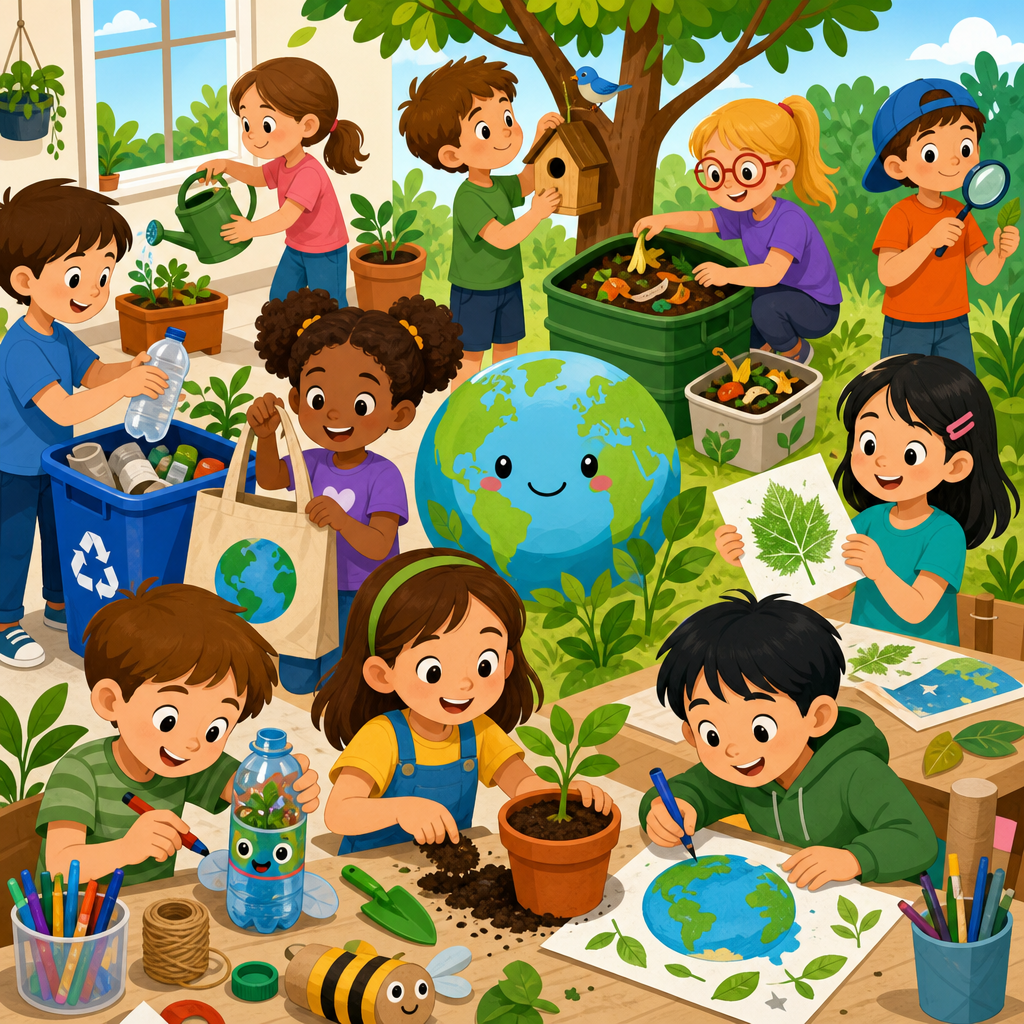
Environmental science for kids becomes far more memorable when children can touch soil, sort recyclables, test sunlight, and watch seeds sprout instead of only reading definitions on a worksheet. At home and in school settings, I have seen the same pattern repeatedly: once environmental ideas become hands-on, children ask sharper questions, remember vocabulary longer, and connect daily habits to bigger systems such as energy, water, waste, weather, and biodiversity. This hub article brings those pieces together through 20 fun eco activities for kids at home or school, while also explaining the core ideas behind each one.
Environmental science is the study of how living things interact with air, water, land, climate, and human systems. For children, that broad field usually starts with practical themes they can observe directly: where trash goes, why plants need light, how insects help gardens, what pollution looks like, and how to conserve resources. Eco activities are structured tasks that turn those themes into action. A compost jar demonstrates decomposition. A classroom energy audit introduces electricity use. A bug survey shows habitat diversity. These activities matter because they build scientific thinking and personal responsibility at the same time.
Used well, environmental science activities for kids support multiple learning goals. They strengthen observation, measurement, classification, cause-and-effect reasoning, and communication. They also make abstract terms concrete. Sustainability becomes easier to understand after children compare single-use items with reusables for one week. Conservation makes sense after they measure how much water a dripping tap wastes over a day. Systems thinking begins when they trace a lunch item from farm to packaging to transport to trash or compost. In my experience, the most effective eco lessons combine curiosity, data, and a visible result children can revisit over days or weeks.
This page is designed as a hub for environmental science for kids, covering the major themes families and teachers usually need: recycling, composting, gardening, energy, water, biodiversity, weather, pollution, and citizen science. The 20 activities below are practical, low-cost, and adaptable across ages. Younger children can focus on noticing patterns and naming materials. Older students can collect measurements, graph results, compare variables, and discuss tradeoffs. Each section explains not just what to do, but what children learn and why the activity works.
Waste, Recycling, and Material Life Cycles
Children often meet environmental science first through waste, because trash is visible and immediate. That makes recycling and reuse a strong entry point, but it is important to teach accuracy, not just good intentions. One of the best starting activities is a home or classroom waste sort. Gather a day’s clean discarded items and ask children to classify them into paper, metal, plastic, glass, food scraps, and landfill. Then compare their sorting with local recycling rules. This shows that recycling depends on material type and municipal systems, not guesswork.
A second activity is a packaging detective challenge. Children examine snacks, school supplies, or shipping boxes and identify which parts are recyclable, compostable, reusable, or difficult to process. This naturally introduces concepts such as mixed materials, contamination, and product design. A juice pouch, for example, looks simple but often combines layers that are hard to recycle in standard curbside programs. In contrast, a plain cardboard box is widely recyclable if it is clean and dry.
A third activity is an upcycling build. Students can turn jars into pencil holders, cereal boxes into organizers, or fabric scraps into simple pouches. Upcycling is not a complete waste solution, but it teaches material value and extends product life. A fourth useful project is a decomposition observation jar. Layer soil with leaves, fruit peels, paper, and a small piece of plastic, then observe changes over several weeks. Children quickly see that organic matter breaks down while conventional plastics persist.
A fifth activity is a lunch waste audit. After lunch, children count wrappers, leftover food, bottles, and compostable scraps. Schools can compare results before and after introducing reusable containers or tray-less service. The lesson is powerful because students generate their own evidence. They also learn a core environmental science principle: every product has a life cycle that includes extraction, manufacturing, transport, use, and disposal.
Gardens, Soil, and Plant Science
Plants are one of the clearest ways to show interdependence in ecosystems. Start with a seed germination test, one of the simplest environmental science experiments for kids. Place seeds in different conditions: light versus dark, damp versus dry, warm versus cool. Children record which variables matter at each stage. They learn that seeds need moisture and suitable temperature to begin growth, while light becomes essential once leaves develop.
A seventh activity is building a windowsill herb garden or school raised bed. Herbs such as basil, mint, and parsley grow fast enough to hold attention, and children can observe leaf shape, smell, and growth rate. If space is limited, recycled containers with drainage holes work well. During garden projects, I always have children keep a log of watering, sunlight hours, and plant height. That routine introduces data collection without making the lesson feel abstract.
An eighth activity is a soil comparison test. Collect samples from a garden, lawn, and compacted path. Add water in clear jars, shake, and let the particles settle into visible layers of sand, silt, and clay. Children can compare drainage by pouring equal amounts of water through each sample. This shows why some soils hold water and others drain quickly, which links directly to plant health and erosion.
Ninth, make a simple compost system. In schools, this may be an outdoor bin; at home, a small compost bucket or worm bin is often easier. Children can track what belongs in compost, such as fruit and vegetable scraps, dry leaves, and shredded paper, and what does not, such as meat or oily foods in many small systems. Composting teaches decomposition, nutrient cycling, microorganisms, and the practical idea that “waste” can become a resource.
Tenth, create a pollinator observation patch using native flowers if possible. Even a few pots can attract bees, butterflies, and hoverflies. Children count visitors for ten-minute intervals and note flower color, time of day, and weather. This turns gardening into biodiversity science and helps students understand that plant reproduction often depends on animal partners.
Water, Weather, and Energy Investigations
Water and energy are central environmental science topics because children use both every day. An eleventh activity is a water-use survey. Ask students to estimate how much water common actions require, then compare with published figures from utilities or environmental agencies. A running tap during toothbrushing can waste several gallons, depending on flow rate. Measuring actual flow with a jug and timer makes conservation tangible rather than moralistic.
Twelfth, build a mini water cycle model in a sealed clear container with a little soil, water, and a small plant. Place it in sunlight and watch evaporation, condensation, and precipitation-like droplets form. Children see that water moves in a cycle rather than disappearing. This is a strong bridge to lessons on clouds, rainfall, watersheds, and drought.
Thirteenth, run a rain gauge project. A marked container placed safely outdoors lets children record precipitation over several weeks. Pair those measurements with temperature and cloud notes to create a simple weather journal. Older students can graph results and compare local patterns with official weather data from the National Weather Service or a national meteorological agency.
Fourteenth, test solar energy with dark and light materials. Put equal amounts of water in containers wrapped with black and white paper, place them in sunlight, and measure temperature changes. Students observe how color and surface properties affect heat absorption. This opens the door to albedo, urban heat islands, and building design. A related extension is comparing shaded and unshaded ground temperatures at school.
Fifteenth, conduct a classroom energy audit. Children count lights, screens, fans, and chargers, estimate usage hours, and identify devices left on unnecessarily. This activity works especially well because it connects behavior to infrastructure. Students learn that saving energy is not only about turning things off, but also about efficient bulbs, insulation, natural light, and appliance choices.
| Activity | Main Concept | Best Setting | What Kids Measure |
|---|---|---|---|
| Waste sort | Material classification | Home or school | Item counts by category |
| Seed germination test | Plant needs and variables | Home or school | Sprout rate and height |
| Rain gauge | Weather and precipitation | School yard or garden | Rainfall over time |
| Energy audit | Resource conservation | Classroom or house | Device counts and use hours |
Biodiversity, Habitats, and Outdoor Observation
Biodiversity can seem too large a topic for young learners until they realize it includes the birds on a fence, ants in a crack, moss on a wall, and worms under leaves. Sixteenth, try a habitat scavenger hunt. Instead of collecting organisms, children look for signs of life and survival needs: food sources, water, shelter, nesting material, and shade. This simple structure helps them understand habitat as a system of conditions, not just a place on a map.
Seventeenth, do a schoolyard or backyard insect survey. Use a small grid, observe for a fixed time, and tally the number and kinds of insects seen on soil, grass, flowers, or pavement. Even basic categories such as beetle, ant, bee, butterfly, and unknown are useful. Students often discover that flowering areas support more visible insect activity than mowed lawn, leading naturally to discussions about habitat quality and native plants.
Eighteenth, organize a bird count from a window or playground edge. Binoculars help, but they are not essential. Children note size, color pattern, beak shape, behavior, and call. This strengthens patience and descriptive language while introducing adaptation. A pigeon’s feeding behavior differs from a hummingbird’s because their bodies and diets differ. If local regulations permit, adding a feeder or water source can increase observations.
Nineteenth, map microhabitats. Children sketch where they find sun, shade, damp soil, leaf litter, bare ground, and flowering plants in one small area. Then they match organisms to those conditions. This is one of the best ways to teach that ecosystems are patchy. Tiny changes in moisture or light can shape where different species live.
Twentieth, join a citizen science project. Programs such as iNaturalist, eBird, Globe Observer, and the Great Backyard Bird Count allow children to contribute observations used by researchers, conservation groups, and land managers. When students upload a plant photo or log cloud cover, they see that environmental science is not only something in textbooks. It is an active field built on repeated observations from many people across many places.
How to Make Eco Activities Effective for Different Ages
The same activity can be shallow or excellent depending on how it is guided. For ages five to seven, focus on noticing, naming, and simple comparisons: which object floats, which soil holds more water, which plant grew taller. For ages eight to eleven, add recording sheets, prediction questions, and pattern finding. Middle school students can test variables, calculate percentages, graph results, and evaluate limitations. That progression matters because environmental science is evidence-based. Children should learn that good questions need observations they can verify.
Use plain materials where possible, but keep methods consistent. If students compare recycling bins, provide the same sorting categories each time. If they test plant growth, keep seed type, pot size, and watering schedule as controlled as possible. Safety also matters. Wash hands after soil work, supervise scissors and outdoor tools, avoid unknown berries or mushrooms, and follow local guidance on wildlife handling. Most importantly, connect every activity to one practical decision. After a water survey, fix habits around taps. After a biodiversity count, plant native species or reduce mowing in one area. Action is what turns a fun lesson into environmental literacy.
Environmental science for kids works best when children can observe a real system, collect simple evidence, and connect what they find to everyday choices. The 20 fun eco activities for kids at home or school in this hub article cover the main building blocks of the subject: waste, recycling, composting, plants, soil, water, weather, energy, habitats, biodiversity, and community science. Together, they show that environmental learning is not a separate topic from daily life. It is the study of how homes, schools, gardens, streets, and natural spaces all interact.
If you are building an education plan under Education and Resources, this page is the starting point for environmental science for kids because it introduces the essential concepts and the hands-on methods that make them stick. Begin with one activity that fits your space and schedule, document what children notice, and then build outward to related topics. A seed test can lead to soil lessons. A waste audit can lead to composting. A bird count can lead to habitat design. Start small, stay consistent, and let children investigate the world they are already part of.
Frequently Asked Questions
What are the best eco activities for kids to do at home or at school?
The best eco activities for kids are the ones that are simple, hands-on, and clearly connected to everyday life. Children learn environmental science more effectively when they can observe, test, sort, build, and care for something themselves. Strong examples include planting seeds in cups or garden beds, making a mini compost jar, sorting household or classroom waste into recycling and trash categories, tracking water use, building a bird feeder from reused materials, creating nature journals, testing which places in a room get the most sunlight, and doing energy-saving challenges such as turning off unused lights. These activities work well because they turn abstract ideas like sustainability, conservation, and ecosystems into visible experiences. At home, parents can use kitchen scraps, recyclables, and outdoor spaces to create easy projects without needing expensive supplies. In school, teachers can extend the same activities into science, math, reading, and art lessons by adding measurements, vocabulary, observation logs, and group discussions. The most effective eco activities are usually not the most complicated ones. They are the ones that help kids notice patterns, ask questions, and understand that their daily choices affect water, energy, waste, plants, animals, and the health of their local environment.
How do eco activities help children learn environmental science more effectively?
Eco activities help children learn environmental science more effectively because they engage multiple senses and encourage active participation. Instead of memorizing isolated facts, kids get to see environmental systems in action. When a child plants a seed and watches it sprout over several days, concepts such as germination, sunlight, soil, water, and plant needs become easier to understand and remember. When children separate paper, plastic, metal, and food waste, they begin to understand resource use, recycling systems, decomposition, and landfill reduction in a practical way. This kind of learning builds stronger memory because the child has a direct experience tied to the concept. It also improves vocabulary retention, since words like habitat, conserve, renewable, compost, pollution, and biodiversity are learned in context rather than as disconnected definitions. Another major benefit is that eco activities naturally promote curiosity. Kids begin asking why some materials break down faster, why certain plants grow better in one location than another, or how weather changes affect the garden. Those questions are the foundation of scientific thinking. In both homes and schools, hands-on environmental learning also helps children connect personal habits to larger systems, which is one of the most important goals in environmental education. They start to recognize that turning off a faucet, reusing a container, or protecting insects in a garden is not just a rule to follow but part of a bigger pattern involving ecosystems, resources, and human impact.
What supplies do I need for simple environmental activities for kids?
Most simple environmental activities for kids can be done with inexpensive, easy-to-find supplies, and many use materials you already have at home or in the classroom. Common basics include empty jars, cardboard tubes, paper, crayons, tape, scissors, old newspapers, plastic bottles, egg cartons, seed packets, potting soil, small cups or containers, and labeled bins for sorting recyclables. For nature-based projects, it helps to have access to leaves, sticks, rocks, flowers, or a patch of outdoor space, but even indoor windowsills can work for planting and sunlight experiments. If you want to support observation and recording, add clipboards, notebooks, measuring cups, rulers, magnifying glasses, and simple charts. For compost demonstrations, you can use a clear container, food scraps, dry leaves, and soil. For water conservation activities, children can use timers, buckets, and tracking sheets. For energy lessons, all you may need is a room map, a weather chart, and a checklist of devices or lights being used. The key is not having specialized equipment. The key is choosing materials that allow children to test a question or observe a process. Recycled and reused items are especially valuable because they reinforce the environmental message of reducing waste. Whether the setting is a kitchen table, a homeschool space, a classroom, or a school garden, eco activities are usually most successful when the setup is practical, safe, and easy for children to help manage on their own.
How can I make eco activities fun for different ages and ability levels?
To make eco activities fun for different ages and ability levels, start by matching the task to the child’s stage of development and then adding choice, movement, and visible results. Younger children usually respond best to short, tactile activities such as planting beans, watering flowers, sorting recyclables by picture labels, or going on a color-based nature hunt. Older children often enjoy projects with more challenge and independence, such as measuring plant growth, comparing how quickly items decompose, designing a recycled craft with a purpose, or recording household energy-saving habits for a week. For mixed-age groups, the same activity can be adjusted in complexity. A preschooler can identify leaves by shape or color, while an older student can compare leaf structures, discuss biodiversity, or research native species. Ability level matters just as much as age, so it helps to offer multiple ways to participate. Some children may prefer drawing observations, others may want to speak their findings aloud, and others may enjoy physically sorting, building, or collecting materials. Clear steps, visual supports, and jobs with tangible outcomes can make activities more accessible and enjoyable. Turning eco projects into games, challenges, scavenger hunts, team tasks, or “junior scientist” missions also helps maintain enthusiasm. Most importantly, make the goal progress rather than perfection. Children stay engaged when they feel capable, useful, and included. If they can see a seed sprout, a waste bin fill correctly, a bird visit a feeder, or a chart show reduced water use, the activity feels meaningful as well as fun.
How can eco activities encourage long-term sustainable habits in children?
Eco activities encourage long-term sustainable habits by giving children repeated, positive experiences with environmental responsibility in everyday situations. Habits are more likely to stick when children understand both the reason behind an action and the real-world result of doing it. For example, if a child regularly helps compost fruit peels, water a garden, sort recycling, or turn off unused lights, those behaviors begin to feel normal rather than forced. Over time, repeated practice builds routine, and routine builds habit. What makes eco activities especially effective is that they help children see cause and effect. They can watch scraps become compost, notice that a reusable bottle prevents disposable waste, or measure how much water is saved by changing a daily habit. That visible feedback is powerful. It turns sustainability from an abstract idea into something concrete and personal. Adults can strengthen this effect by using consistent language, modeling the same habits, and inviting children to make decisions rather than just follow instructions. Asking questions such as “What could we reuse for this project?” or “How can we save water today?” helps children think like problem-solvers. In school settings, these habits can be reinforced through classroom jobs, garden care, recycling monitors, and science reflections. At home, simple routines like checking lights, packing reusable lunches, or caring for a plant can have the same impact. The long-term goal is not just to teach isolated eco facts. It is to help children develop awareness, responsibility, and confidence so that sustainable choices become part of how they think and act every day.