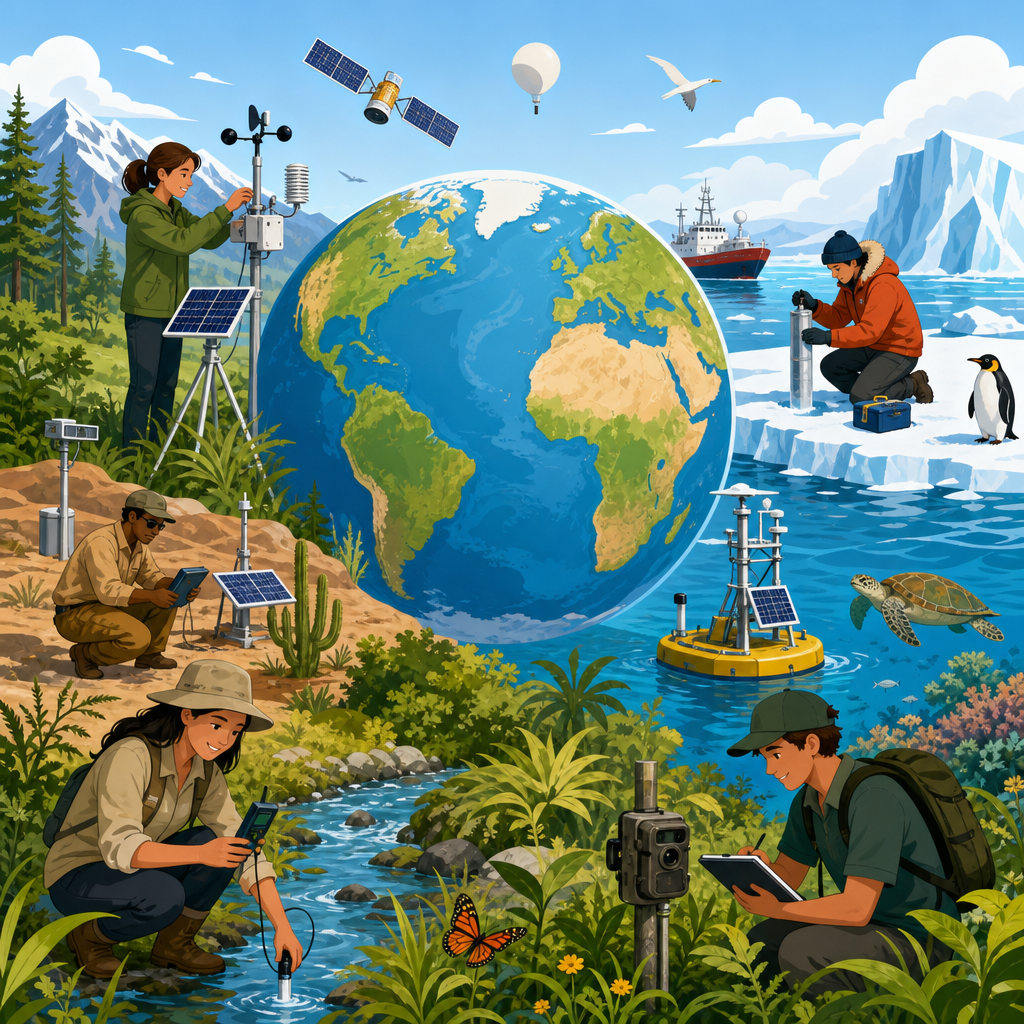
Biodiversity hotspots are regions that contain exceptional concentrations of endemic species while also facing exceptional levels of habitat loss, making them some of the most urgent places on Earth for conservation. In environmental science, biodiversity refers to the variety of life across genes, species, and ecosystems, while ecosystems describe the interacting communities of organisms and their physical environments. A hotspot is not simply a place with many species; under the widely used Conservation International framework, it must contain at least 1,500 endemic vascular plant species and must have lost at least 70 percent of its original natural vegetation. That dual requirement matters because it links irreplaceability with vulnerability. From tropical forests and Mediterranean-climate shrublands to mountain systems and island chains, hotspots reveal where ecological richness and human pressure collide most dramatically.
I have worked with ecology teams that used hotspot mapping to prioritize field surveys, restoration plans, and funding proposals, and the reason is practical: conservation resources are limited, but species losses can be permanent. Protecting a hectare in one region does not always yield the same ecological return as protecting a hectare somewhere else. Hotspots help policymakers, researchers, and land managers identify landscapes where action can prevent extinctions, stabilize ecosystem functions, and sustain human livelihoods. They also serve as a gateway concept for understanding ecology and ecosystems more broadly, because each hotspot illustrates core ecological ideas such as niche specialization, trophic relationships, disturbance regimes, island biogeography, resilience, and ecosystem services. For an Environmental Science hub, hotspots connect species conservation to climate regulation, soil formation, pollination, water security, food systems, and cultural values.
The global importance of biodiversity hotspots extends beyond rare wildlife. Healthy ecosystems in hotspot regions regulate floods, store carbon, maintain fertile soils, support fisheries, and buffer communities against environmental change. The Tropical Andes, for example, supply freshwater to millions of people, while Madagascar’s forests support pollinators, watershed protection, and locally important forest products. The Cape Floristic Region in South Africa, though relatively small, contains extraordinary plant endemism linked to nutrient-poor soils, fire-adapted vegetation, and specialized pollination systems. These places function as living laboratories for evolution and adaptation. They also show how ecological processes work at different scales: local interactions among species, landscape-level patterns of fragmentation, and global drivers such as warming temperatures, invasive species, and commodity-driven land conversion. Understanding hotspots therefore gives readers a foundation for nearly every major issue in ecology and ecosystems.
Hotspots matter because extinction risk is unevenly distributed. Species with small ranges, narrow habitat requirements, and low population sizes are often concentrated in these regions, especially on islands and in montane zones. When forests are cleared, rivers dammed, wetlands drained, or coastlines overbuilt, endemic species cannot simply move elsewhere. This is why hotspot conservation is often described as a strategy for maximizing impact per dollar invested. It does not replace the need to protect wilderness areas, oceans, or intact boreal ecosystems, but it offers a scientifically grounded method for reducing global extinction risk. As a hub topic, biodiversity hotspots also provide a map to the wider study of ecology: how energy flows through food webs, how species interactions shape community structure, how disturbance and succession influence habitats, and how human activities alter ecosystem stability. To understand ecosystems in the real world, start where the stakes are highest.
What biodiversity hotspots reveal about ecology and ecosystems
Biodiversity hotspots make ecological principles visible in ways textbooks alone cannot. They show that species richness is not random but shaped by climate, topography, evolutionary history, and long periods of environmental stability. In many hotspot regions, complex terrain creates microclimates and barriers that isolate populations, allowing speciation over time. Mountain slopes in the Tropical Andes, for instance, can host distinct communities over short elevation gradients, from cloud forest to páramo. On islands such as Madagascar or in the Philippines, geographic isolation drives high endemism because species evolve separately for millions of years. These patterns are central to ecology: habitats structure communities, isolation affects gene flow, and environmental gradients influence adaptation.
Hotspots also clarify how ecosystems function. A forest is not just a collection of trees; it is a network of producers, herbivores, predators, decomposers, fungi, and microbes exchanging energy and nutrients. Remove one key element and the effects can cascade. In the Atlantic Forest of Brazil, fragmentation reduces habitat for seed-dispersing birds and mammals, which in turn affects tree regeneration and long-term forest composition. In coral reef hotspots such as the Indo-Burma region’s coastal systems, overfishing can disrupt trophic balances, allowing algal overgrowth that suppresses coral recovery. These are classic examples of ecosystem dynamics, where species interactions influence resilience, productivity, and the capacity to recover after disturbance.
Another lesson from hotspots is that disturbance is not always harmful; its effect depends on intensity, frequency, and ecological context. Mediterranean-type hotspots such as California Floristic Province and the Cape Floristic Region evolved with periodic fire. Many plant species there possess fire-adapted traits, including serotinous cones or seeds that germinate after heat or smoke exposure. The problem arises when fire regimes shift because of invasive grasses, urban expansion, or climate-driven drought. Similarly, wetlands in hotspots may depend on seasonal flooding, yet become degraded when water extraction changes hydrology. Ecology and ecosystems are therefore best understood through process, not static snapshots. Hotspots are dynamic systems, and conservation must work with those dynamics rather than against them.
Where the world’s biodiversity hotspots are and why they formed
There are 36 widely recognized biodiversity hotspots distributed across every inhabited continent, though they are concentrated in tropical, island, and Mediterranean-climate regions. Well-known examples include the Tropical Andes, Mesoamerica, the Caribbean Islands, the Atlantic Forest, Madagascar and the Indian Ocean Islands, Sundaland, Wallacea, the Western Ghats and Sri Lanka, Indo-Burma, the Philippines, the Eastern Afromontane, and the Cape Floristic Region. Each formed through a combination of geological history, climatic variation, and long-term isolation. Plate tectonics created mountain chains, islands, and fragmented landmasses; glacial cycles shifted habitats; and stable refugia allowed species to persist and diversify. Hotspots are therefore products of both deep time and present-day pressure.
The ecological conditions behind hotspot formation are often specific. Tropical mountain systems combine high rainfall with steep environmental gradients, producing many niches in a small area. Islands promote adaptive radiation because colonizing species encounter reduced competition and evolve into multiple forms, as seen in Madagascar’s lemurs or the Philippines’ birds and reptiles. Mediterranean-climate regions, characterized by cool wet winters and hot dry summers, can support remarkable plant diversity when soil mosaics and recurrent fire favor specialization. In all cases, endemism rises when populations are isolated and environmental conditions vary enough to reward local adaptation. That is why hotspots are often rich in species found nowhere else.
| Hotspot | Defining ecological features | Representative conservation pressure |
|---|---|---|
| Tropical Andes | Extreme elevation gradients, cloud forests, high freshwater value | Agricultural expansion, mining, road building |
| Madagascar and Indian Ocean Islands | Long isolation, high endemism, dry and humid forest mosaics | Slash-and-burn agriculture, logging, invasive species |
| Cape Floristic Region | Mediterranean climate, nutrient-poor soils, fire-adapted flora | Urban growth, invasive plants, altered fire regimes |
| Atlantic Forest | Coastal forest diversity, high fragmentation sensitivity | Deforestation, infrastructure, habitat fragmentation |
| Western Ghats and Sri Lanka | Monsoon-driven forests, amphibian endemism, watershed importance | Plantations, dams, land conversion |
Understanding where hotspots occur helps explain larger biogeographic patterns across ecology and ecosystems. Biodiversity peaks are linked to energy availability, water, historical stability, and habitat heterogeneity, yet they are also shaped by chance events such as colonization and extinction. This makes hotspots powerful teaching tools for biomes, food webs, ecological succession, and landscape ecology. They connect local habitat features to continental history and global climate patterns. For readers exploring environmental science, hotspot geography offers a practical way to organize many subtopics: tropical ecology, island ecology, conservation biology, restoration ecology, ecosystem services, and human-environment systems.
Why hotspots are globally important for people, climate, and ecosystem services
Biodiversity hotspots are globally important because they support ecosystem services that reach far beyond their boundaries. Watersheds in hotspot regions deliver drinking water, irrigation supply, and hydropower potential. Forests and peat-rich systems store carbon, helping moderate atmospheric greenhouse gas concentrations. Pollinators and wild relatives of crops contribute to food security and agricultural resilience. Coastal mangroves, reefs, and estuaries reduce storm damage and sustain fisheries. These functions are measurable and economically significant. The World Bank, the Intergovernmental Science-Policy Platform on Biodiversity and Ecosystem Services, and the Food and Agriculture Organization have repeatedly emphasized that ecosystem degradation directly threatens development, health, and long-term prosperity.
In field planning, I have seen local officials respond most strongly when biodiversity is translated into operational risks and benefits. Protecting montane forest is not only about birds or orchids; it reduces sedimentation in reservoirs, lowers treatment costs for drinking water, and stabilizes slopes during heavy rain. Conserving mangrove habitats is not only about nursery grounds for fish; it can cut coastal erosion and provide a first line of defense during cyclones. In hotspot landscapes where communities rely on fuelwood, medicinal plants, grazing lands, or tourism income, ecosystem decline has immediate social consequences. Ecological integrity and human well-being are tightly linked.
Hotspots are also important because they preserve evolutionary options. Genetic diversity within wild populations underpins adaptation to pests, disease, and changing climates. Crop wild relatives found in hotspot regions can carry useful traits for drought tolerance, salinity resistance, or disease defense. Diverse ecosystems are often more functionally resilient because different species perform overlapping roles. If one declines, another may partially compensate, though never perfectly. This insurance effect has limits, but it is real. Losing endemic species narrows the portfolio of ecological functions and future opportunities, including medicines, biomaterials, and scientific knowledge that has not yet been discovered.
Major threats and the most effective conservation responses
The leading threats to biodiversity hotspots are habitat loss, fragmentation, overexploitation, invasive species, pollution, and climate change, usually acting together rather than separately. Agricultural expansion remains the dominant driver in many tropical hotspots, whether through cattle pasture, soy, oil palm, cocoa, or subsistence farming. Infrastructure such as roads, dams, and transmission corridors opens previously intact habitat to logging, settlement, and hunting. Fragmentation is especially damaging because it isolates populations, increases edge effects, alters microclimates, and disrupts species movement. Small habitat patches may still hold value, but many become ecological traps when they no longer support viable breeding populations.
Climate change compounds these pressures by shifting temperature and rainfall patterns, intensifying heat stress, drying wetlands, bleaching corals, and forcing species upslope or poleward. Mountain species are particularly vulnerable because they can run out of suitable elevation. Island endemics face sea-level rise, storms, and invasive predators. In freshwater systems, altered flow regimes and warming water reduce oxygen levels and affect breeding cycles. These are not abstract projections. Coral bleaching on tropical reefs, amphibian declines in montane forests, and repeated megafires in Mediterranean-climate systems already show how climate interacts with existing habitat stress to push ecosystems beyond recovery thresholds.
The most effective conservation responses combine strict protection with landscape-level management and community partnership. Protected areas are essential, especially in places holding last refuges for highly endemic species, but boundaries alone are insufficient. Conservation works better when reserves are connected by habitat corridors, embedded in sustainable land-use mosaics, and supported by enforcement, finance, and local legitimacy. Restoration matters where habitats are already fragmented; reforesting riparian strips, removing invasive plants, and rebuilding natural fire regimes can reconnect ecological processes. Science-based planning tools such as systematic conservation planning, Key Biodiversity Areas, remote sensing platforms, and IUCN Red List assessments improve prioritization. The core principle is straightforward: protect what remains intact, restore what can recover, and manage production landscapes so they do less harm.
How hotspots guide the broader study of environmental science
As a hub for ecology and ecosystems, biodiversity hotspots help organize the full environmental science curriculum. They bring together population ecology, community ecology, biogeochemistry, climate science, hydrology, land-use change, and environmental policy in one applied framework. A student examining the Western Ghats can study monsoon ecology, endemic amphibians, watershed services, plantation impacts, and reserve design. A reader exploring the Caribbean Islands can connect reef ecology, invasive species, hurricanes, fisheries, and tourism economies. This integration is valuable because real environmental problems do not stay within disciplinary boundaries.
Hotspots also sharpen a crucial insight: conservation is not a choice between nature and people, but a question of how ecosystems are governed, used, and restored. The best outcomes usually come from combining ecological evidence with Indigenous knowledge, local tenure rights, transparent monitoring, and long-term funding. For anyone building a deeper understanding of ecology and ecosystems, follow the hotspot lens into related topics such as food webs, biomes, habitat fragmentation, restoration ecology, ecosystem services, and climate adaptation. These regions show, with unusual clarity, why biodiversity underpins planetary stability and human resilience. Protecting hotspots is one of the most practical ways to defend life-support systems that no technology can fully replace. Explore the connected ecology topics within Environmental Science, and use this hub as your starting point for informed action.
Frequently Asked Questions
What is a biodiversity hotspot, and how is it different from any area with lots of species?
A biodiversity hotspot is a biogeographic region identified as a top conservation priority because it combines two critical features: it contains an exceptional number of endemic species, and it has already lost a large share of its original natural habitat. In other words, a hotspot is not just a place with abundant wildlife or high species richness. It is a place where unique life forms found nowhere else on Earth are under immediate threat. This distinction matters because many regions may be biologically rich, but hotspots stand out for both irreplaceability and vulnerability.
Under the widely used Conservation International criteria, a region must meet a specific threshold for endemic vascular plants and must have lost at least 70% of its original vegetation to qualify as a hotspot. That means the term has a precise scientific and conservation meaning. These areas often include tropical forests, Mediterranean-type ecosystems, island systems, and mountain regions where species evolved in isolation over long periods. Because so many organisms there are endemic, habitat destruction in a hotspot can lead directly to global extinction, not just local population decline. That is what makes biodiversity hotspots especially important in environmental science and conservation planning.
Why are biodiversity hotspots considered globally important?
Biodiversity hotspots are globally important because they hold a disproportionate share of Earth’s biological diversity in relatively small areas. Although hotspots cover only a modest fraction of the planet’s land surface, they support vast numbers of plant and animal species, including many that exist nowhere else. Protecting these regions can therefore prevent a very large amount of biodiversity loss with targeted conservation action. From a strategic perspective, hotspots are some of the most efficient places to focus limited conservation funding and policy attention.
Their importance goes beyond species counts. Healthy ecosystems in hotspot regions contribute essential ecosystem services that support both local communities and the wider world. These services include water regulation, soil protection, pollination, carbon storage, climate moderation, and natural resilience to floods, erosion, and drought. Hotspots also support food systems, medicines, cultural traditions, and scientific discovery. Many modern drugs and agricultural resources trace back to wild species and genetic diversity found in biologically rich ecosystems. When a hotspot is degraded, the world may lose not only species, but also ecological functions and future benefits that cannot easily be replaced.
What kinds of threats do biodiversity hotspots face?
Biodiversity hotspots face intense and often overlapping pressures, which is one reason they are treated as urgent conservation priorities. Habitat loss is the defining threat and typically results from deforestation, agricultural expansion, urban growth, mining, road construction, logging, and other forms of land conversion. In many hotspots, these changes fragment ecosystems into smaller and more isolated patches, making it harder for species to find food, reproduce, migrate, and maintain healthy populations. Fragmentation is especially damaging for endemic species with narrow ranges because they may have nowhere else to go.
In addition to habitat destruction, hotspots are affected by climate change, invasive species, overexploitation of wildlife, pollution, and altered fire regimes. Climate change can shift temperature and rainfall patterns faster than species can adapt, particularly in mountain or island hotspots where movement options are limited. Invasive species may outcompete native organisms or introduce new diseases. Overhunting, illegal wildlife trade, and unsustainable harvesting can push already vulnerable species closer to extinction. These threats often interact: for example, a forest weakened by clearing may become more susceptible to fires, invasive species, and climate stress. As a result, conserving hotspots requires integrated solutions rather than a single policy response.
How do biodiversity hotspots support ecosystems and human well-being?
Biodiversity hotspots support ecosystems by maintaining complex networks of life across genes, species, and habitats. In ecological terms, biodiversity strengthens ecosystem functioning because different organisms play different roles, such as pollination, seed dispersal, nutrient cycling, decomposition, pest control, and water filtration. When many species interact in balanced ways, ecosystems are generally better able to recover from disturbance and adapt to environmental change. This resilience is especially valuable in a time of rising climate instability, habitat fragmentation, and resource pressure.
For people, the benefits are both immediate and long-term. Communities living in and around hotspots often depend directly on forests, wetlands, grasslands, reefs, or other local ecosystems for fresh water, fuel, fisheries, crops, building materials, and traditional medicine. At broader scales, hotspot ecosystems help regulate climate, store carbon, protect watersheds, and reduce disaster risks such as landslides and flooding. They also have major educational, cultural, spiritual, and economic value, including ecotourism opportunities and scientific research potential. Preserving biodiversity hotspots is therefore not just about protecting wildlife for its own sake; it is also about safeguarding natural systems that sustain livelihoods, health, and environmental stability.
What are the most effective ways to conserve biodiversity hotspots?
Effective hotspot conservation depends on protecting habitat, restoring degraded ecosystems, and supporting the people who live in these regions. One core strategy is the creation and proper management of protected areas, including national parks, reserves, and community-conserved lands. However, protection on paper is not enough. Successful conservation also requires enforcement, ecological monitoring, long-term funding, and landscape-level planning that connects fragmented habitats through wildlife corridors or restoration zones. This helps species move, reproduce, and adapt, especially under climate change.
Equally important is working with local and Indigenous communities, whose knowledge and stewardship are often essential to lasting conservation success. Sustainable agriculture, forestry, fisheries, and land-use planning can reduce pressure on critical habitats while still supporting livelihoods. Governments, researchers, nonprofits, and businesses also play important roles through better policy, conservation finance, environmental education, and stronger regulation of activities such as mining, logging, and wildlife trade. In many cases, the most effective approach is a combination of science-based priorities and social equity, ensuring that conservation protects endemic species while also addressing poverty, governance, and development needs. Because biodiversity hotspots represent both extraordinary natural value and urgent ecological risk, early and sustained action offers some of the highest returns in global conservation.