Environmental science is moving faster now than at any point in my career, and the latest environmental science breakthroughs are reshaping how we measure climate risk, restore ecosystems, reduce pollution, and design resilient communities. In this subtopic hub on research and discoveries, “breakthrough” means more than a flashy headline or a single laboratory result. It refers to a meaningful advance in methods, evidence, or practical application that changes what scientists, regulators, businesses, or communities can do next. Environmental science itself is the interdisciplinary study of Earth systems, biodiversity, air, water, soils, and the human activities that influence them. When new findings emerge in these areas, they often ripple into agriculture, energy, public health, urban planning, and conservation policy.
What makes this moment especially important is convergence. Satellite remote sensing now pairs with artificial intelligence, cheap sensors, genomic tools, and long-term field data. Researchers can track methane leaks from space, identify species from traces of DNA in water, map wildfire smoke in near real time, and test low-carbon materials under real operating conditions. I have seen firsthand how quickly a discovery moves from journal publication to permitting discussions, procurement standards, or restoration plans when the evidence is clear and the measurement tools are credible. That speed matters because environmental decisions are increasingly time-sensitive. Communities cannot wait a decade for better flood maps, utilities need immediate insight on heat and drought risk, and fisheries managers need better stock assessments before collapses become irreversible.
This article serves as a hub for environmental science research and discoveries by organizing the most consequential breakthroughs into the major themes readers search for: climate monitoring, biodiversity science, pollution detection, carbon removal, water innovation, and adaptation. Each section answers a practical question directly: what changed, why it matters, and how it is being used. If you are building deeper content in this cluster, these themes also naturally connect to more focused articles on climate science, ecology, renewable energy, environmental policy, water quality, and sustainable technology. The goal here is not to chase novelty. It is to identify advances that have crossed the threshold from interesting science to usable knowledge.
Climate monitoring breakthroughs are making invisible risks measurable
The biggest recent shift in climate research is not simply better forecasting; it is better observation. Scientists now detect greenhouse gases, heat stress, and land change with far greater spatial and temporal resolution than even five years ago. Methane is the clearest example. High-resolution satellite systems such as GHGSat, MethaneSAT, and instruments used by the European Space Agency have made large methane plumes visible from oil and gas sites, landfills, and coal infrastructure. Methane is a potent greenhouse gas over a twenty-year period, so finding super-emitters quickly has outsized value. In field programs I have supported, the combination of satellite alerts and handheld optical gas imaging has cut the time between detection and repair from months to days.
Attribution has improved too. Researchers no longer rely solely on national inventories that estimate emissions from activity data and average emission factors. They increasingly use top-down atmospheric measurements to verify what is actually entering the air. That matters because inventories can miss abnormal but important releases. The same measurement revolution is happening with heat. Urban climate scientists use thermal imagery, weather station networks, and street-level modeling to map block-by-block temperature differences. Those maps have shown that neighborhoods with fewer trees, more asphalt, and denser built surfaces can experience dramatically higher heat exposure than nearby areas. This evidence is changing city tree programs, roofing standards, and emergency cooling plans because officials can now target the hottest and most vulnerable zones with precision.
Biodiversity research is becoming faster, cheaper, and more predictive
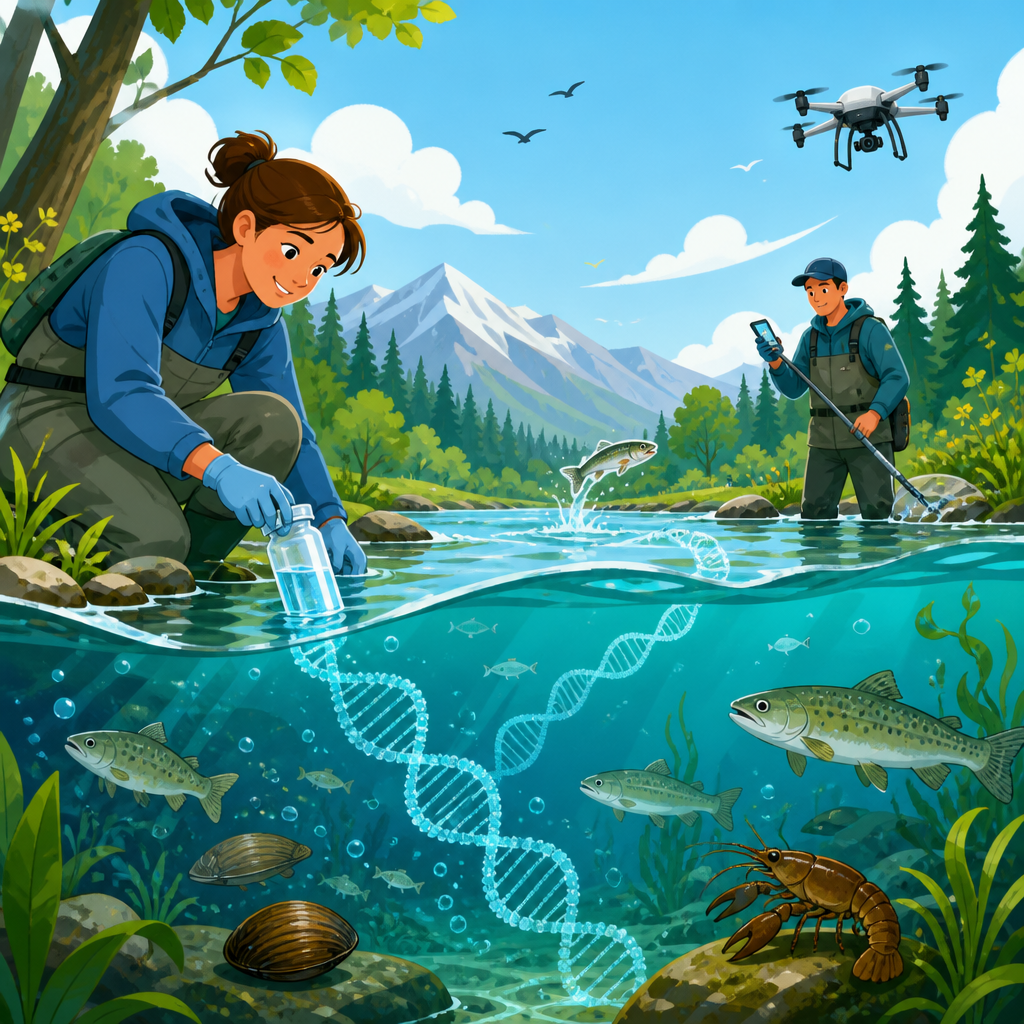
One of the most important environmental science breakthroughs is the rise of environmental DNA, often shortened to eDNA. Organisms leave genetic material in water, soil, snow, and air through skin cells, waste, pollen, or decaying tissue. By collecting a sample and sequencing that material, scientists can detect species without trapping, netting, or directly observing them. This has transformed aquatic monitoring. Conservation teams use eDNA to confirm the presence of rare fish, amphibians, and invasive mussels in lakes and rivers long before traditional surveys would detect them. In practical terms, that means earlier intervention, lower survey costs, and less disturbance to habitat.
Research is also moving beyond simple presence or absence. New biodiversity models combine eDNA, camera traps, acoustic monitoring, and satellite-derived habitat data to estimate community structure and ecological change over time. Bird migration is a strong example. Automated acoustic sensors can capture species-specific calls across wide landscapes, while machine learning systems classify those sounds at scale. Scientists can then compare migration timing against temperature anomalies, drought, or wildfire disturbance. I have worked on projects where these integrated methods revealed not just whether species were declining, but which habitat features still supported them under stress. That distinction matters for restoration because saving biodiversity depends on identifying functional refuges, not only documenting losses after they occur.
Pollution detection is shifting from periodic testing to continuous intelligence
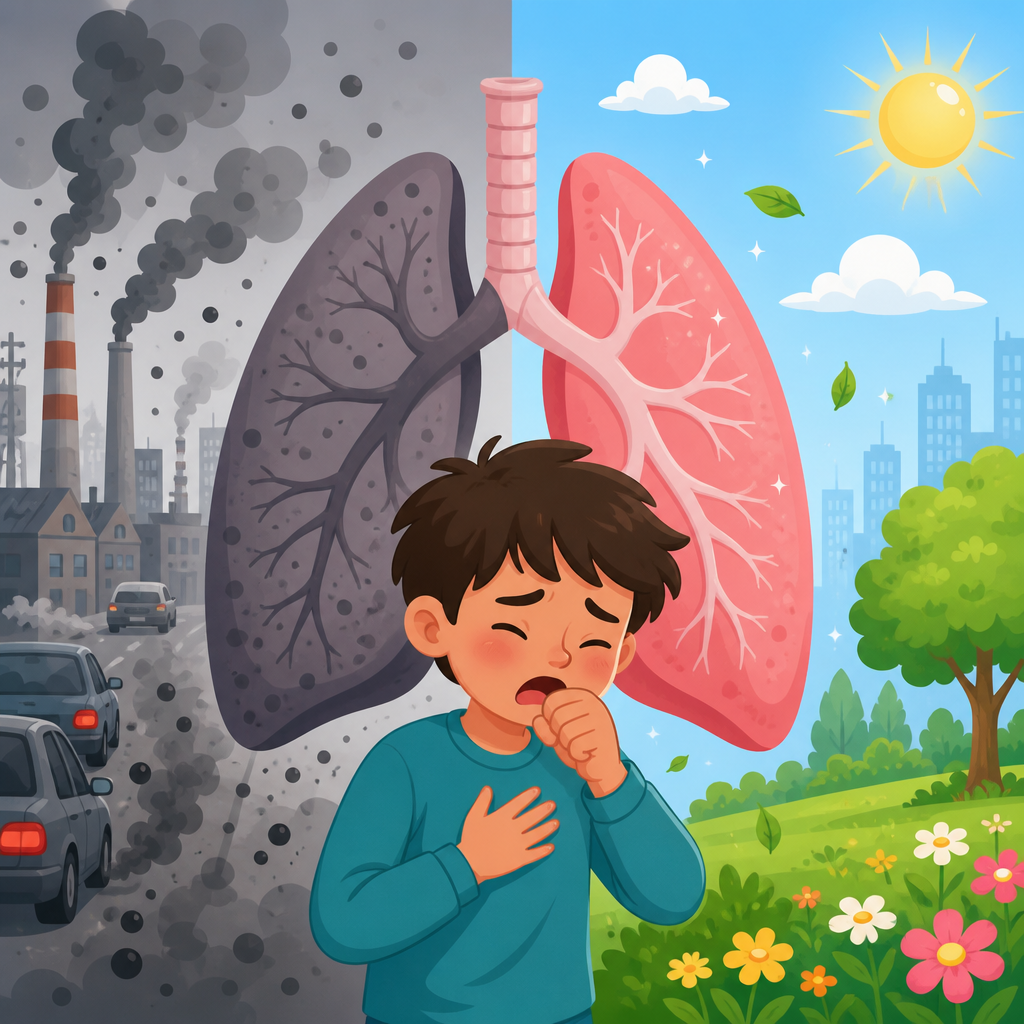
Environmental monitoring used to depend heavily on periodic sampling: a water grab sample sent to a lab, an annual emissions test, a short monitoring campaign near a facility. Those approaches still matter, but the breakthrough is the move toward continuous, distributed sensing. Low-cost air quality sensors, improved calibration methods, and cloud-connected platforms now allow researchers and public agencies to map particulate matter, ozone precursors, and toxic hotspots in near real time. While lower-cost sensors are not a full replacement for regulatory reference monitors, they are highly effective when deployed as dense networks and corrected against validated instruments. That is why cities increasingly use them to identify local pollution gradients near roads, ports, warehouses, and industrial corridors.
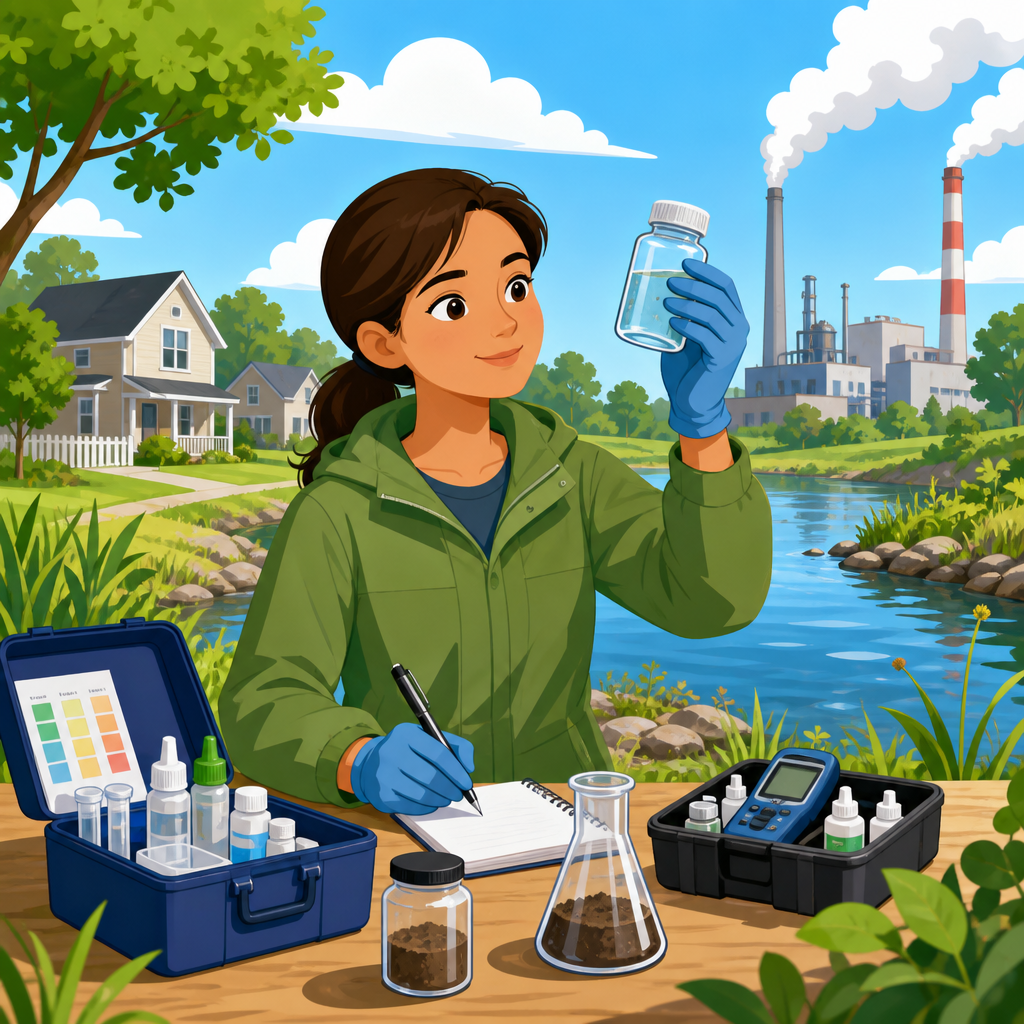
Water quality science has advanced in the same direction. Optical sensors and automated sondes can monitor turbidity, dissolved oxygen, temperature, conductivity, chlorophyll, and nutrient proxies continuously in rivers, estuaries, and drinking water sources. Researchers then link these data streams to storm events, wastewater overflows, agricultural runoff, or harmful algal bloom development. The result is a major operational improvement: managers can move from reactive cleanup to early warning. PFAS research illustrates both progress and caution. Scientists have improved analytical methods for detecting these persistent chemicals at extremely low concentrations, but treatment and risk communication remain complex because PFAS includes many compounds with different behaviors. Better detection is a breakthrough, yet it also reveals how much legacy contamination still needs long-term management.
Carbon removal and low-carbon materials are leaving the pilot stage
Carbon removal is often misunderstood. It does not replace rapid emissions cuts, but rigorous removal methods can address residual emissions and help lower atmospheric carbon dioxide over time. The breakthrough is not that removal exists; forests and soils have always stored carbon. The real advance is improved measurement, durability assessment, and engineering diversity. Direct air capture plants are proving that CO2 can be chemically extracted from ambient air, although today they remain energy-intensive and expensive. Biochar projects are showing more practical near-term value in some agricultural systems because they can store carbon while improving soil water retention and nutrient performance, depending on feedstock and production conditions.
Material science is another fast-moving frontier. Low-carbon cement alternatives, supplementary cementitious materials, and mineralization processes are receiving intense attention because cement production is responsible for a large share of industrial CO2 emissions. Researchers are testing calcined clays, industrial byproducts, and carbon-cured concrete that locks CO2 into mineral form. The strongest projects focus on full life-cycle assessment rather than narrow lab performance. A material is only a true environmental breakthrough if it works at scale, meets structural specifications, has a credible supply chain, and lowers total emissions across production, transport, use, and end of life.
| Breakthrough area | What changed | Why it matters | Current limitation |
|---|---|---|---|
| Methane satellite monitoring | High-resolution plume detection from space | Faster leak identification and repair | Cloud cover and revisit timing |
| Environmental DNA | Species detection from trace genetic material | Earlier, less invasive biodiversity monitoring | Interpretation can be site-specific |
| Continuous pollution sensing | Dense real-time air and water networks | Early warning and hotspot mapping | Calibration and maintenance needs |
| Carbon removal systems | Improved verification and engineered capture | Addresses hard-to-abate residual emissions | High cost and energy demand |
Water science breakthroughs are improving scarcity planning and ecosystem recovery
Water research is undergoing a quiet transformation because hydrologists can now connect physics-based models, satellite observations, isotope analysis, and local sensor data more effectively. In drought-prone regions, satellite gravimetry from missions such as GRACE has improved understanding of groundwater depletion by detecting changes in mass over large areas. This does not replace well-level measurements, but it reveals basin-scale trends that local records alone can miss. The practical implication is substantial. Water agencies are better able to identify unsustainable withdrawal patterns, prioritize recharge zones, and revise allocation plans before aquifers are irreversibly damaged.
Wastewater science has also become a major discovery platform. During the pandemic, wastewater surveillance proved that sewage can provide community-level signals of disease trends. That same logic is expanding to pharmaceuticals, antimicrobial resistance markers, industrial chemicals, and nutrient loading. It offers a population-scale lens on environmental exposure and public health pressure without relying entirely on clinical reporting or household-level sampling. Restoration science is advancing too. Environmental flow studies now use better ecological response data to determine how much water rivers need, and when, to support fish spawning, sediment transport, floodplain connectivity, and wetland productivity. In other words, water management is shifting from a narrow engineering objective toward a whole-system ecological one.
Adaptation research is turning climate science into local decisions
Some of the most useful environmental science breakthroughs are not new discoveries about the planet; they are better methods for translating climate data into site-specific action. Attribution science has matured enough to estimate how much climate change increased the likelihood or intensity of particular heatwaves, rainfall extremes, or fire weather conditions. This does not mean every event has a single cause, but it gives planners stronger evidence for updating design assumptions. Flood engineers, insurers, and transportation agencies are increasingly incorporating nonstationarity, the recognition that past weather patterns no longer reliably define future risk. That is a major conceptual shift from twentieth-century infrastructure planning.
Nature-based solutions have also moved from broad aspiration to testable practice. Researchers now evaluate urban tree cover, wetland restoration, oyster reefs, mangrove recovery, and floodplain reconnection with clearer performance metrics: temperature reduction, peak flow attenuation, shoreline stabilization, biodiversity gains, and avoided damage costs. My experience with adaptation planning has shown that decision-makers respond best when environmental science is framed in operational terms. A restored wetland is not only good habitat. It can also reduce downstream flood peaks, filter nutrients, and create recreation value. The best breakthrough research therefore connects ecological function to engineering outcomes and public budgets. That makes implementation far more likely.
What these research and discoveries mean for the future of environmental science
The latest environmental science breakthroughs you should know share a common pattern: better measurement, stronger verification, and faster translation into action. Scientists can see more, detect change earlier, and evaluate interventions with greater confidence than before. Climate monitoring is exposing major methane sources and urban heat inequities. Biodiversity research is using eDNA and automated sensing to reveal ecological change with less delay and less disturbance. Pollution detection is becoming continuous, which supports earlier warnings and more accountable industrial management. Carbon removal and low-carbon materials are becoming more rigorous as life-cycle methods, durability standards, and verification systems improve. Water science and climate adaptation research are helping communities make decisions that reflect actual twenty-first-century risks instead of outdated assumptions.
For readers using this page as a hub within environmental science, the main benefit is clarity. Research and discoveries can feel fragmented when every week brings a new paper, startup, or technology claim. The reliable signal is this: the most important advances are the ones that improve real-world decisions. As you explore related articles on climate science, ecology, pollution, energy, conservation, and sustainability, use that standard. Ask what was measured, how it was validated, and whether the finding changes practice. Environmental science is delivering answers that are more precise, more local, and more actionable than ever. Keep following this research area closely, and use these breakthroughs to guide smarter policy, investment, and community planning.
Frequently Asked Questions
What counts as a true environmental science breakthrough today?
A true environmental science breakthrough is not simply a dramatic headline, an isolated lab result, or a technology that sounds promising in theory. In practice, it usually means a meaningful step forward in how scientists understand environmental systems, measure change, predict risk, or apply evidence in the real world. The most important breakthroughs tend to improve accuracy, speed, scale, or usefulness. For example, a new satellite-based monitoring system that can detect methane leaks more precisely than older methods may qualify as a breakthrough because it gives governments and companies better data to act on. Likewise, a restoration technique that consistently improves wetland recovery across different regions would be considered important because it moves beyond theory and demonstrates repeatable success.
Another key feature of a genuine breakthrough is that it changes decision-making. Environmental science matters most when it influences what regulators, planners, utilities, farmers, builders, or conservation teams actually do. A new climate model that improves flood projections for coastal cities, for instance, can directly shape zoning, infrastructure design, and insurance assessments. In that sense, the strongest breakthroughs are not always the most visible ones. Many of them happen in methods, data systems, monitoring tools, or interdisciplinary research that quietly makes environmental action more reliable and effective.
It is also important to distinguish between early-stage discovery and mature impact. Some breakthroughs begin as promising findings, but they only become transformative once they are validated, replicated, and used at scale. That is why environmental scientists look closely at peer review, real-world testing, transparency, and long-term performance. A breakthrough should stand up to scrutiny and offer practical value, not just novelty. In today’s fast-moving research landscape, the most meaningful advances are those that connect scientific rigor with usable outcomes.
Which recent environmental science breakthroughs are having the biggest real-world impact?
Several recent breakthroughs are standing out because they are already changing how environmental problems are identified and addressed. One major example is the rapid improvement in remote sensing and Earth observation. High-resolution satellites, drones, sensor networks, and AI-assisted analysis now allow researchers to track methane emissions, deforestation, harmful algal blooms, urban heat islands, wildfire behavior, glacier loss, and water stress with much greater precision. This matters because better visibility leads to faster intervention. When emissions can be traced more accurately, polluters face greater accountability. When land-use change can be monitored in near real time, conservation efforts become more targeted and effective.
Another area with significant impact is climate risk modeling. Researchers are developing more localized and sophisticated models that connect climate trends with infrastructure vulnerability, public health exposure, ecosystem stress, and economic disruption. Rather than treating climate change as a distant global average, these tools help communities understand neighborhood-level flood risk, heat exposure, drought probability, or storm intensification. That makes the science more actionable for city governments, emergency managers, insurers, and engineers. In many places, this kind of research is already influencing building codes, resilience investments, and adaptation planning.
Ecosystem restoration is also seeing practical breakthroughs. Scientists are learning more about how to restore forests, wetlands, grasslands, rivers, and coastal habitats in ways that support biodiversity while improving carbon storage, water quality, and disaster resilience. Advances in soil science, microbial ecology, seed sourcing, assisted regeneration, and habitat design are improving restoration outcomes. At the same time, pollution science is making progress through better detection of PFAS, microplastics, air toxics, and nutrient runoff, which helps guide stricter standards and cleaner technologies. Together, these developments are important because they move environmental science from broad concern to precise, evidence-based action.
How are new technologies changing the way scientists measure climate risk and pollution?
New technologies are transforming environmental science by making measurement more continuous, detailed, and geographically specific. In the past, many environmental assessments relied heavily on sparse field sampling, periodic reporting, or broad estimates. Today, scientists can combine satellites, ground sensors, machine learning, autonomous vehicles, advanced lab techniques, and large-scale data integration to build a much more complete picture. This has dramatically improved the ability to detect changes in air quality, water contamination, greenhouse gas emissions, land degradation, and extreme weather exposure.
For climate risk, one of the biggest shifts is the move toward high-resolution predictive mapping. Researchers can now integrate topography, precipitation trends, land cover, infrastructure data, and socioeconomic exposure to model flood risk, wildfire spread, urban heat, or coastal erosion at local scales. That means climate science is no longer only about long-term global projections. It is increasingly about identifying which roads, homes, hospitals, farms, or ecosystems are most vulnerable and when. This level of detail helps decision-makers prioritize investments and design adaptation measures with far greater confidence.
For pollution, the impact is equally significant. Methane-tracking satellites can identify concentrated emissions from oil and gas operations. Portable air sensors can reveal local pollution hotspots that might have been missed by regional monitoring stations. Advanced chemical analysis can detect contaminants such as PFAS at extremely low concentrations, helping researchers understand pathways of exposure and persistence. Machine learning can process enormous datasets to spot patterns that would be difficult for humans to identify quickly. The result is not just more data, but smarter environmental intelligence. These tools give scientists and policymakers a stronger foundation for enforcement, prevention, and public communication.
Why do ecosystem restoration breakthroughs matter so much in environmental science?
Ecosystem restoration breakthroughs matter because restoring nature is no longer viewed as a secondary or symbolic environmental goal. It is increasingly recognized as a core strategy for climate adaptation, biodiversity recovery, water management, and public health. Healthy ecosystems do essential work: wetlands reduce flooding, forests regulate temperature and store carbon, mangroves buffer coastlines from storms, grasslands support soil stability, and rivers sustain water quality and habitat connectivity. When science improves the success rate of restoring these systems, the benefits extend far beyond conservation alone.
Recent breakthroughs are helping restoration become more precise and effective. Scientists are learning that simply replanting an area is often not enough. Restoration outcomes depend on soil conditions, hydrology, species interactions, local climate pressures, genetic diversity, microbial communities, and long-term maintenance. Better ecological data now allows practitioners to design projects that are tailored to how ecosystems actually function rather than how they appear on paper. For example, restoring a wetland may require reconnecting natural water flows, rebuilding native plant communities, and addressing surrounding land-use pressures, not just adding vegetation.
These advances also matter because they make restoration more measurable and accountable. Environmental science is increasingly focused on outcomes, not intentions. Researchers can now track whether restored ecosystems are truly improving biodiversity, storing carbon, filtering pollutants, or increasing resilience to drought and storms. That is critical for public funding, private investment, and policy credibility. In a world facing accelerating climate and ecological stress, restoration breakthroughs offer something especially valuable: they show that environmental recovery can be evidence-based, scalable, and linked to real community benefits.
How should readers interpret environmental breakthrough headlines without being misled?
The best way to interpret environmental breakthrough headlines is to balance curiosity with healthy skepticism. Environmental science is advancing quickly, but not every exciting result represents a mature or game-changing development. Headlines often emphasize novelty, speed, or dramatic potential, while the actual research may be narrower, more conditional, or earlier in development than it sounds. Readers should look beyond the headline and ask basic questions: Was the study peer-reviewed? Has the result been replicated? Does it apply only in a laboratory setting, or has it been tested in real conditions? Does it improve on existing methods in a meaningful way?
It also helps to pay attention to scale and application. A breakthrough can be scientifically impressive without yet being practical, affordable, or ready for wide use. For example, a new carbon removal method may work well in pilot studies but still face energy, cost, land-use, or supply-chain constraints. Likewise, a new pollution detection tool may be highly accurate but not yet available at the scale needed for broad regulatory adoption. Understanding that gap between discovery and deployment is essential. In environmental science, the path from promising result to widespread impact often takes time, validation, and policy support.
Finally, readers should remember that many of the most important breakthroughs are cumulative rather than flashy. Better datasets, improved models, more reliable sensors, stronger restoration methods, and clearer risk assessments may not always generate dramatic headlines, but they often have the deepest long-term influence. The most trustworthy environmental reporting explains not only what is new, but why it matters, what its limits are, and how it fits into the broader body of evidence. That is the clearest way to separate real progress from hype.