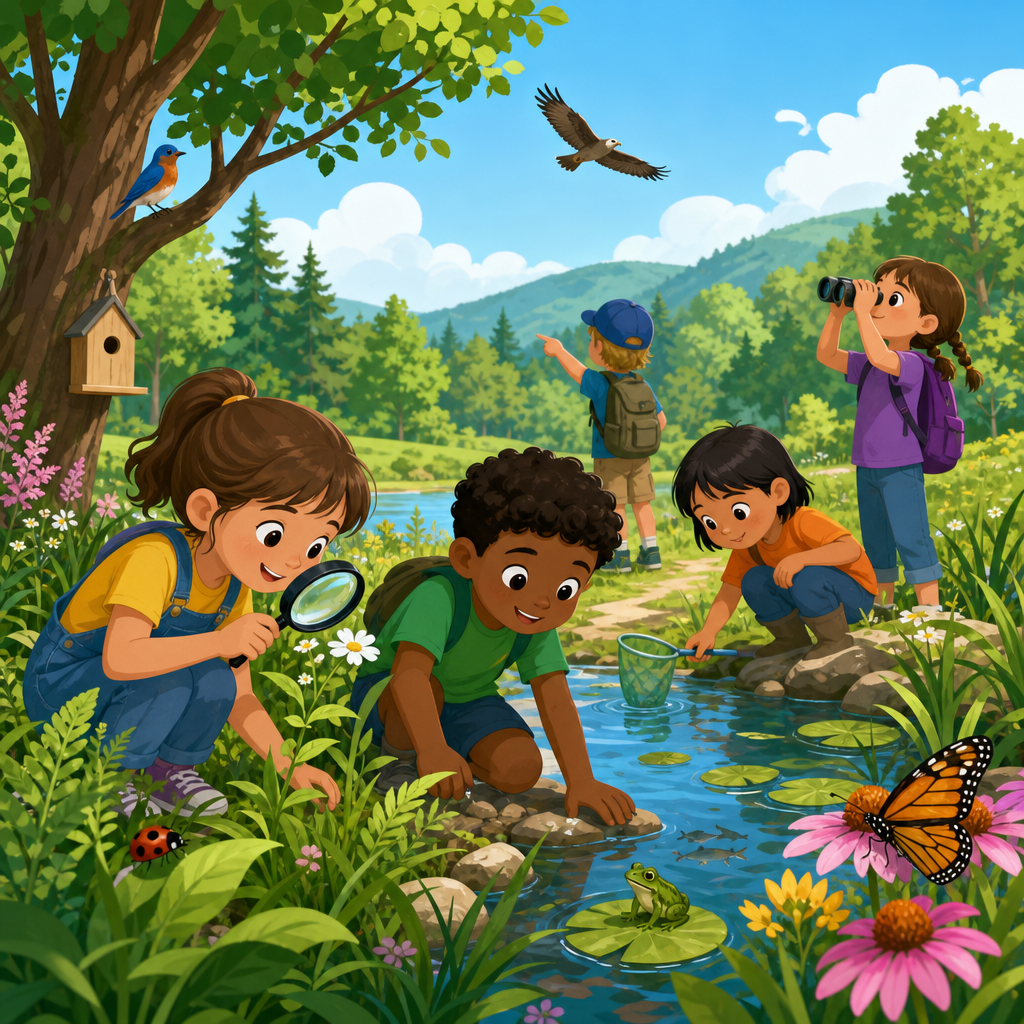
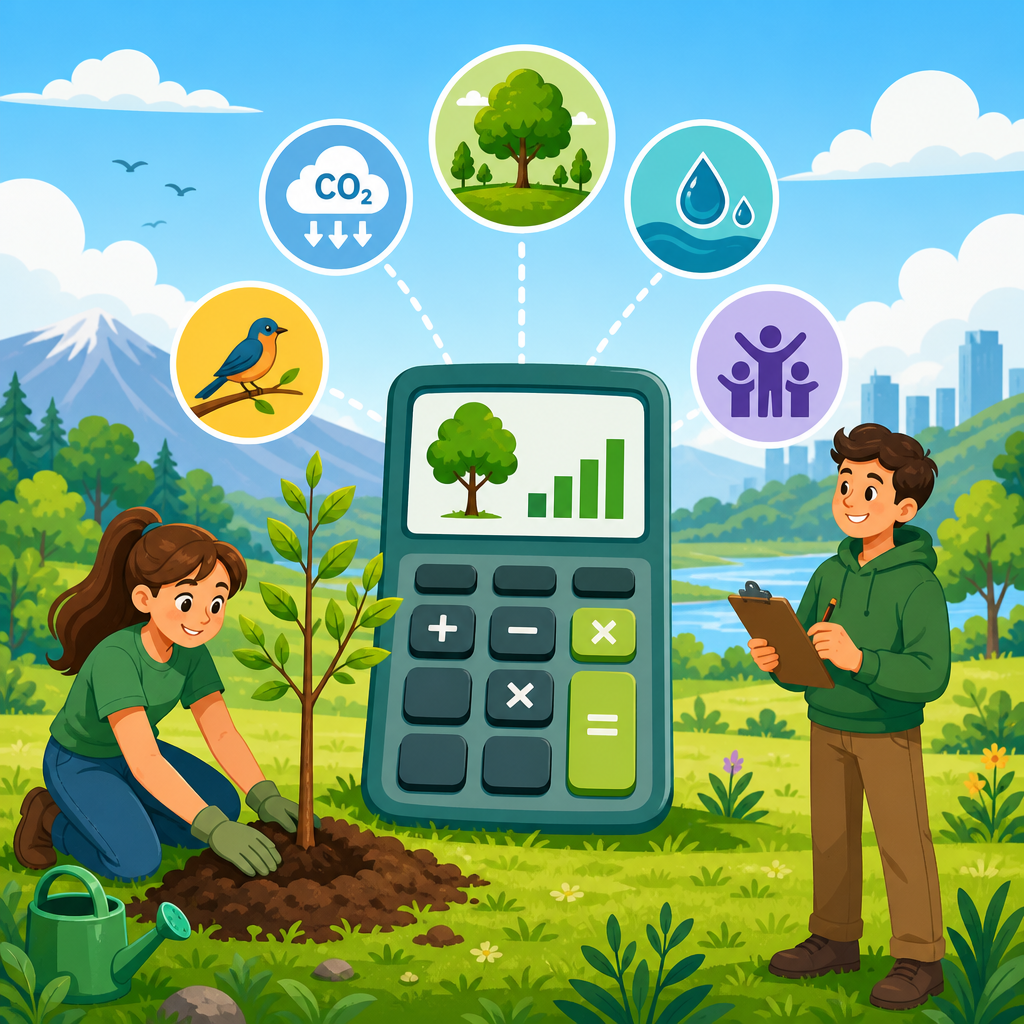
Outdoor learning activities that teach sustainability give schools a practical way to turn environmental curriculum from an abstract idea into daily habit. In effective programs, students do not just memorize recycling symbols or climate vocabulary; they investigate soil, monitor water, grow food, observe waste streams, and connect ecological systems to choices made in classrooms, cafeterias, homes, and neighborhoods. As a hub within Education & Resources, this guide explains how schools can use outdoor learning to build a complete environmental curriculum for schools, from early years through secondary grades.
Sustainability in education means teaching students how natural systems, human activity, and long-term resource use interact. Environmental curriculum for schools usually includes ecology, conservation, climate science, biodiversity, energy, food systems, waste reduction, and civic responsibility. Outdoor learning activities are structured experiences conducted in schoolyards, gardens, parks, waterways, or community spaces where students collect evidence, solve real problems, and reflect on consequences. I have seen students grasp watershed pollution faster during one storm-drain mapping walk than after a week of slides, because they can trace where litter travels and who is affected downstream.
This approach matters because schools are under pressure to improve science literacy, student engagement, and social-emotional development at the same time. Outdoor sustainability lessons support all three. Research from organizations such as Project Learning Tree, NOAA, and the North American Association for Environmental Education consistently shows that place-based environmental instruction can improve attention, increase retention, and strengthen problem-solving. It also aligns well with NGSS practices, including asking questions, analyzing data, developing models, and constructing explanations. When designed carefully, outdoor learning is not an extra unit; it is the operating system for a schoolwide sustainability culture.
Why outdoor learning works in an environmental curriculum for schools
Outdoor learning works because sustainability is fundamentally about systems, and systems are easier to understand when students can observe relationships directly. A class studying decomposition learns more from comparing leaf litter, compost, and landfill-bound trash than from a textbook diagram alone. Students studying urban heat islands can record temperatures on asphalt, grass, mulch, and under tree canopy, then discuss how city planning shapes public health. These are not symbolic exercises. They produce firsthand evidence that links science standards to visible local conditions.
In curriculum planning, outdoor sustainability activities also solve a common instructional problem: fragmentation. Many schools teach recycling during Earth Day, plant seeds in spring, and discuss climate change in a separate science unit, but students never see how those topics connect. A coherent environmental curriculum for schools uses recurring questions: Where do resources come from? How are they used? What waste is produced? What can be restored, reduced, or redesigned? Outdoor tasks make those questions concrete across grade levels. Kindergarten students can sort natural and human-made materials, while older students can audit campus energy use or evaluate habitat health.
There are broader benefits as well. Outdoor learning improves relevance for students who may not respond to conventional lecture-heavy instruction. English learners often participate strongly in observation-based tasks because data collection, sketching, measuring, and photographing provide multiple access points. Students with leadership strengths can manage tools, teams, or public presentations. In schools I have worked with, the most successful sustainability programs were not the ones with the largest budgets. They were the ones that tied repeated outdoor observations to classroom analysis, writing, and action.
Core outdoor learning activities that build sustainability knowledge
The strongest school programs use a small set of repeatable activities that expand in complexity over time. School garden investigations are a foundational example. Younger students can identify pollinators, compare plant needs, and observe seasonal change. Upper elementary classes can test how mulch affects soil moisture, calculate yield, and explore food miles. Secondary students can examine regenerative practices, compost nutrient cycling, and the economics of local food systems. A garden becomes a living lab for biology, math, geography, and health.
Waste audits are another high-impact activity because they connect sustainability to everyday behavior. Students sort a sample of cafeteria or classroom waste into landfill, recycling, compost, and reusable categories, then calculate percentages and identify contamination problems. A single audit often reveals that students know bins exist but do not know local recycling rules. That distinction matters. Good environmental curriculum for schools teaches system literacy, not slogans. Follow-up projects can include redesigning signage, reducing single-use items, or presenting recommendations to administrators.
Water investigations are equally effective. Students can map drains, test pH and turbidity where appropriate, observe erosion, and track how rain moves across campus surfaces. In one middle school project, students discovered that a frequently flooded walkway corresponded with compacted soil and poor drainage near a downspout. Their recommendation for a rain garden linked stormwater management, native plants, engineering design, and campus improvement. Energy walks, biodiversity surveys, tree canopy studies, and litter transects offer similar value because each begins with observation and leads to measurable decisions.
| Activity | Main sustainability concept | Best grade bands | Practical output |
|---|---|---|---|
| School garden study | Food systems, biodiversity, soil health | K-12 | Plant logs, harvest data, compost plans |
| Waste audit | Consumption, circularity, behavior change | 3-12 | Bin redesign, reduction targets, posters |
| Stormwater mapping | Watersheds, runoff, pollution prevention | 4-12 | Campus map, rain garden proposal |
| Habitat survey | Biodiversity, species interactions | 2-12 | Species list, pollinator plan |
| Energy walk | Efficiency, resource use, carbon impacts | 5-12 | Switch-off campaign, audit summary |
Designing a schoolwide progression from early years to secondary
A comprehensive environmental curriculum for schools should progress from awareness to analysis to action. In early years, the priority is sensory connection and stewardship language. Students notice textures, weather, insects, shade, and water. They learn that living things have needs and that care matters. Activities include seed planting, nature journals with drawings, simple habitat walks, and litter collection with discussion about where trash belongs and why. The aim is not to oversimplify serious issues but to build attachment to place before abstract policy debates begin.
In upper elementary, lessons should add classification, measurement, and cause-and-effect reasoning. Students can compare decomposition rates, measure rainfall, count species in a garden plot, or chart lunch waste over a month. They should also begin discussing tradeoffs. For example, reusable containers reduce waste but require washing; native plants support pollinators but may look unfamiliar compared with ornamental landscaping. These conversations teach that sustainability decisions involve systems, costs, and values.
By middle school, students are ready for more rigorous field methods and structured inquiry. They can use quadrat sampling, digital probes, GIS-based mapping tools, and spreadsheet analysis. They should be expected to support claims with evidence and distinguish observation from inference. Secondary students can move further into policy, economics, and design. They can evaluate campus procurement, compare renewable energy options, model carbon reduction scenarios, or collaborate with municipal departments on habitat restoration. The key is progression: each outdoor learning activity should revisit a concept at a higher level rather than appearing as a disconnected annual event.
Connecting outdoor activities to standards, assessment, and other subjects
For sustainability education to last, it must fit the realities of curriculum maps, standards, and reporting. The good news is that outdoor learning aligns naturally with science, geography, mathematics, language arts, design technology, and civics. A biodiversity survey addresses ecosystems, data analysis, and scientific communication. A waste audit supports ratios, graphing, persuasive writing, and public speaking. A school garden can anchor lessons in plant biology, nutrition, local history, and entrepreneurship if students sell produce or calculate harvest value.
Assessment should measure more than participation. Strong programs evaluate content knowledge, data quality, reflection, and application. I recommend using performance tasks: students collect field data, interpret patterns, explain implications, and propose action. For example, after a campus heat mapping exercise, students might submit a short report that includes temperature data, a map, an explanation of heat absorption, and two realistic mitigation strategies such as shade trees or reflective surfaces. This format shows whether students can transfer observation into informed decision-making.
Documentation matters, especially for a hub page supporting related articles and internal resources. Schools should maintain common templates for field notes, species logs, risk assessments, and rubric-based project evaluation. Digital tools such as iNaturalist, ArcGIS StoryMaps, Google Sheets, and Vernier sensors can strengthen consistency, though paper clipboards still work well. What matters most is a repeatable process. When teachers share protocols across grade levels, students become more fluent in environmental inquiry and the curriculum feels cumulative instead of improvised.
Implementation: safety, equity, teacher support, and community partnerships
Successful outdoor sustainability programs are not built on enthusiasm alone. They require operational planning. Safety starts with site checks, weather procedures, allergy awareness, tool protocols, hydration access, and clear supervision ratios. Schools should define boundaries, emergency communication methods, and sanitation procedures for garden or compost work. Risk management should be proportional, not restrictive. A muddy field investigation carries manageable risk when staff use checklists and routines; eliminating outdoor learning entirely because it is less predictable than a classroom undermines educational value.
Equity is just as important. Not every student has prior access to parks, gardens, or safe green space, so schools should avoid assuming baseline experience. Activities should be designed with accessible routes, adaptive tools, multilingual instructions, and varied participation modes. A student who cannot dig can still record measurements, photograph evidence, or lead analysis. Environmental curriculum for schools should also reflect local realities. Urban students may study air quality, tree equity, and stormwater infrastructure, while rural schools may focus more on soil erosion, agriculture, and watershed health. Both are sustainability education when tied to evidence and action.
Teacher support often determines whether programs survive beyond one motivated champion. Staff need planning time, resource lists, storage for equipment, and examples of lessons that work in small spaces. Community partnerships help fill gaps. Local parks departments, botanical gardens, master gardeners, watershed groups, farms, and universities can provide expertise, native plant advice, or field access. The best partnerships are reciprocal. Students do not just receive information; they contribute data, restoration labor, public communication, or design ideas that benefit the community as well.
Building the hub: topics every environmental curriculum for schools should link outward to
As a hub page, this article should anchor the wider environmental curriculum for schools by connecting readers to the major strands they will need next. Those strands typically include school gardens, composting systems, climate change education, biodiversity and pollinator lessons, recycling and waste reduction, water conservation, renewable energy, outdoor classroom design, citizen science projects, and sustainability project assessment. Organizing content this way helps school leaders and teachers move from big-picture planning to specific implementation without losing coherence.
Each supporting topic should answer a practical question. How do you start a school garden with limited space? What belongs in a school compost system, and what does not? How do you teach climate change in age-appropriate ways? Which native plants support local pollinators? How should students conduct a litter audit or calculate cafeteria waste? What are realistic campus energy investigations if students cannot access utility data? A strong hub page frames those questions and establishes common principles: local relevance, evidence-based inquiry, progression across grades, and action tied to measurable outcomes.
The central benefit of outdoor learning activities that teach sustainability is simple: students learn environmental responsibility best when they can see systems, test ideas, and improve the places they use every day. A schoolyard, garden bed, tree line, drainage path, or cafeteria waste station can become a rigorous teaching space when activities are planned with clear concepts, standards alignment, and follow-through. Start with one repeatable investigation, document what students learn, and build outward into a full environmental curriculum for schools that grows stronger each year.
Frequently Asked Questions
What are outdoor learning activities that teach sustainability?
Outdoor learning activities that teach sustainability are hands-on lessons and projects that help students understand how natural systems work and how human choices affect them. Instead of learning only through worksheets or lectures, students go outside to investigate real environmental conditions and participate in meaningful tasks. These activities can include school gardening, composting, habitat observation, pollinator studies, litter and waste audits, water testing, soil analysis, tree planting, weather monitoring, and campus energy or resource investigations. The goal is to make sustainability visible, practical, and relevant to everyday life.
What makes these activities especially effective is that they connect academic concepts to real-world responsibility. Students can see how healthy soil supports plant growth, how rainfall moves through school grounds, how food scraps become compost, and how waste habits influence the amount of trash a school produces. This approach helps them move beyond memorizing terms like conservation, biodiversity, and circular economy. They begin to understand systems, patterns, consequences, and solutions. In strong school programs, outdoor sustainability learning also encourages reflection on how classroom routines, cafeteria choices, transportation habits, and neighborhood conditions all play a role in environmental outcomes.
Why is outdoor sustainability education more effective than teaching these topics only in the classroom?
Outdoor sustainability education is often more effective because it transforms abstract environmental ideas into direct experience. When students test the pH of soil, compare the temperature of shaded and unshaded areas, observe insect activity in a pollinator garden, or measure how much cafeteria waste is thrown away in a week, they are not just hearing about sustainability—they are seeing evidence, collecting data, and drawing conclusions for themselves. That kind of active learning tends to improve understanding, retention, and engagement across grade levels.
It also supports deeper critical thinking. Sustainability is not a single topic with a simple answer; it involves systems, tradeoffs, local conditions, and long-term thinking. Outdoor learning gives students a chance to ask better questions: Why does runoff collect in one place and not another? What happens to food waste after lunch? Which plants thrive with less water? Why are fewer pollinators appearing in some areas? These observations naturally lead to cross-curricular learning in science, math, social studies, language arts, and health. Just as importantly, outdoor experiences can build stewardship. Students are more likely to care about reducing waste, saving water, or protecting habitat when they have personally studied and contributed to those systems.
What are some of the best outdoor activities schools can use to teach sustainability?
Some of the most effective outdoor activities are those that combine observation, student responsibility, and measurable outcomes. School gardens are a strong example because they can teach food systems, soil health, composting, biodiversity, seasonal change, and nutrition all at once. Waste audits are another high-impact activity because they help students analyze what is being discarded, identify avoidable waste, and recommend improvements for recycling, composting, or cafeteria practices. Water-focused activities such as rain gauge monitoring, runoff mapping, and basic water quality testing help students understand local ecosystems and resource management in a way that feels immediate and concrete.
Habitat and biodiversity projects also work well. Students can create pollinator gardens, track bird species, observe insects, document native versus invasive plants, or design small restoration efforts on school grounds. Energy and climate-related activities can be adapted outdoors too, such as measuring surface temperatures, comparing shaded and paved areas, tracking sunlight for garden planning, or investigating how trees affect heat and air quality. The best activities are not necessarily the most expensive or complex. They are the ones that encourage repeated observation, student ownership, and a clear connection between what students learn outside and the decisions they make inside the school community.
How can schools start an outdoor sustainability program with limited budget and space?
Schools do not need a large campus or major funding to begin. A successful outdoor sustainability program can start with a small, manageable project tied to existing curriculum goals. A few raised beds, container gardens, a compost station, a native plant corner, a rain barrel, or a simple observation area can provide powerful learning opportunities. Even paved campuses can support sustainability lessons through waste audits, microclimate studies, portable planting containers, weather monitoring, and neighborhood walking investigations. The key is to start with what is practical, consistent, and easy for staff and students to maintain.
Budget-conscious programs are strongest when they build partnerships and phase in growth over time. Schools can often work with local garden centers, environmental nonprofits, municipal sustainability offices, watershed groups, universities, or parent volunteers for donated materials, expertise, and labor. Teachers can integrate projects into science and social studies standards rather than treating them as extra activities. Student leadership teams can also help maintain momentum by assisting with data collection, signage, peer education, and care routines. A small pilot project that is well used and well documented is usually more valuable than an ambitious initiative that is difficult to sustain. Over time, schools can expand by adding monitoring tools, habitat features, food production spaces, and more structured sustainability investigations.
How do outdoor learning activities help students build long-term sustainable habits?
Outdoor learning helps students build long-term sustainable habits because it links knowledge to routine behavior and personal responsibility. When students regularly separate compost from landfill waste, care for plants, monitor water use, track biodiversity, or analyze litter patterns, they begin to see sustainability as something they do rather than something they only discuss. Repetition matters. A single Earth Day activity may raise awareness, but ongoing outdoor practice is what helps habits form. Students start to recognize that small choices—what gets thrown away, how water is used, which plants are grown, how outdoor spaces are treated—have visible consequences.
These experiences also strengthen agency. Students who participate in outdoor sustainability projects often feel that they can contribute to solutions instead of just hearing about environmental problems. That mindset is essential for long-term impact. As they collect evidence, solve local problems, and share findings with classmates or families, they develop confidence, systems thinking, and a sense of stewardship that can carry into home life and future civic engagement. Over time, outdoor learning can shape school culture as well. When sustainability becomes part of daily observation, campus care, and decision-making, students are more likely to carry those habits into cafeterias, households, transportation choices, and community action beyond school.