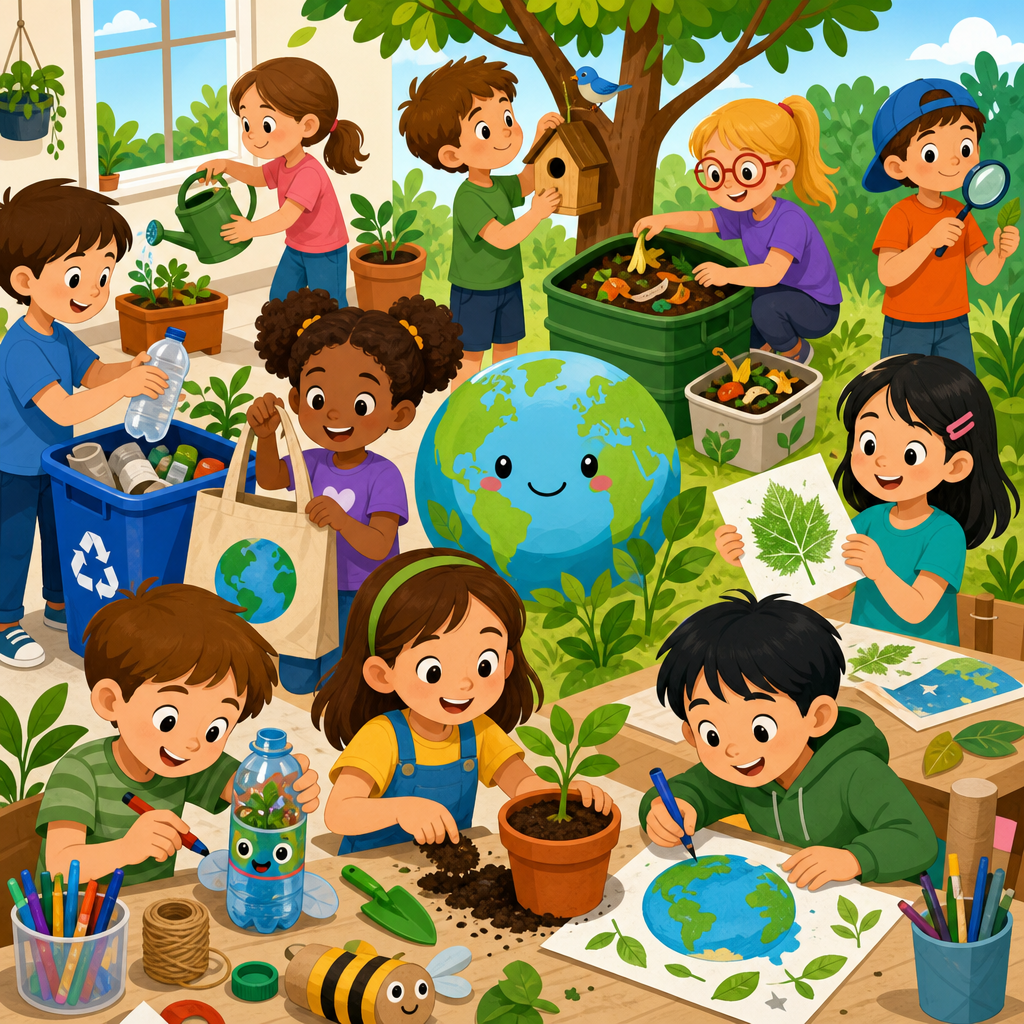
Environmental education standards by grade level give schools a practical structure for teaching students how natural systems work, how human choices affect air, water, land, and climate, and how informed citizens can solve environmental problems. In curriculum planning, standards are the agreed learning expectations for what students should know and be able to do at each stage of schooling. Environmental curriculum for schools includes science content, civic engagement, sustainability practices, field investigation, and local problem solving. I have helped schools map these outcomes across elementary, middle, and high school programs, and the difference between a scattered set of activities and a standards-aligned sequence is significant. When grade-level expectations are clear, teachers can build knowledge progressively instead of repeating isolated lessons about recycling or weather. This matters because environmental literacy is now tied to public health, workforce readiness, community resilience, and academic achievement across science, social studies, language arts, and career education.
A strong environmental curriculum for schools does more than add nature topics to existing classes. It connects disciplinary core ideas, inquiry practices, place-based learning, and decision-making skills. In the United States, many districts use frameworks influenced by the Next Generation Science Standards, state social studies standards, agricultural education pathways, and sustainability initiatives such as EcoSchools or Green Ribbon Schools. International schools may also draw from UNESCO’s education for sustainable development guidance and the United Nations Sustainable Development Goals as organizing themes. The best programs translate those broad frameworks into grade-banded competencies: early learners notice patterns in nature; upper elementary students explain ecosystems and resource use; middle school students analyze systems and human impact; high school students evaluate evidence, policy, and solutions. That progression turns environmental education from a one-off enrichment activity into a coherent learning pathway.
What Environmental Education Standards Include
Environmental education standards usually combine knowledge, skills, and dispositions. Knowledge includes ecosystems, biodiversity, water cycles, energy sources, climate systems, waste streams, conservation, and environmental justice. Skills include observing, collecting data, modeling systems, interpreting graphs, researching sources, debating tradeoffs, and designing local action projects. Dispositions include stewardship, curiosity, responsibility, and respect for evidence. Effective standards are measurable. For example, instead of saying students should “care about the environment,” a sound grade-level expectation asks third graders to describe how plants and animals depend on habitats, or asks eighth graders to evaluate how land-use decisions affect runoff and water quality.
Across districts, I consistently see six strands that make standards usable. First, ecological literacy teaches how living and nonliving systems interact. Second, human-environment interaction examines agriculture, transportation, energy, and consumption. Third, inquiry and investigation covers field methods, sampling, and evidence-based explanation. Fourth, systems thinking helps students understand feedback loops and unintended consequences. Fifth, civic and community action addresses policy, collaboration, and service learning. Sixth, sustainability and resilience focus on long-term resource management and adaptation. When these strands are mapped across grade bands, schools can identify gaps, prevent redundancy, and align assessments to actual learning goals.
Standards should also match developmental readiness. Kindergarten students can sort living and nonliving things and observe seasonal change, but they are not ready for a full policy analysis of carbon markets. By contrast, eleventh graders can compare lifecycle impacts of renewable and fossil energy sources, interpret emissions data, and assess environmental regulations. A good environmental curriculum for schools respects those differences while maintaining continuity. It uses age-appropriate vocabulary, local examples, and repeated concepts that deepen over time, such as habitat, resource use, adaptation, interdependence, and risk.
Grade-Level Progression From Early Elementary Through High School
The most effective environmental education standards by grade level follow a staircase model. In the primary grades, students build awareness through direct experience. They observe weather, identify plants and animals, notice schoolyard habitats, and practice simple stewardship routines such as reducing litter and saving water. In grades three through five, the curriculum shifts toward explanation. Students investigate food webs, erosion, pollution, and community resources while beginning to connect environmental conditions to human choices. In grades six through eight, learners examine systems, scale, and evidence. They study watersheds, climate trends, biodiversity loss, and environmental health using data analysis and structured argument. In grades nine through twelve, students are expected to synthesize across disciplines, evaluate competing claims, and develop informed solutions grounded in science, economics, and public policy.
| Grade Band | Core Focus | Typical Student Outcomes |
|---|---|---|
| K-2 | Observation and care for local environments | Identify living things, describe weather and seasons, practice classroom stewardship |
| 3-5 | Ecosystems and resource use | Explain habitats, food chains, recycling, water use, and simple human impacts |
| 6-8 | Systems and evidence | Analyze watersheds, pollution, climate patterns, and biodiversity using data |
| 9-12 | Evaluation and action | Assess policy, energy choices, environmental justice, and design solution projects |
This progression works because it aligns cognitive demand with student readiness. Young children learn best from concrete observation and routine. Older students can handle abstraction, delayed consequences, and conflicting evidence. A district that asks second graders to memorize technical climate terminology usually gets weak retention, while a district that delays environmental topics until high school misses the best years for habit formation and curiosity. I have seen the strongest results when every grade level has one to three essential environmental questions, supported by field experiences and performance tasks that build year after year.
Elementary School Standards and Curriculum Priorities
Elementary environmental curriculum should prioritize direct contact with the local environment. In kindergarten through grade two, standards often focus on weather patterns, plant and animal needs, habitats, seasonal change, and caring for shared spaces. A first-grade class might maintain a pollinator garden, chart bird sightings, and discuss why insects, water, sunlight, and soil matter. A second-grade lesson can compare natural and built environments by walking the school grounds and recording where water collects after rain. These activities seem simple, but they establish the observational habits behind later scientific reasoning.
By grades three through five, standards usually add ecosystem relationships, resource cycles, waste reduction, and the idea that environmental change can be measured. Students can test soil permeability, compare landfill and compost systems, map where cafeteria food waste goes, or study how storm drains connect to streams. This is also the stage where reading and writing integration becomes powerful. Students can summarize informational texts on forests or oceans, write explanations of local species interactions, and present evidence-based recommendations to reduce single-use plastics at school. Schools that treat environmental learning as interdisciplinary rather than as an occasional science add-on typically achieve better retention and stronger student engagement.
Assessment in elementary grades should emphasize demonstration over memorization. Students can label a habitat model, explain a water conservation routine, or complete a simple investigation notebook. Rubrics should measure accurate observation, use of vocabulary, and the ability to connect actions to outcomes. For example, if students say recycling “helps the Earth,” teachers should press for specificity: it reduces waste sent to landfills, conserves raw materials, and may lower energy use in manufacturing depending on the material stream. Precision starts early.
Middle School Standards: Systems Thinking, Data, and Local Issues
Middle school is where environmental curriculum for schools often becomes rigorous enough to change how students think. Standards at this level should emphasize systems thinking, cause and effect, and evidence-based claims. Students are ready to understand that a watershed is not just a river but a connected land area where rainfall, runoff, soil, impervious surfaces, vegetation, and human development interact. They can analyze school energy consumption, compare air quality indicators, or model how invasive species alter ecosystems. In practice, these units work best when abstract concepts are tied to nearby issues such as flooding, drought, urban heat islands, or loss of tree canopy.
A well-designed middle school sequence usually includes ecology, Earth systems, human population impacts, and environmental health. Students should interpret line graphs, maps, and datasets rather than rely only on textbook summaries. For instance, classes can use National Oceanic and Atmospheric Administration climate normals, Environmental Protection Agency water data, or municipal waste audits to ask answerable questions. What months are hottest in the community? Which land uses contribute most to runoff? How does tree cover affect surface temperature around the school? When students collect and analyze real data, environmental concepts stop feeling distant and become measurable realities.
Project-based learning is especially effective here, but standards must anchor it. I have seen schools launch ambitious recycling campaigns with little academic depth; students stay busy without learning much. A better approach is to require a driving question, baseline data, stakeholder interviews, and an evidence-based proposal. One eighth-grade team I worked with studied cafeteria waste, separated compostable and non-compostable materials, calculated weekly volumes, and presented a phased compost plan to administrators. They learned matter cycling, data analysis, and civic communication in a single standards-aligned project.
High School Standards: Analysis, Policy, Careers, and Action
High school environmental education standards should prepare students for informed citizenship, postsecondary study, and green career pathways. At this level, environmental science can no longer be limited to broad awareness. Students should investigate climate mechanisms, energy systems, conservation biology, environmental chemistry, environmental justice, risk assessment, and regulatory frameworks. They should compare mitigation and adaptation, distinguish hazard from exposure, and evaluate tradeoffs among cost, equity, feasibility, and ecological impact. Courses may sit in science departments, but the strongest programs also connect to economics, civics, geography, agriculture, engineering, and career and technical education.
Standards should expect students to work with primary and secondary sources, not just teacher-prepared summaries. A rigorous high school task might ask students to compare local transportation emissions strategies, review municipal planning documents, interpret census and health data, and develop recommendations for reducing heat vulnerability in underserved neighborhoods. Another might involve lifecycle analysis of solar panels, natural gas, and battery storage, including extraction impacts, grid reliability, and end-of-life management. These are complex issues, and students should be taught that environmental decisions rarely have perfect answers. The goal is disciplined judgment informed by evidence.
Career exposure is also essential. Environmental curriculum for schools should show students how classroom learning connects to jobs in conservation, urban planning, water treatment, environmental law, renewable energy, geographic information systems, sustainable agriculture, and corporate sustainability reporting. Partnerships with parks departments, utilities, universities, extension offices, and nonprofit organizations make standards more concrete. Capstone projects, internships, and dual-enrollment courses are valuable because they turn environmental literacy into practical competence.
How Schools Build a Coherent Environmental Curriculum
Building a coherent program starts with curriculum mapping. Schools should identify which environmental concepts already appear in science, social studies, health, agriculture, and electives, then sequence them by grade level so learning progresses instead of repeating. A simple audit often reveals common problems: recycling taught every year without deeper systems analysis, climate change introduced too late, or field experiences disconnected from classroom assessment. Once gaps are visible, teams can define essential questions, performance tasks, and common vocabulary for each grade band.
Professional development matters just as much as the written standards. Many teachers are comfortable with ecology basics but less prepared to teach environmental justice, climate data, or local policy. Districts should provide vetted resources, planning time, and access to regional experts. Useful sources include state education agencies, Project Learning Tree, Project WET, Project WILD, NOAA education resources, EPA classroom materials, and local conservation districts. The strongest implementation plans also include outdoor learning protocols, safety procedures, and equity strategies so every student can participate in fieldwork and action projects.
Finally, schools should evaluate whether the curriculum changes student understanding and behavior. Good indicators include performance assessments, student surveys, participation in stewardship projects, reductions in school waste or energy use, and evidence of stronger cross-curricular writing and analysis. Environmental education standards by grade level are most valuable when they turn good intentions into visible outcomes. For school leaders, the next step is straightforward: audit your current environmental curriculum for schools, align it to grade-banded standards, and build a sequence that helps students move from awareness to informed action.
Frequently Asked Questions
What are environmental education standards by grade level?
Environmental education standards by grade level are clear learning expectations that describe what students should understand and be able to do at different stages of school. They give teachers and curriculum planners a practical framework for introducing environmental topics in age-appropriate ways, starting with basic observation of nature in the early grades and progressing toward data analysis, systems thinking, policy discussions, and problem solving in later grades. Rather than treating environmental learning as a single lesson or special event, these standards organize it as a developmental sequence that builds knowledge and skills over time.
In practice, these standards often include core concepts such as ecosystems, biodiversity, water resources, energy use, climate, conservation, and the relationship between human activity and natural systems. They also include habits of mind and applied skills, such as asking questions, interpreting evidence, evaluating environmental impacts, participating in community action, and making responsible decisions. When schools use grade-level standards, they create more consistency across classrooms and help ensure that students are not simply memorizing facts, but learning how environmental issues connect to science, health, economics, civic life, and everyday choices.
Why is it important to teach environmental education in a grade-by-grade progression?
A grade-by-grade progression matters because children learn best when new ideas are introduced at the right level of complexity and then revisited in more sophisticated ways as they mature. Young students may begin by identifying living and nonliving things, observing weather patterns, or learning simple habits like reducing waste and caring for school grounds. As they move into upper elementary and middle school, they can compare ecosystems, study pollution sources, analyze resource use, and examine how communities affect land, water, and air. By high school, students are ready to evaluate environmental data, investigate climate trends, debate policy options, and propose evidence-based solutions to real local and global problems.
This structured progression prevents major gaps in understanding and avoids overwhelming students with abstract issues before they have the background to make sense of them. It also supports long-term retention. When environmental concepts are reinforced over many years, students develop a stronger understanding of cause and effect, systems, and responsibility. Just as important, a sequenced approach helps schools align lessons, assessments, and projects across grade bands, making environmental literacy a coherent part of the curriculum instead of an isolated enrichment topic.
What topics are usually included in environmental curriculum for schools?
Environmental curriculum for schools usually combines scientific knowledge, sustainability practices, and civic engagement. Common topics include ecosystems and habitats, food webs, soil and water systems, weather and climate, natural resources, renewable and nonrenewable energy, pollution, waste management, recycling, conservation, and biodiversity. Students may also explore human population patterns, land use, agriculture, environmental justice, public health connections, and the ways local communities manage environmental challenges. These topics are often adapted by grade level so students can move from concrete observations to more complex analysis.
Strong environmental curriculum does more than cover content. It also teaches students how to investigate environmental questions, collect and interpret data, communicate findings, and participate in informed decision-making. Many schools include field investigations, school garden projects, energy audits, watershed studies, habitat restoration, or community partnerships to help students apply what they learn. The most effective programs connect classroom study to real-world action, showing students that environmental education is not just about understanding nature, but also about understanding how societies can make better choices for long-term sustainability.
How do environmental education standards connect with science, civics, and other subjects?
Environmental education standards are naturally interdisciplinary, which is one of their greatest strengths. In science, they align with topics such as ecosystems, Earth systems, energy transfer, climate processes, and human impacts on the environment. In social studies and civics, they connect to public policy, community planning, resource management, citizenship, and the role of government and organizations in addressing environmental issues. In language arts, students may read informational texts, write persuasive arguments, present research, and evaluate sources. In math, they can analyze graphs, compare trends, measure resource use, and work with statistics from environmental studies.
This cross-curricular approach helps students see that environmental issues are not isolated scientific problems. They involve economics, ethics, culture, geography, technology, and law. For example, a lesson on water quality can include scientific testing, mathematical data analysis, historical land-use patterns, and a discussion of community responsibility. A unit on waste reduction can involve design thinking, persuasive writing, and calculations related to landfill use or recycling rates. By integrating standards across subjects, schools can make learning more relevant and help students develop the broad understanding they need to participate thoughtfully in environmental problem solving.
How can schools implement environmental education standards effectively at each grade level?
Effective implementation starts with careful curriculum planning. Schools need to identify the environmental concepts, skills, and action competencies students should develop at each grade level, then map those expectations into existing subjects and units. This often means creating a sequence that begins with foundational awareness in the early grades, expands into systems and human-environment interaction in middle grades, and culminates in analysis, research, and civic action in high school. Clear learning goals, appropriate instructional materials, and grade-level assessments help ensure that teaching remains consistent and purposeful.
Professional development is also essential. Teachers need support in both environmental content and instructional strategies, especially when lessons involve outdoor learning, project-based work, local investigations, or community partnerships. Schools often see the best results when environmental education is reinforced through daily practices as well as classroom instruction, such as school recycling programs, energy conservation efforts, habitat projects, or sustainability committees. When students can connect standards-based learning to what they see in their school and community, the content becomes more meaningful. Over time, this approach builds environmental literacy, strengthens critical thinking, and prepares students to act as informed citizens who understand both environmental challenges and practical solutions.